Romania - The Great Loop
A complete journey through the treasures of Transylvania, Maramureș and Bucovine
Duration
14 days
From
€1,265/pers.
Ideal seasons
Apr, May, Jun, Sep, Oct
Style
Self-drive tour
Comfort
classique
Travelers
Couple, Solo, With friends, senior
The spirit of travel
This circuit will take you to wonderful regions that will generously reveal all their secrets to you. It is the most comprehensive circuit of the country's must-sees.
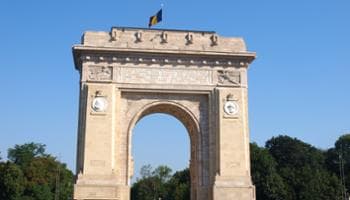
Your journey will begin in Bucharest, the country's capital, a vibrant city rich in history.
On the proposed itinerary you will discover cities and medieval villages in Transylvania that bear a strong imprint of Saxon culture, then the north of the country, Maramures and Bucovina before returning to Bucharest.
The Maramures, former territory of the free Dacians, known for its wooden churches, whose spire "pierces the clouds", but also for its black and red folk costumes, for its music and the warm welcome of its inhabitants.
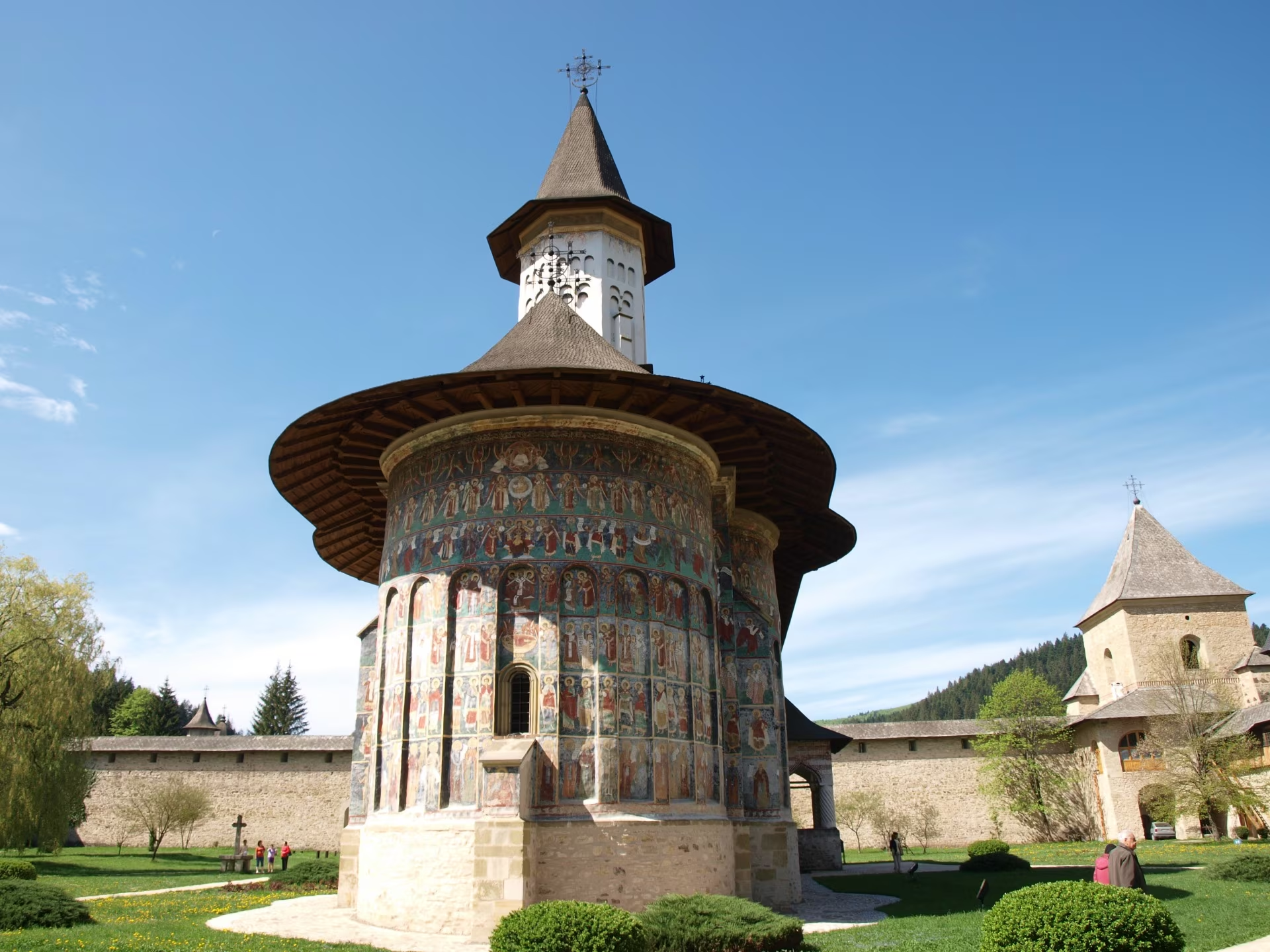
Hidden in the valleys and forests, near the Ukrainian border, lies one of Europe's most remarkable ecclesiastical treasures: the painted monasteries of Bucovina. Founded mostly in the 16th century, they have become prosperous religious communities again. The woods and fields surrounding them give them a special charm. Bucovina means "the land of beeches", this nickname is still valid today. The monasteries of Bucovina are living communities that have managed to preserve their way of life for centuries. During the warm evenings of early summer you can see the nuns in their black habits mowing the meadows, a scene that seems to come straight out of a medieval prayer book.
The stages of your journey
Highlights
Day-by-day itinerary
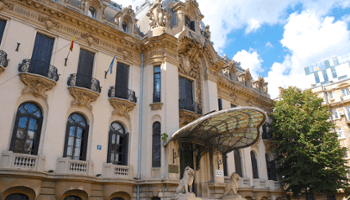
Arrival in Bucharest
To Bucarest
Depending on your time of arrival, you may already have a first glimpse of the city of Bucharest.
Nicknamed "the Little Paris of the '30s", the capital of Roumanie will surprise you with the variety of its architecture: the Stavropoleous Church, the Lipscani merchants street, the Royal Palace, the Roumanian Athenaeum and the impressive Palace of Parliament – House of the People, the second largest building in the world after the Pentagon are just a few visits not to be missed.
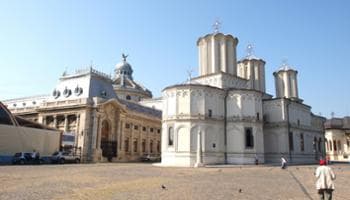
Discovering the Capital
To Bucarest
Today, after breakfast, you can continue your visits to Bucharest. There are many things to discover: the History Museum where you can see the gold bracelets belonging to the Dacian royal treasure; the Art Museum or the Ceausescu House or the Palace of Parliament, parks and shaded gardens, small alleys, shops, palaces, public buildings, most of which were designed in the late 19th century by French architects such as Cassian-Bernard, Galleron, Villacrosse or Gottereau
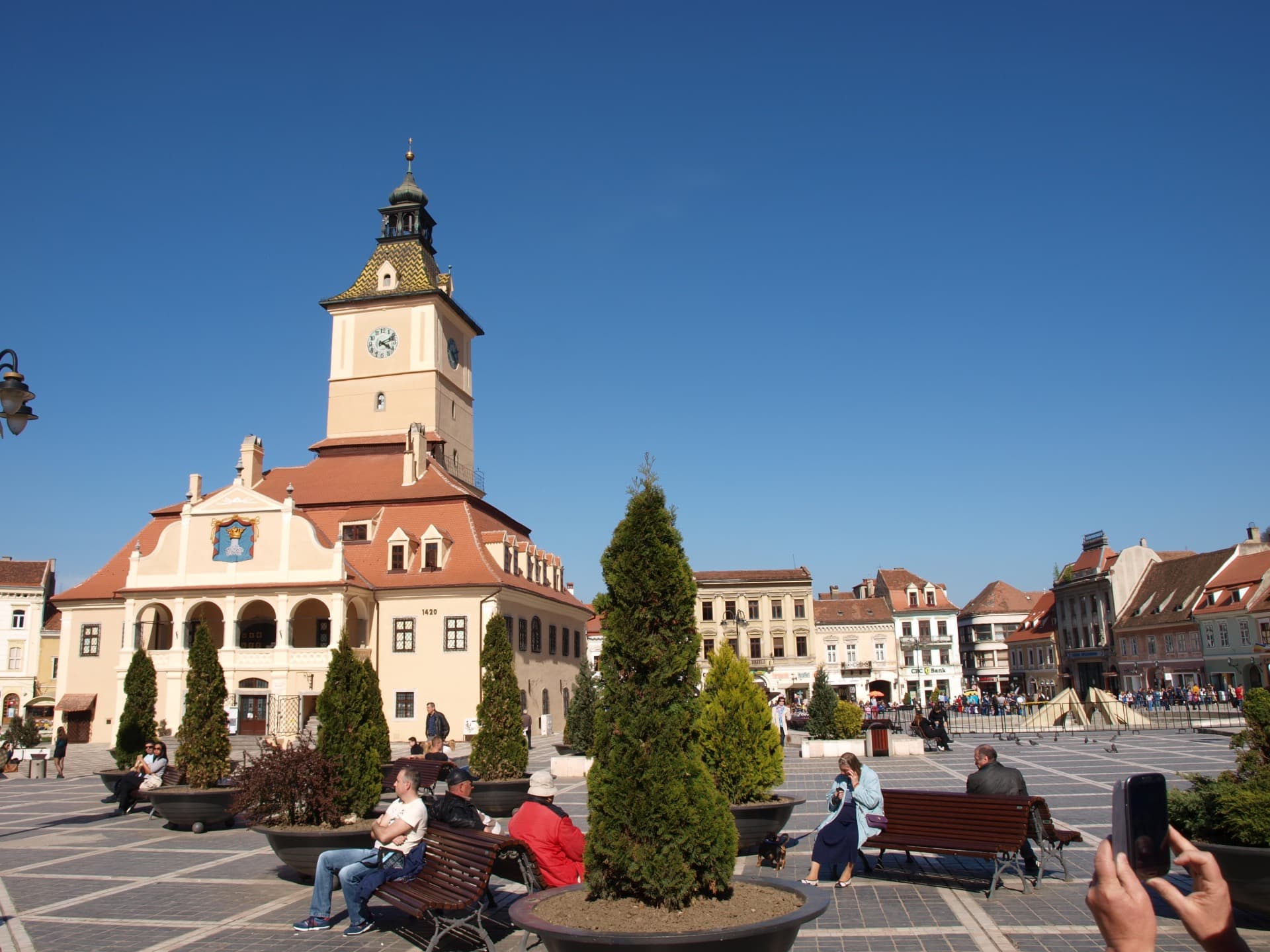
Peles Castle and the Medieval Town of Brasov
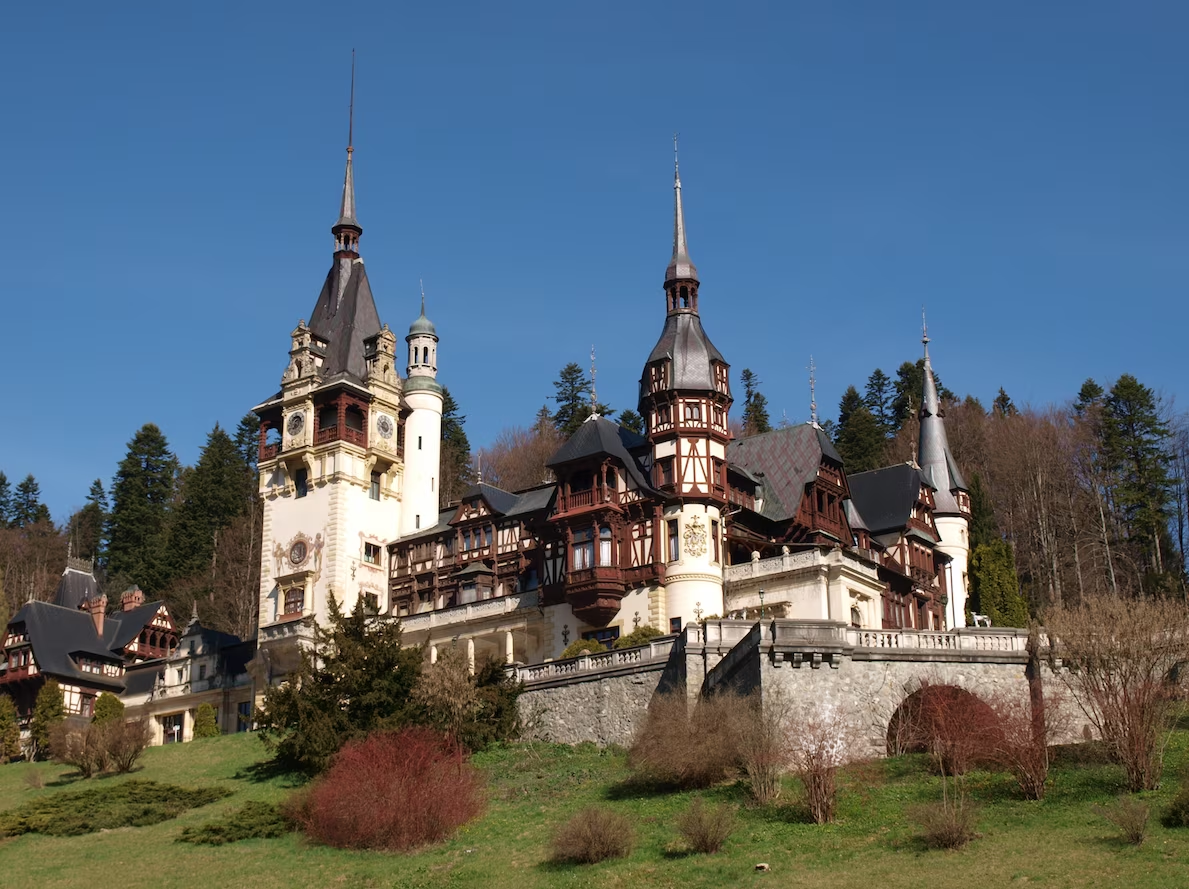
A first stop on the way will be at Sinaia to visit the impressive Peles Castle, dating from the late 19th century. It was built following the personal financing of the first king of Roumanie, Carol I of Hohenzollern. The result of the work was a true marvel: an imposing castle in German Neo-Renaissance style, with sharp profiles, an abundance of carved wood and statues. It was the first castle in Europe to have electricity and central heating!
Brasov is the "Crown City"* of Transylvania, founded by the order of the Teutonic Knights in 1211 and called "Kronstadt" by German settlers. Nestled at the foot of the mountains, it still retains its old medieval charm. Take time to stroll through the old town center. Must-sees include: the Council Square, the old center with its typically German architecture, the Black Church – an imposing Gothic building that dominates the Council Square, Rope Street. A photo from above will be possible from Tâmpa hill (accessible by cable car).
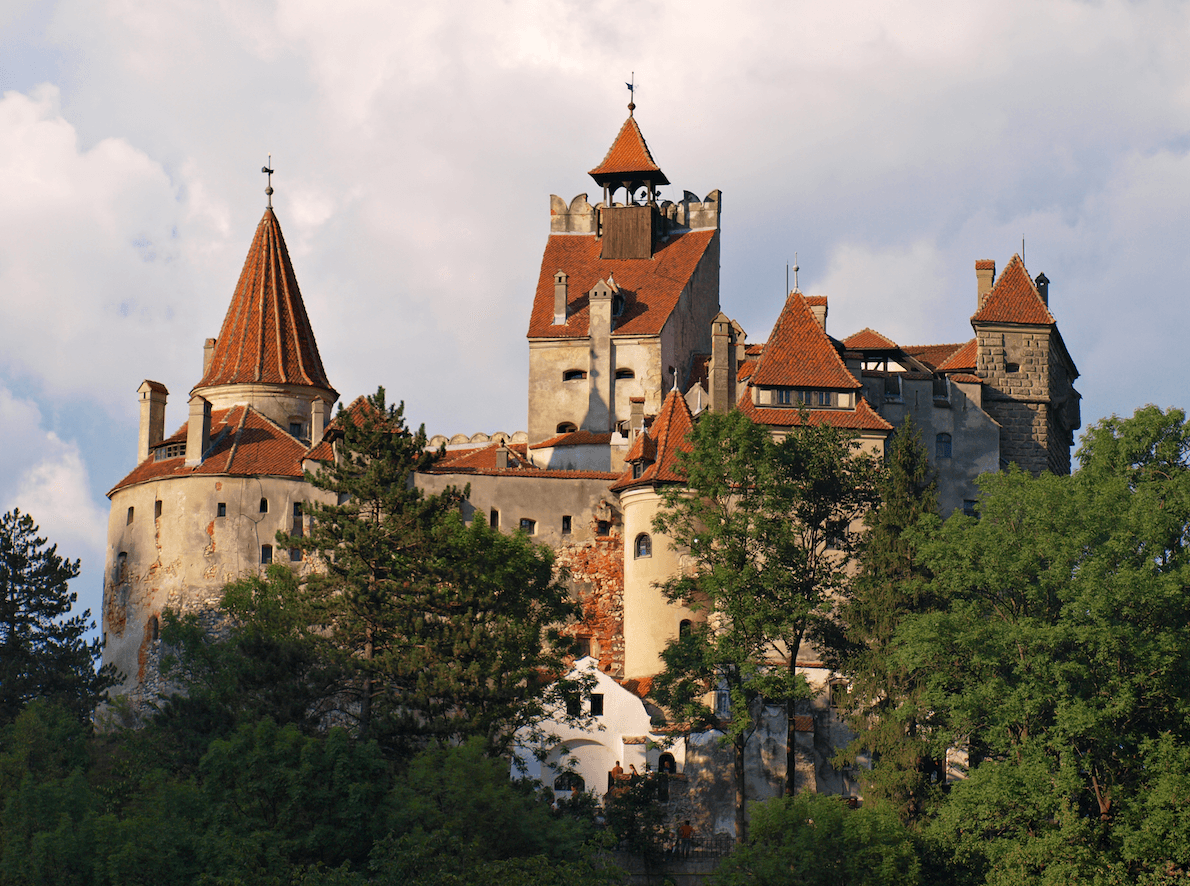
Bran Castle
During this day you will explore the Brasov region.
If you wish to visit the Bear Sanctuary at Zarnesti you will need to start the day with this visit because there are only guided group tours in the morning.
Then, you can take an easy walk in the Zarnesti Gorges before heading towards Bran where the famous castle is located, often attributed to Dracula.
The Bran Castle is a magnificent medieval fortress built by the Teutonic Knights in the early thirteenth century, and several owners contributed to its construction or restoration over the centuries. Today, it belongs to Dominic de Habsburg.
Bran Castle was unjustly associated with the history of Dracula. Bram Stoker was inspired by its architecture to create the castle of Dracula in the Pas de Bargau (Borgo Pas).
Prince Vlad Tepes (Vlad the Impaler) who inspired the character of Dracula never owned Bran Castle, and no evidence proves that he ever even visited it.
Route to Bacau
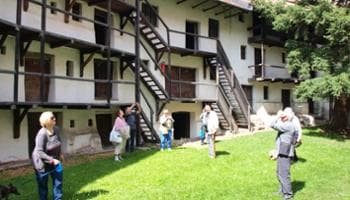
On the way to Bacau you can visit the Prejmer peasant fortress, built by the Knights of the Teutonic Order from the 13th to 16th century, in the process of colonizing the region. It is surrounded by a defense wall 4 m thick, divided into 272 rooms designed to shelter inhabitants in case of attack. It is said that the number of rooms corresponded to that of the families living in Prejmer at the time of construction! In the inner courtyard, you can see the stairs and walkways that allowed access to the rooms built along the walls.
In the inner courtyard, you can see the stairs and walkways that allowed access to the rooms built along the walls.
Prejmer Church has been listed as a UNESCO World Heritage Site since 1999.
Next you will cross the Land of the Szeklers (South-East Transylvania, the only region of Roumanie where Hungarian speakers are in the majority) to reach Bacau. You can stop in Targu Secuiesc to taste the famous "kurtoskalacs", chimney or pipe-shaped pastries approximately 25–30 cm in length.
Arrival in Bucovina
First you will stop at Piatra Neamt to visit the old town center, the church, the Tower of Stephen the Great and the Cucuteni Eneolithic Art Museum (Muzeul de Artă eneolitică Cucuteni), which presents the largest and richest collection of artworks from the Cucuteni-Trypillia Culture (a Neolithic culture of the 5th and 4th millennia BC).
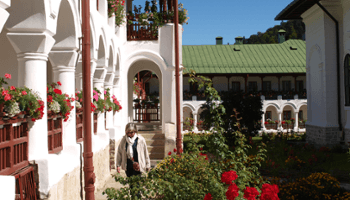
The Agapia Monastery is an Orthodox convent monastery, built in the 17th century. The church is beautifully decorated with frescoes executed in 1858 by Nicolae Grigorescu, considered the national painter of Roumanie and also the founder of modern Romanian painting. Like the entire constellation of Romanian painters of the 19th century, he studied painting at Barbizon.
The "POPA" museum in Tarpesti, is a less frequented but nevertheless very interesting tourist destination. Its collections, open to the public since 1977, include: archaeology, numismatics, ethnography, religious objects, icons, naive painting, as well as works by Neculai and Elena Popa: masks, costumes for winter performances, wood and stone sculpture.
The Painted Monasteries of Bucovine
This day is dedicated to the discovery ofBucovine.
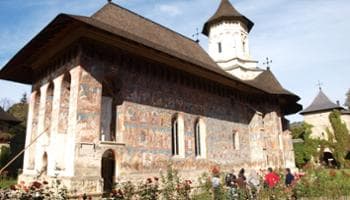
In addition to the must-see visits to the monasteries with exterior frescoes that are part of UNESCO heritage (Moldovita, Sucevita, Humor, and Voronet), you can visit the village of Marginea, renowned for its black pottery, a tradition inherited, it is said, from the ancient Dacians (the pre-Roman period), the Museum of Painted Eggs and practice your own decorative talents with a craftsman who decorates Easter eggs. The Polish village of Cacica with its red brick church and its salt mine is also worth a visit.
From Bukovina to Maramures
You will leave Bucovina heading towards Maramures - a treasure of traditions and rituals still alive, which has preserved like nowhere else in Roumanie its traditions, its art and its folk costumes.
On the way, the village of Ciocanesti will certainly catch your attention with these houses whose external walls are decorated with geometric or floral motifs; it's the perfect time to say goodbye to Bucovina!
From there, the road climbs to the Prislop Pass (over 1400m altitude) and you will be impressed by the landscape to your left: the peaks of the Eastern Carpathians and the wide pastures dotted with seasonal shepherding huts.
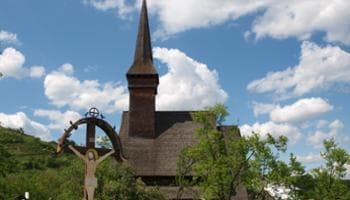
As soon as you cross the Prislop Pass, the architecture changes, you will see the wooden gates typical of Maramures and a little further on, the spire towers of wooden churches. Almost every village has a small wooden church and a new, larger church of recent construction.
Discovering the Maramures
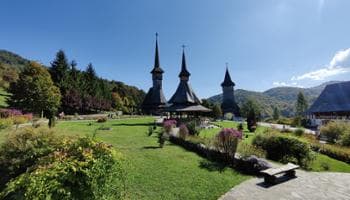
Discovery of historic Maramures whose highlights are the Barsana monastery and the Merry Cemetery of Sapanta.
The Barsana monastery is well known in Maramures as a pilgrimage site. The entire complex is built in wood and perfectly integrated into nature, a jewel of traditional architecture.
Sapanta became famous thanks to its cemetery which illustrates the village's history on sculpted and painted wooden crosses. The Merry Cemetery of Sapanta is the creation of sculptor Stan Ioan Patras, who began in 1935 to paint each cross in blue - the traditional color of hope and freedom - and to put an epitaph on the crosses - a brief poem written in the 1st person, naive, sometimes ironic. The source of inspiration is the life of the deceased, his personality and the village's perception of the person in question.
Just next to Sapanta is the new Peri wooden monastery. With its tower of 78 m in height, it is currently the tallest wooden building in Europe and perhaps in the world.
In Sighet you can visit the Memorial Museum (a museum set up in one of Romania's harshest political prisons from the 1950s) or the Village Museum (especially if you haven't visited the one in Sibiu) to see the collection of traditional houses, domestic objects and archaic installations of Maramures peasants.
The city of Cluj
On the way to Cluj, passing through the Cosau Valley, the villages of Breb, Sarbi, Budesti, is a must as it is the territory that has best preserved the architecture and traditions of Maramures.
Do not miss the old installations that still use the power of water in the village of Sarbi: "valtori", ecological washing machines, the distillery, etc.
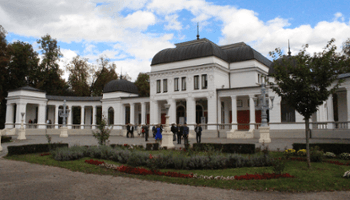
In the afternoon you will arrive in Cluj, take the opportunity to visit the old town center which stands out for the richness of its Gothic and Baroque architecture: the Roman Catholic Church of Saint-Michael, one of the oldest religious monuments in the city, the birthplace of Matei Corvin, the Banffy Castle - built in the 18th century in Baroque style which today houses the Art Museum. You can also admire the Orthodox Cathedral, the National Theatre and Opera in Baroque and Rococo style.
Northern to Southern Transylvania
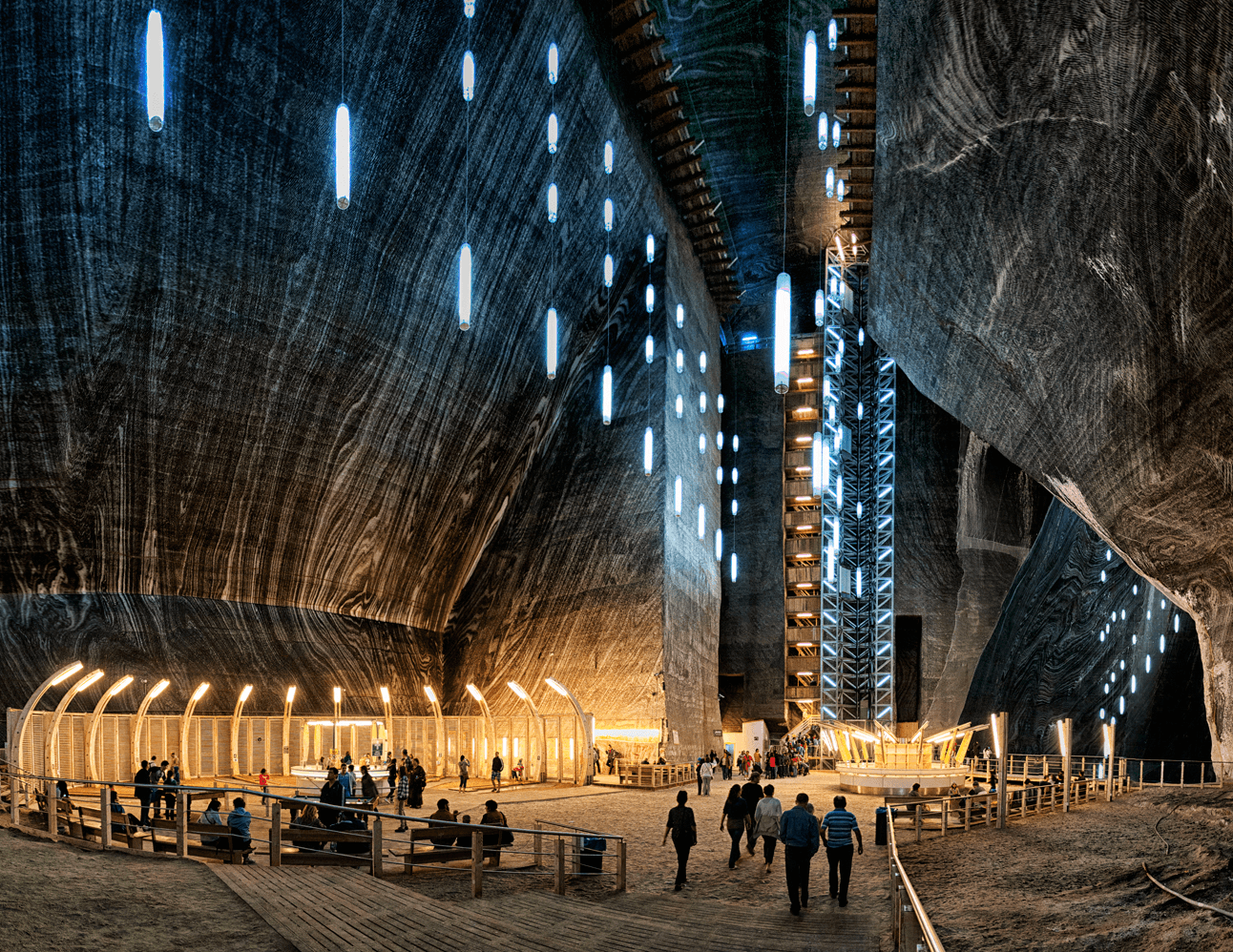
The morning will be dedicated to visiting the Turda Salt Mine. This salt mine, exploited since antiquity, leaves no one indifferent. Over the centuries it has served as a makeshift shelter, cheese aging cave, tourist attraction, therapeutic center, leisure center…currently it is an unmissable tourist site.
Then you will be in Alba Iulia to attend the ceremonial changing of the guard at the entrance of the citadel.
The Vauban-style fortress, recently restored, will enchant you and transport you to the atmosphere of the early 18th century.
The Marginimea Sibiului region (literally: The surroundings of Sibiu) represents a universe of quite exceptional charm. It comprises 18 communes, west of Sibiu. These communes are a true testimony to Romanian cultural identity in this region. Since the earliest times, the inhabitants, most of whom have been shepherds, have proven to be true masters in making clothing from wool or leather.
The city of Sibiu
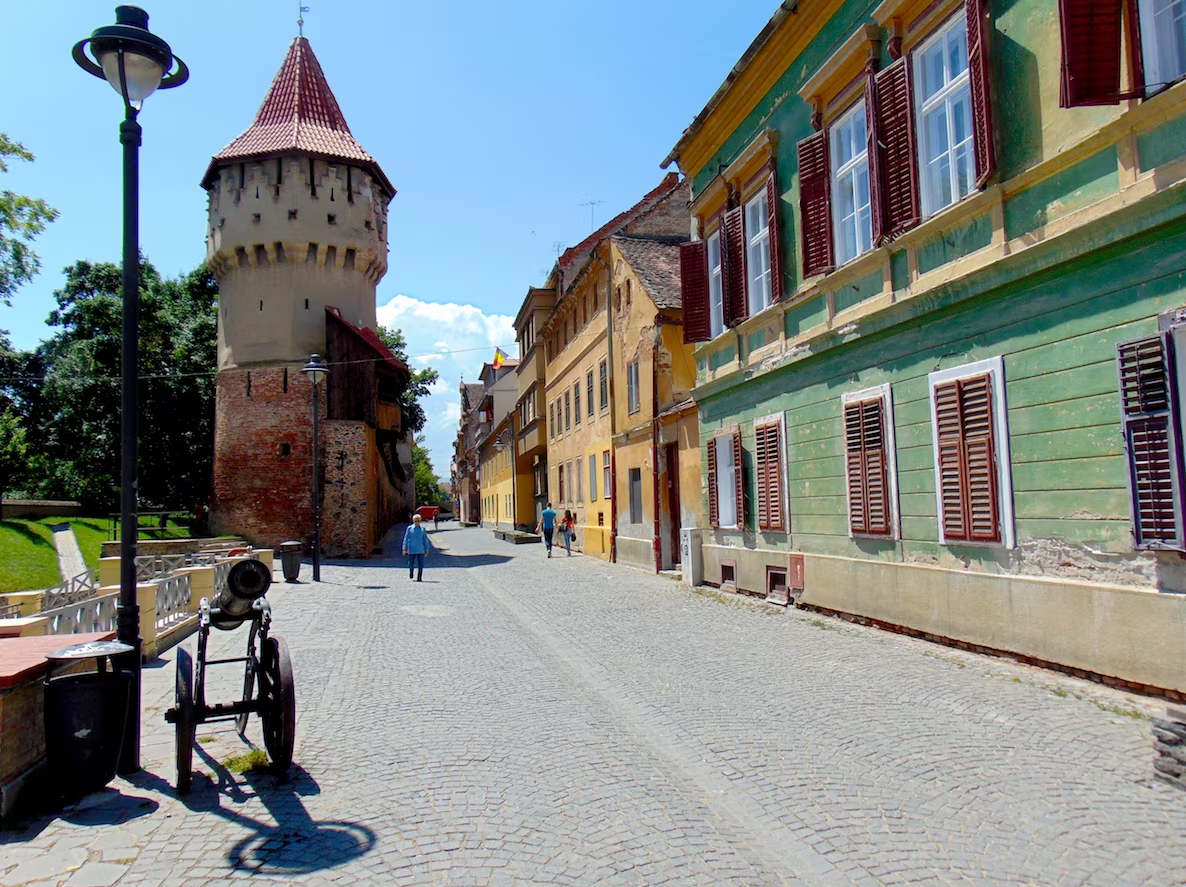
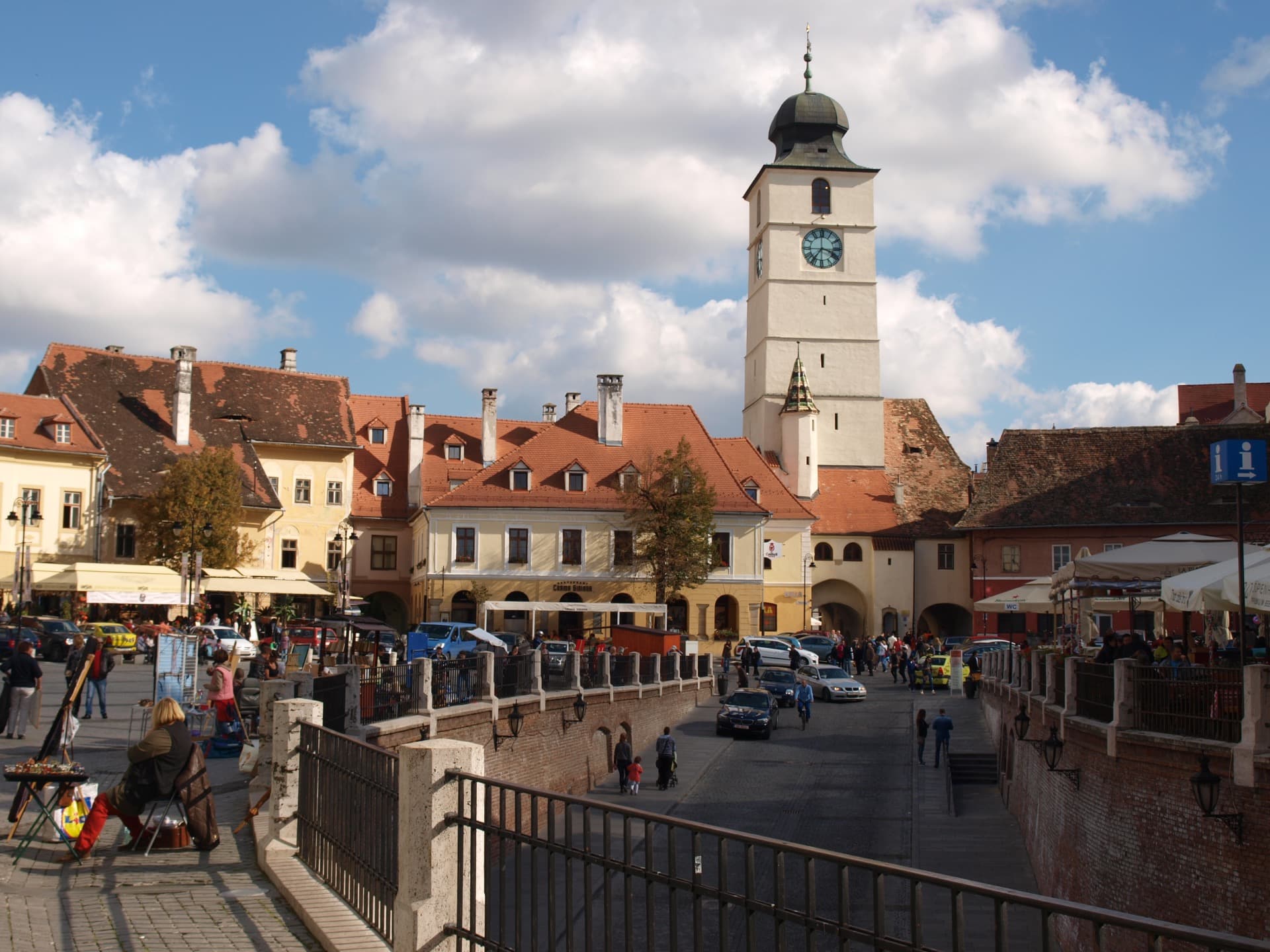
In the morning you will visit the city of Sibiu – European capital in 2007.
Sibiu was founded in the 12th century by Saxon settlers established in the region. The city still retains its medieval atmosphere.
To visit: the Great Square (Piata Mare) - the city center since the 16th century where the Council Tower stands, one of the city's symbols; the Small Square (Piata Mica) and Huet Square; the Evangelical Church - the Liars' Bridge – dating from 1859, it is the first cast iron bridge in Southern Europe. It bears this name because it is supposed to collapse as soon as a liar crosses it.
To conclude your visit to Sibiu, there is an unmissable site, the ASTRA Open-Air Ethnographic Museum – a concentration of beauty and ingenuity of the Roumanian people.
Return to Bucharest
In the morning you will take the road that runs along the Olt Valley to reach Bucharest in the afternoon/evening.
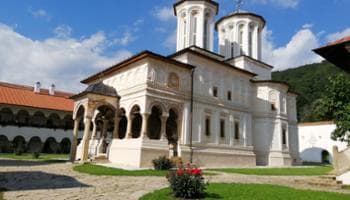
We suggest making a detour to visit the village of Horezu, renowned for its pottery and for its monastery listed as a UNESCO World Heritage site.
For the last evening of the trip we recommend dinner in the typical atmosphere of 1930s Bucharest at the famous Caru cu Bere restaurant (Beer Chariot)
Price per person
Indicative price per person, based on double room. Each trip is customized according to your preferences.
This trip can be tailored to your preferences
This itinerary provides an excellent foundation for discovery, but it can be fully customized. Our local advisors build each trip tailored to your budget, dates and preferences.
Not included
- International Transport
- Airport transfers
- Passport fees
- Repatriation and Travel Insurance
- Extra drinks and alcohols
- Phone calls
- Meals not mentioned
- Tips
Included
- Standard double room accommodation in 3* - 4* hotels or 3* guesthouses
- Breakfast
- The dinners mentioned in the program
- 5-seater rental car from Day 3 to Day 13
- Car insurance
- GPS with pre-registered accommodations and sites
- Complete travel file
- 24/7 Phone Support
Practical Information
Registration is considered firm and final after payment of a deposit of 30% of the total price and acceptance of the specific terms of sale.
The balance must be paid no later than 45 days before the departure date.
See our specific terms of sale for full details.
In the event of cancellation by the traveller, the following fees apply:
- Plus de 60 jours avant le départ : 40 % du prix total (acompte retenu)
- Entre 60 et 30 jours avant le départ : 50 % du prix total
- Moins de 30 jours avant le départ : 100 % du prix total
We strongly recommend taking out cancellation insurance. See our specific terms of sale for full details.
The information below concerns travellers who are nationals of the European Economic Area (EEA), Switzerland and Canada travelling to Romania for a tourist stay. As entry rules may change, we recommend you verify the information with the official authorities before your departure.
Passport or ID card
Nationals of the European Economic Area and Switzerland can enter Romania with a valid passport or national identity card. The document must be in good condition (no damaged, torn or altered pages).
Canadian nationals must carry a valid passport for the entire duration of the stay, preferably with validity of at least six months after the date of entry into the country.
Tourist stay without a visa
Nationals of the European Economic Area and Switzerland have no length of stay restrictions in Romania as European citizens benefiting from freedom of movement within the EU.
Canadian nationals benefit from a visa exemption for tourist stays of a maximum duration of 90 days within any 180-day period in the Schengen area, of which Romania has been part since 31 March 2024.
Authorities may request Canadian travellers to provide:
an exit ticket from the territory (return or onward flight),
proof of sufficient financial resources for the duration of the stay,
an accommodation booking for all or part of the stay.
Schengen Area
Romania joined the Schengen area on 31 March 2024 for air and maritime borders, and on 1 January 2025 for land borders. Border controls at internal borders with other Schengen countries have been removed for travellers coming from these countries.
For Canadian nationals, the stay in Romania is counted towards the overall 90 days within 180 days limit applicable to the entire Schengen area.
Travelling with children
Minors must hold their own valid travel document (passport or identity card depending on nationality) covering the duration of the stay.
In some European countries, when a minor travels without one of their parents, an authorisation to leave the territory may be required according to the regulations of the country of residence.
Other nationalities
Entry conditions may vary depending on nationality. Travellers concerned should inquire with the embassy or consulate of Romania in their country of residence.
To participate in our trips, it is strongly recommended to be insured for repatriation assistance and medical expenses abroad.
Your local agency encourages you to review the specific policy developed with our partner CHAPKA ASSURANCES and AXA ASSISTANCE.
To subscribe to insurance, learn about coverage and rates, follow the link below.
CAP EXPLORER: The complete insurance solution designed for a worry-free trip!
Choose the plan that suits you best:
Explorer'Multirisque
Explorer'Annulation
Explorer'Assistance
Explorer' Complémentaire Carte Bancaire
Specific to our trips, we strongly recommend subscribing to them.
If you choose to subscribe to one of these plans, the policy detailing all coverage and claim declaration procedures is available on the insurer's website.
Your local agency will be aware of it, but only the participant is responsible for complying with claim declaration procedures. The participant must therefore keep this policy with them throughout their trip.
Chapka — Cap Explorer
Our insurance partnerTravel with peace of mind with our partner Chapka. Cancellation, repatriation, medical expenses, baggage… All the coverage for a worry-free trip.
Travel with peace of mind — I'll handle the insuranceFrequently asked questions
To enter Romania, you must have a valid identity document (ID card or passport). No special formalities are required. The local currency is the Romanian leu. Before traveling, check the entry conditions applicable to your nationality with the Romanian consular authorities.
Go to the My Trips section to find all your projects.
You can send a message to your host directly from the Tea Lounge.
For a tailor-made quality trip, expect between €110 and €180 per day and per person, including accommodation, meals, internal transfers and activities. International flights (€150-400 return) are additional. Romania is one of the most affordable destinations in the EU.
Your documents are accessible in the Documents tab of your trip.
Absolutely. We tailor each itinerary to our travelers' profiles. For families, we prioritize relaxed paces, family-friendly accommodations, engaging and educational activities, and comfortable private transfers. Our English-speaking local guides know how to captivate children with age-appropriate anecdotes.
It's simple. You'll exchange with our local team to define your wishes, budget and dates. You'll receive a detailed itinerary proposal within 48 hours. You'll refine every detail together until it's perfect. You'll confirm and travel with peace of mind. Your local agency remains available 7 days a week throughout your trip.
In case of emergency, contact your local agency immediately.
Payment is generally made in two installments.
Our agency is part of the Nomadays network, registered in France. You benefit from APST (Association Professionnelle de Solidarité du Tourisme) coverage, which protects 100% of your funds. Secure payment, repatriation insurance included, and English-speaking assistance 24/7 on the ground throughout your stay.
Let's talk about your adventure — Transylvania
Guardian of Romanian traditions, based in Cluj-Napoca
Romania is a country where many traditions still live naturally. It's often these simple moments and unexpected encounters that touch travelers the most.
— Cornelia