Sighetu Marmatiei Memorial Museum
Sighetu Marmatiei Memorial Museum
Housed in a former political prison from the 1950s, the Sighet Memorial traces communist repression in Roumanie, cell by cell.
The Memorial Museum of the Victims of Communism and Resistance in Sighetu Marmatiei occupies a former political prison located in the far north of Roumanie, just kilometres from the Ukrainian border. Between 1950 and 1955, this austere building served the physical and moral elimination of Roumanian political, religious and intellectual elites. Transformed into a place of memory from the 1990s onwards under the impetus of Ana Blandiana and the Civic Academy, it now offers a museum tour cell by cell, each devoted to a chapter of Roumanie's political and social life after World War II.
Why visit the Sighet Memorial
Sighetu Marmatiei is not an obvious stop on Roumanian tourism routes: the town lies in Maramureș, an isolated rural region in the north of the country. Yet the Memorial is one of Europe's rare museums entirely dedicated to the memory of communism's victims. For its originality, it has received the Council of Europe Prize, a distinction highlighting the historical rigour of the project and its role in transmitting a still-recent history.
The visit will appeal to travellers interested in 20th-century history, the Cold War and totalitarian regimes in Eastern Europe. It enriches a cultural stay in Roumanie, where the communist past remains a vivid subject.
History of Sighet Prison
Sighet Prison was built at the end of the 19th century, when the region belonged to the Austro-Hungarian Empire. It initially served as a common law prison. From August 1948 onwards, the Roumanian communist regime turned it into a detention centre for political prisoners. In May 1950, it became a special prison designed for the elimination of Roumanian elites: former ministers, parliamentarians, senior officials, generals, Greek-Catholic bishops, academics.
Nearly two hundred personalities were interned there under extreme conditions: isolation, deprivation, prohibition of all outside contact. More than fifty died and were buried anonymously in the "pauper's cemetery" on the outskirts of town. The prison ceased functioning as a political detention facility in 1955, then continued to hold common law prisoners until 1977.
Birth of the Memorial
The project to transform the abandoned building into a place of memory was driven by poet Ana Blandiana and her husband Romulus Rusan, through the Civic Academy foundation established in the early 1990s. The Council of Europe supported the initiative from its inception. The exhibitions presented in the museum stem from research conducted by the foundation since 1990, which has amassed a substantial collection of oral and documentary archives on communist repression in Roumanie.
What to see in the museum
The tour follows the very structure of the former prison. Each cell of the old prison presents a different chapter of Roumanian political and social life after World War II, spread across two levels and former administrative areas. You will find notably:
- Cells devoted to the rigged elections of 1946 and the abolition of the monarchy in 1947
- The room dedicated to forced collectivisation of the countryside
- Spaces dedicated to the destruction of political parties, Greek-Catholic Churches and the free press
- Cells on the Roumanian concentration camp system (Danube-Black Sea canal, Pitești, Aiud)
- The portrait room, where photographs of prisoners who died in Sighet are displayed
- The "pauper's cemetery" and "Space for Prayer and Meditation" designed outdoors
Allow two to three hours to explore the full tour. Explanations are in Roumanian and English; an audio guide or visit with an English-speaking guide greatly facilitates understanding the context.
Practical information
The Memorial is open year-round, with extended hours in summer and more limited ones in winter. Admission remains moderate, with reductions for students and groups. Check opening hours on the museum's official website before your visit, as some time slots may vary on public holidays.
The visit is emotionally demanding: plan a rest period after the tour. Photography is generally permitted without flash.
How to reach Sighetu Marmatiei
Sighetu Marmatiei is located in northern Maramureș, about 130 km from Baia Mare and 250 km from Cluj-Napoca. The town is served by a train line from Bucharest and Cluj, but the journey is long. Driving is the most practical option: from Cluj, allow four to five hours by car through the Tisa valley. The museum is in the town centre, near the main square.
What to see nearby
The Maramureș region boasts exceptional rural heritage. Several stops naturally complement a visit to the Memorial:
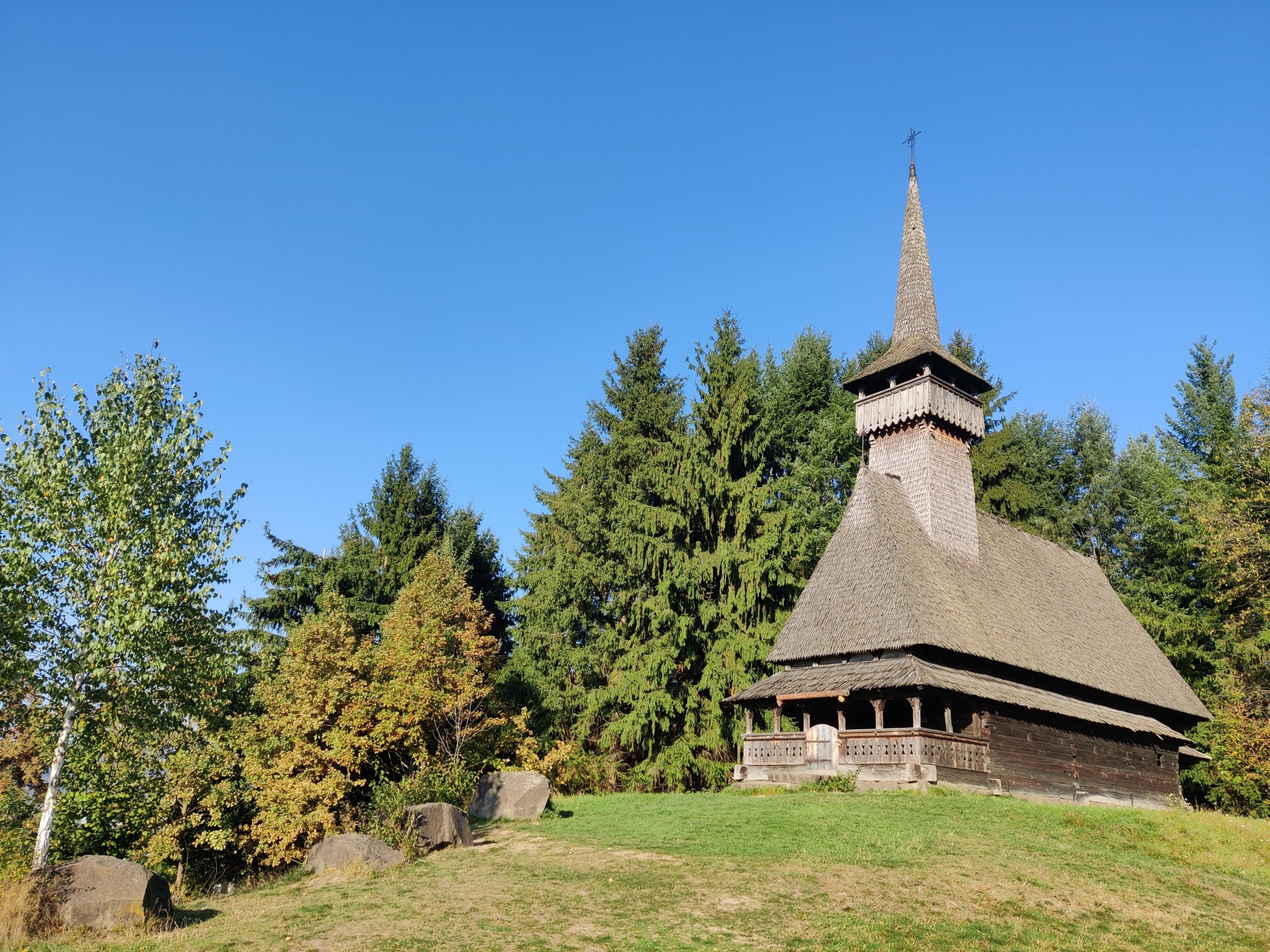
- The wooden churches of Ieud, among the region's oldest and UNESCO-listed
- The Museum of the Roumanian Peasant Woman in Dragomirești, dedicated to traditional ways of life
- The geological reserve "Creasta Cocoșului", for a day's hiking in the Gutâi Mountains
- The ASTRA Ethnographic Museum in Sibiu, to combine on a broader itinerary
Planning your trip
The Sighet Memorial naturally fits into a cultural and rural circuit through Maramureș and Transylvania. To build a bespoke itinerary blending history, traditional villages and Carpathian landscapes, explore our Roumanie travel suggestions.
Nearby
Interested in this visit?
We can include it in your personalised itinerary.