Moldovita Monastery
Moldovita Monastery
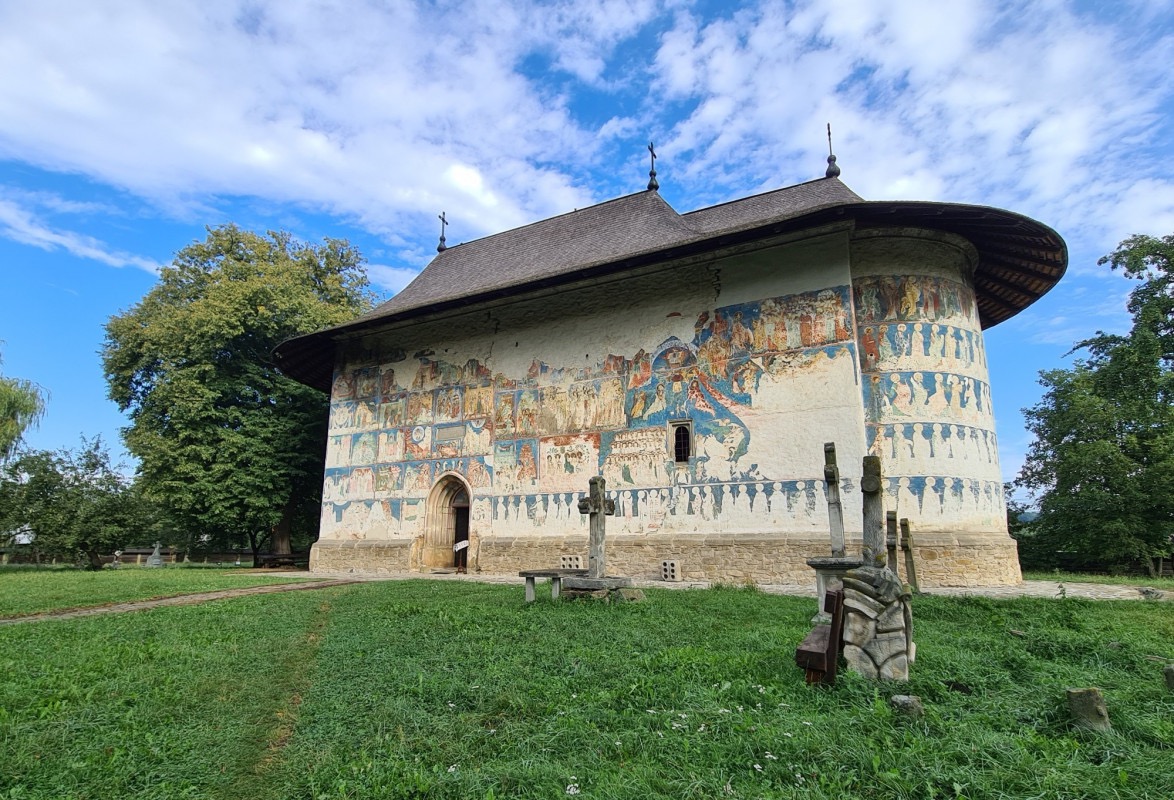
Built in 1532 by voivode Petru Rareș and adorned with frescoes completed in 1537, Moldovita Monastery stands as one of the masterpieces of Moldavian art and a UNESCO World Heritage site.
Moldovita Monastery ranks among the most celebrated painted structures in Bucovina, in northern Roumanie. Founded in the 16th century by voivode Petru Rareș, it preserves an exceptional exterior iconographic programme completed in 1537 and has been inscribed since 1993 on the UNESCO World Heritage List as part of the "Painted Churches of Moldavia".
Why visit Moldovita Monastery
Three elements justify the detour:
- The exterior frescoes from 1537, in a remarkable state of preservation thanks to the roof overhang and the orientation of the walls.
- The Siege of Constantinople, a monumental fresco covering the entire south wall of the church and constituting one of the masterpieces of Moldavian art.
- The rural setting of the Moldovita Valley, with its Bucovinian villages, wooden houses and forested landscapes.
Unlike the more visited Voroneț, Moldovita remains a relatively peaceful site where one can take time to observe the iconographic details.
History: from landslide to UNESCO
The site has a turbulent past. A first stone church was erected here in the early 15th century, but it was swept away by a landslide; its ruins are still visible near the current enclosure. In 1532, voivode Petru Rareș, son of Stephen the Great, had a new church built on this location, dedicated to the Annunciation (Buna Vestire).
Five years later, in 1537, the interior and exterior paintings were completed. The building is representative of 16th-century Moldavian art, both in its architecture—trilobed plan, octagonal tower, robust buttresses—and in its painted decoration. The monastery was surrounded by a fortified enclosure to resist the Ottoman and Tatar incursions that regularly threatened the Moldavian principality.
After a long period of decline in the 18th century, the monastery regained its monastic life with a female community in the 20th century. Today, a small community of nuns maintains it and welcomes visitors.
What to see on site
The exterior frescoes
The south wall displays the most celebrated composition: the Siege of Constantinople, which transposes the Byzantine episode of 626 into a 16th-century political reading, where Ottoman Turks replace the Persian besiegers. It is a manifesto against the Ottomans commissioned by Petru Rareș himself.
The apse presents the Tree of Jesse, a symbolic genealogy of Christ, as well as a Celestial Hierarchy in successive registers. The dominant tones are ochre yellow and deep blue, the chromatic signature of Moldovita (to be distinguished from the "blue of Voroneț").
The church interior
The narthex, the pronaos, the tomb chamber and the naos follow the classical Moldavian layout. The interior frescoes illustrate the liturgical calendar, the Passion and the Last Judgment. There is also a votive portrait of Petru Rareș offering the church to Christ.
The monastic museum
Installed in the Casa Domneasca (princely house) within the enclosure, the small museum displays manuscripts, liturgical embroideries and the sculpted wooden throne of Petru Rareș, a rare piece of Moldavian princely furniture.
The fortified enclosure
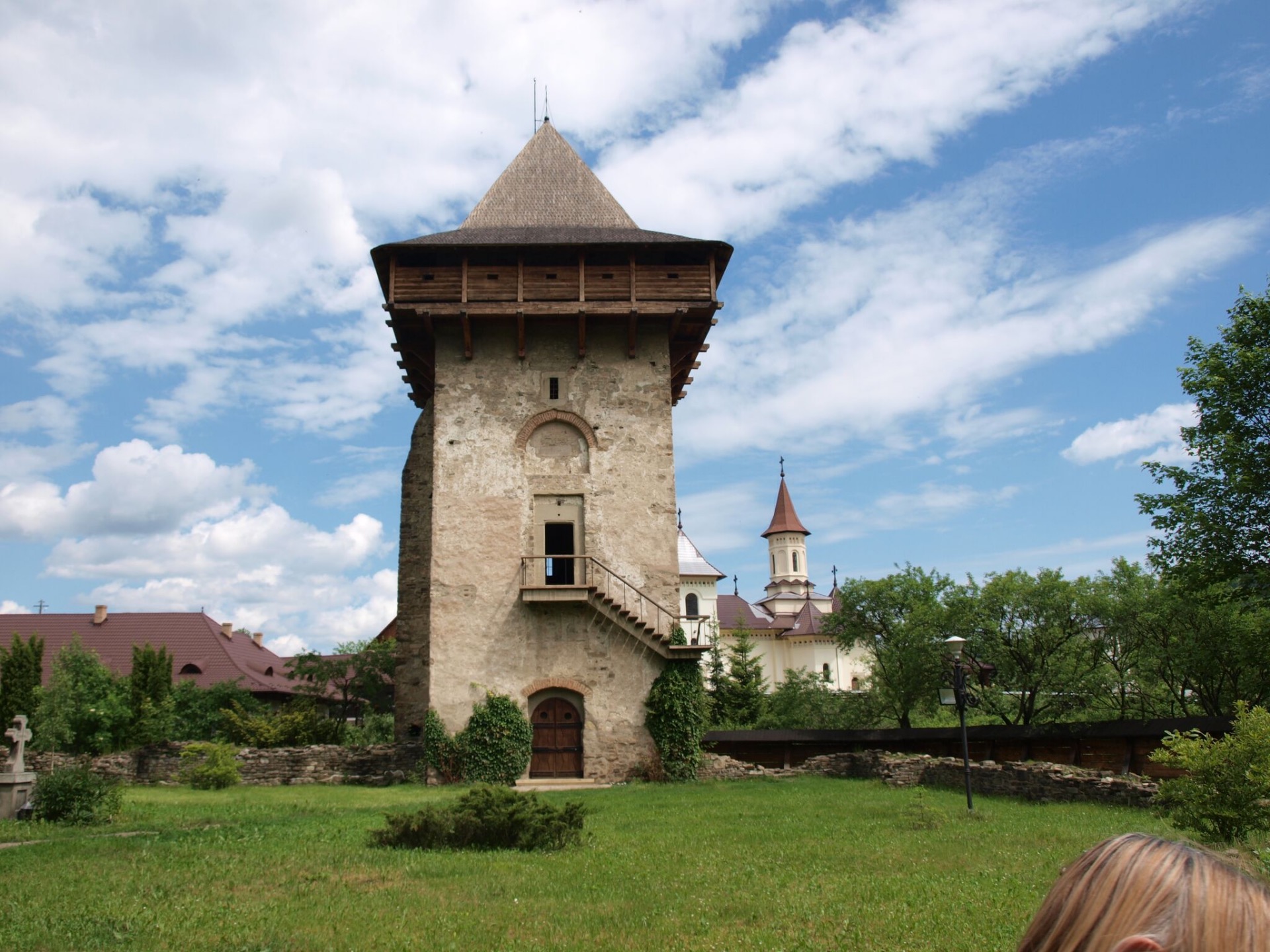
The enclosure walls, corner towers and bell tower above the gateway remind visitors of the monastery's defensive purpose. A walk around the enclosure allows one to appreciate the architectural ensemble in its setting.
Practical information
- Duration of visit: allow 1 to 1.5 hours for the church, museum and a tour of the frescoes.
- Admission fee: modest entrance fee, with possible additional charge for photography.
- Dress code: shoulders and legs must be covered; wraps are sometimes provided at the entrance.
- Photography: permitted outside, often restricted inside the church.
- Guided tour: the nuns occasionally offer explanations in French, English or German; the reputation of English-speaking Sister Tatiana is well known locally.
When to visit
The best period runs from May to October, when the light enhances the exterior frescoes and the road from Suceava is clear. July and August concentrate groups during midday: prefer an arrival early in the morning or late in the afternoon.
In winter, the monastery remains open but access to neighbouring villages may be slowed by snow. The period of major Orthodox holidays (Easter, Annunciation on March 25) offers a particular liturgical setting, at the cost of increased numbers.
How to get there
Moldovita is located in Suceava county, in Bucovina, approximately 80 km west of Suceava and 25 km from Vatra Dornei.
- By car: from Suceava, take road DN17 then DN17A towards Vama, then DJ176 to Vatra Moldoviței. Journey time: 1.5 to 2 hours.
- By train: the Moldovita forest railway is connected to Vama, which is itself served from Suceava. Picturesque but slow.
- As part of a circuit: most visitors combine Moldovita with Voroneț, Sucevita and Humor on a tour of the painted monasteries over one to two days.
To combine in the region
Moldovita fits into a wider cultural itinerary through northern Roumanie. You can extend your visit with:
- the wooden churches of Ieud, in neighbouring Maramureș, another UNESCO gem of Romanian religious architecture;
- the Museum of the Romanian Peasant at Dragomirești, to understand traditional rural life;
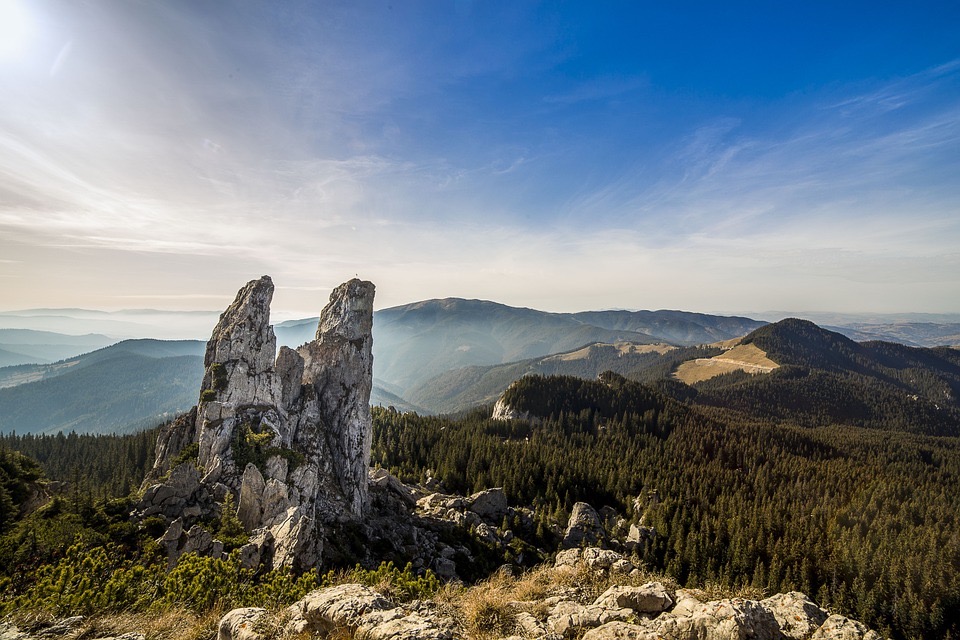
- the Creasta Cocoșului geological reserve, for a nature stop in the Eastern Carpathians;
- the ASTRA Ethnographic Museum in Sibiu, further south, which complements understanding of Romanian heritage.
Planning your trip
Moldovita Monastery fits naturally into a Bucovina circuit or a broader tour of the Carpathians. To build a coherent itinerary including the painted monasteries, Maramureș and Transylvania, consult our journeys in Roumanie.
Nearby
Interested in this visit?
We can include it in your personalised itinerary.