Prejmer Fortified Church
Prejmer Fortified Church
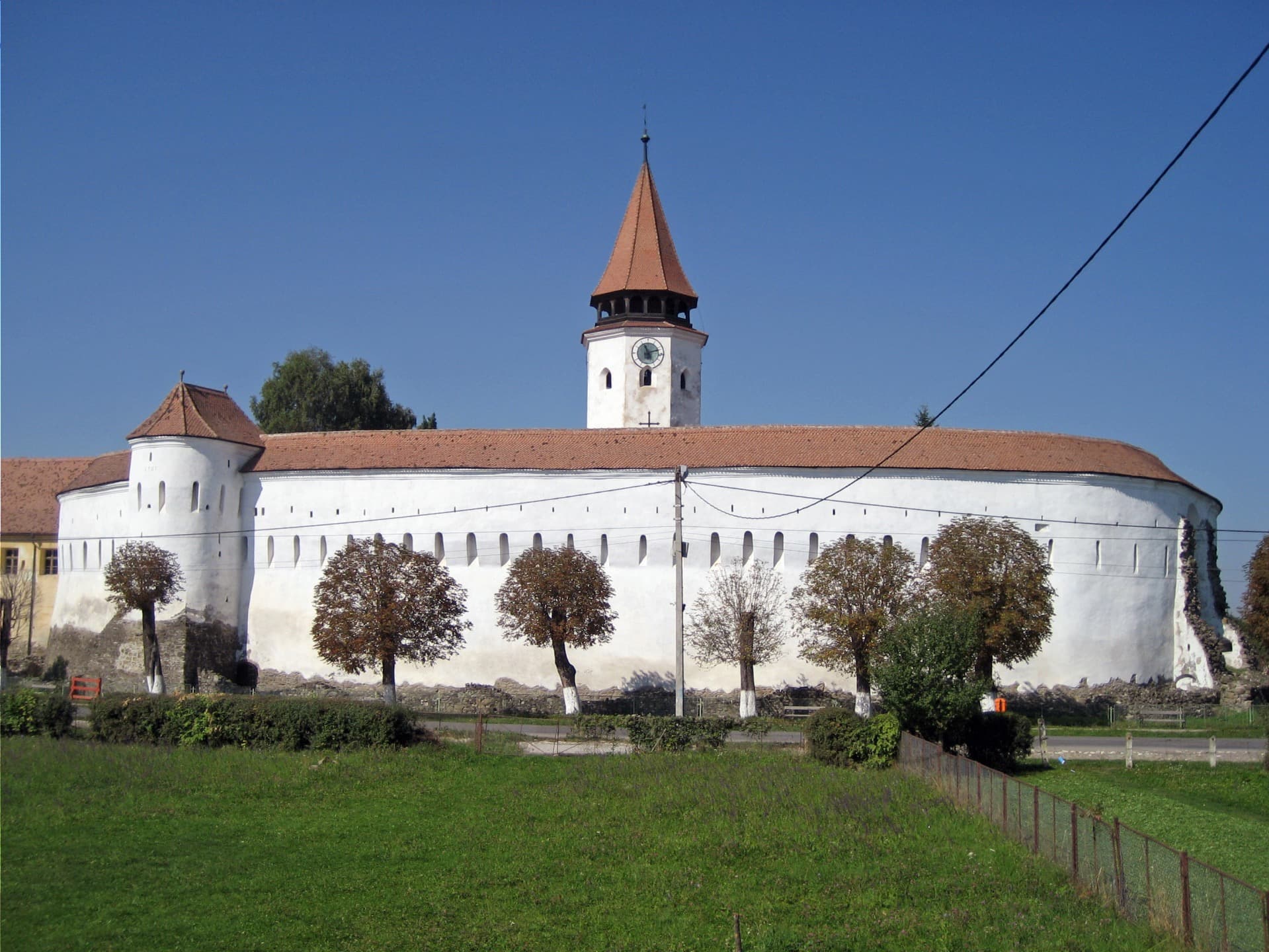
Located 18 km from Brașov, Prejmer fortified church houses a 13th-century fortified church classified as UNESCO World Heritage, among the best preserved in Eastern Europe.
About twenty kilometres northeast of Brașov, in Transylvania, Prejmer fortified church protects one of the best-preserved fortified churches in Eastern Europe. Inscribed on the UNESCO World Heritage List since 1999 as part of the Saxon villages of Transylvania, it bears witness to a unique collective defensive organization, where each family in the village had its own space within the walls.
Why visit Prejmer fortified church
The site stands out for three rare characteristics in Central Europe. A 13th-century Gothic church with a Greek cross plan, surrounded by a ring of walls among the thickest in the region, and an internal organization where each Saxon family owned its own storage cell. This ensemble forms a coherent testament to Saxon communal life in the face of Ottoman and Tatar invasions.
- UNESCO-listed site since 1999
- Fortified church among the best preserved in Eastern Europe
- Family cells still visible within the enclosure
- Short visit (1 to 1.5 hours) compatible with a day trip from Brașov
History of the fortified church
The foundation of the church dates back to the early 13th century, when the Knights of the Teutonic Order colonized southeastern Transylvania at the request of the King of Hungary, Andrew II. After the expulsion of the Teutonic Order in 1225, Saxon settlers continued and completed the building, then gradually fortified it between the 14th and 16th centuries in response to Ottoman and Tatar raids.
The architecture of the church, with its inscribed Greek cross, draws inspiration from the primitive Gothic of the Rhine valley and Cistercian models, with an influence sometimes linked to plans of churches in Jerusalem brought back by the Crusaders. The painted altarpiece dating from the mid-15th century is among the oldest preserved in Transylvania.
Over the centuries, the village was besieged dozens of times. The fortified church never fell by force: its resistance owed as much to the thickness of its walls as to the logistical organization designed to withstand weeks-long sieges.
What to see on site
The fortified church
At the center of the enclosure, the church retains its original Gothic volume. Inside, the polyptych altarpiece, dated around 1450, features scenes of the Passion on its painted panels. The nave also contains carved benches and several pieces of Saxon-era furniture.
The thick defensive wall
The perimeter wall reaches 4 to 5 meters thick and 12 meters high in places. It is doubled by a second, lower enclosure, the zwinger, which formed a preliminary firing zone. Corner towers and a system of machicolations completed the defensive arrangement.
The family cells
The most singular feature of the site remains the ring of cells built against the inner wall on four levels connected by wooden passageways. Each family in the village owned their own cellar, passed down by inheritance, where permanent reserves of food and drink were stored. Part of these spaces is now open to the public and allows visitors to understand the food autonomy possible during prolonged sieges.
The school and siege life
A school operated inside the fortification so that daily life could continue during attacks. This organization, rare on such a scale, illustrates how long a siege could last and the community's determination to maintain children's education even in times of retreat.
Practical information
- Duration of visit: allow 1 to 1.5 hours to tour the site
- Recommended period: April to October, when the wooden passageways and cells are accessible in good conditions
- Admission: moderate entrance fee, possible additional charge for photography
- Accessibility: narrow staircases and wooden passageways, wear flat shoes
- Hours: open during daytime, closed Sunday morning for services
How to get there
Prejmer is located about 18 km northeast of Brașov, on the road leading to Sfântu Gheorghe.
- By car: 25 to 30 minutes from Brașov city center via the DN10, parking available nearby
- By train: Prejmer station is on the Brașov–Întorsura Buzăului line, approximately 20 minutes travel time, then 10 minutes walk
- By bus: regular connections from Brașov bus station
Nearby attractions
The region offers a range of complementary sites to extend your discovery of Romanian heritage.
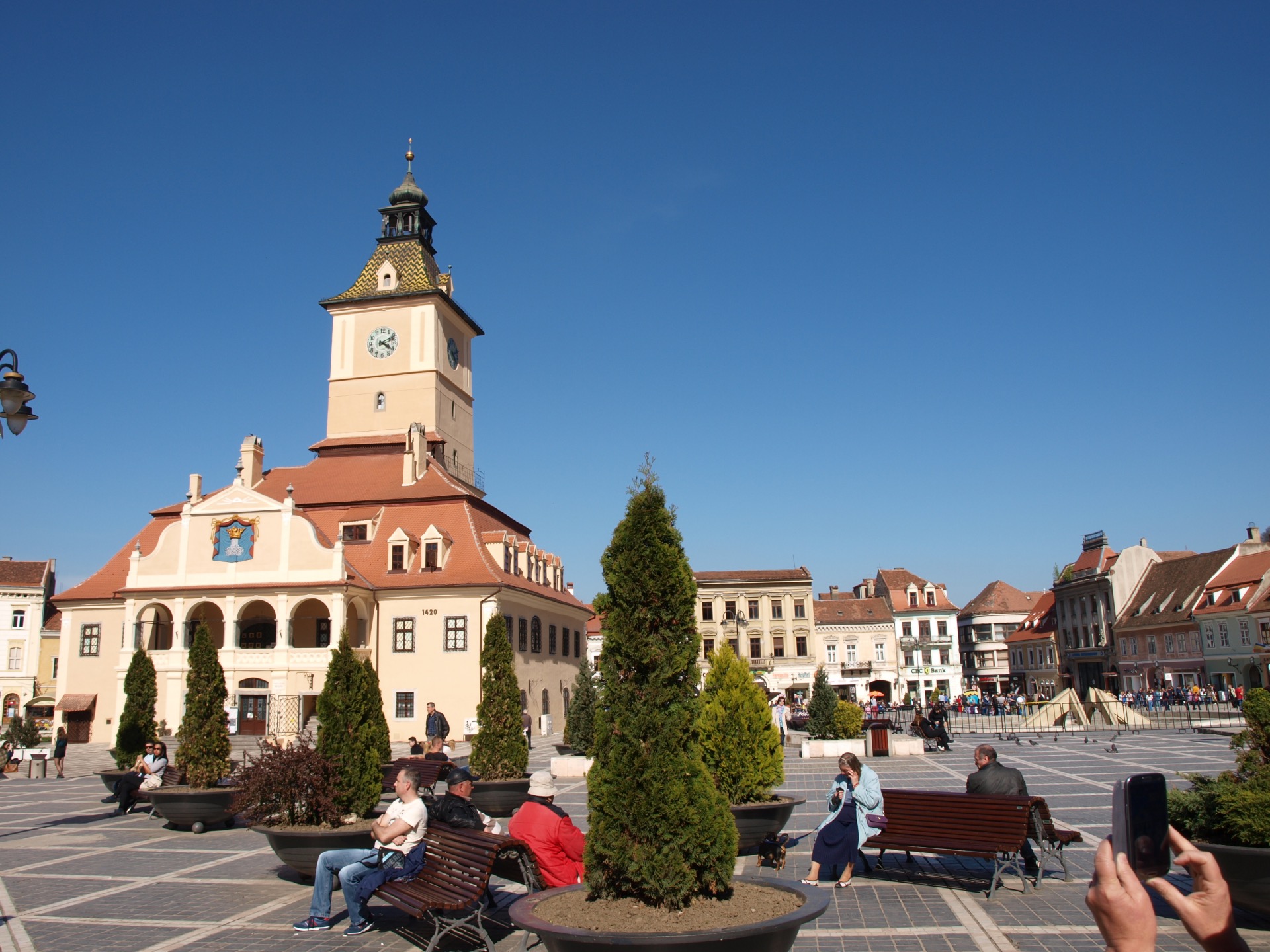
- Brașov, medieval Saxon city, ideal base for exploring the Carpathians
- The Transfăgărășan road, accessible from Brașov, crosses the southern Carpathians
- The ASTRA Ethnographic Museum in Sibiu, 2.5 hours away, complements your understanding of Transylvanian rural heritage
- Further north, the wooden churches of Ieud in Maramureș, also UNESCO-listed
Frequently asked questions
Frequently asked questions
Yes, it has been inscribed on the World Heritage List since 1999 as part of the "Villages with Fortified Churches in Transylvania" property, which groups together seven Saxon localities.
One to one and a half hours is enough to visit the church, walk the passageways, and observe the family cells.
Part of the cells is open to the public and allows you to understand how each family stored its reserves in its own space, passed down by inheritance.
April to October offers optimal visiting conditions. In winter, access to the wooden passageways may be restricted for safety reasons.
Yes, the proximity (18 km) allows for a half-day excursion from Brașov, by car, train, or bus.
Plan your trip to Romania
Prejmer fortified church fits naturally into an itinerary in Transylvania centered on Saxon villages and the Carpathians. To build a tailor-made journey combining UNESCO heritage, hiking, and medieval cities, explore our Romania travel suggestions.
Interested in this visit?
We can include it in your personalised itinerary.