Sighet Village Museum
Sighet Village Museum
On Dobăieș hill in Sighetul Marmației, this open-air museum brings together houses, churches and wooden buildings representative of Maramureş heritage.
The Sighet Village Museum, or Muzeul Satului Maramureșean, showcases a representative sample of vernacular architecture from Maramureş in an open-air setting. Situated on Dobăieș hill, on the outskirts of Sighetul Marmației, it groups together around forty wooden structures — peasant houses, barns, mills, carved gates and churches — relocated from villages across the region to preserve testimony of a rural way of life that endured into the twentieth century.
Why visit the Sighet Village Museum
This site offers direct insight into the material culture of Maramureş, one of Europe's regions where wooden architecture survived longest. In a single visit, you traverse the historical sub-regions of Mara, Iza, Cosău and Vișeu, each represented by authentic buildings reassembled with meticulous accuracy.
- An ethnographic collection in situ, complementing Romania's major open-air museums.
- Wooden churches with characteristic spires, testament to craftsmanship inscribed as UNESCO World Heritage in the region.
- An open landscape setting overlooking Maramureş hills, ideal for an unhurried visit.
- A natural complement to discovering the living villages nearby, where these traditions continue today.
Museum history
This is a regional museum whose area of representation is the historic province of Maramureş. Its creation reflects the Romanian museographic movement of the 1970s–1980s, which saw the emergence of several open-air museums designed to preserve rural habitats against the accelerated modernization of the countryside.
The buildings presented are not reconstructions: they were dismantled piece by piece in their original villages, transported and then reassembled on Dobăieș hill. This method, known as architectural transfer, guarantees the authenticity of materials, mortise-and-tenon assemblies and carved ornamentation. The collection has grown progressively and continues to incorporate new pieces when threatened structures are identified in the region.
What you will see on site
Peasant houses
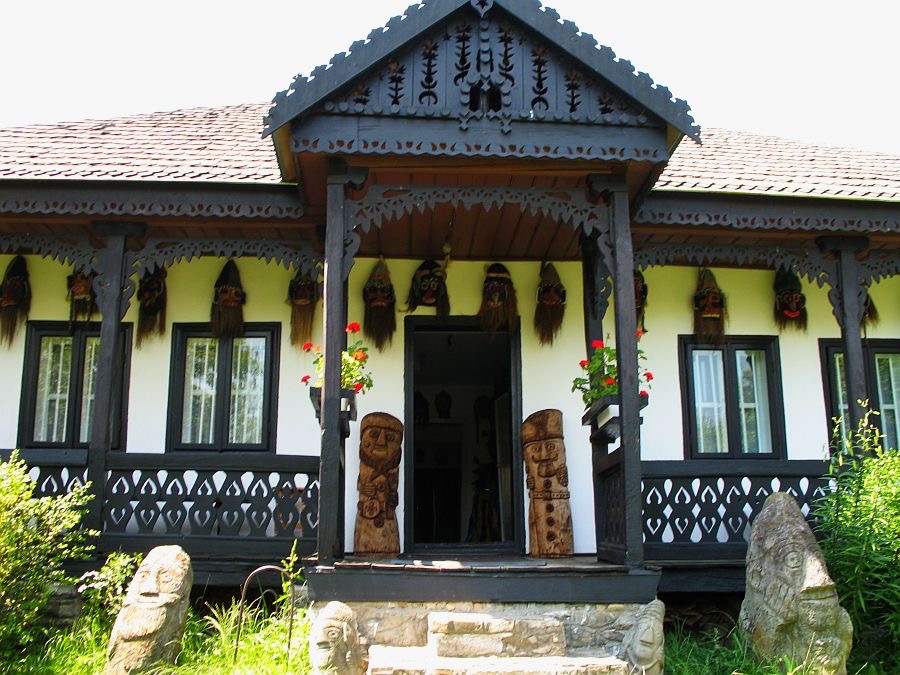
Dwellings built from oak or fir logs, covered with shingles, illustrate the evolution of Maramureş houses between the eighteenth and early twentieth centuries. Interiors are furnished: ceramic stoves, looms, embroidered textiles, wooden vessels.
Monumental gates
An emblematic element of the region, the carved porți maramureșene bear solar motifs, twisted ropes and trees of life. Their height and ornamental richness once signaled the family's status.
Wooden churches
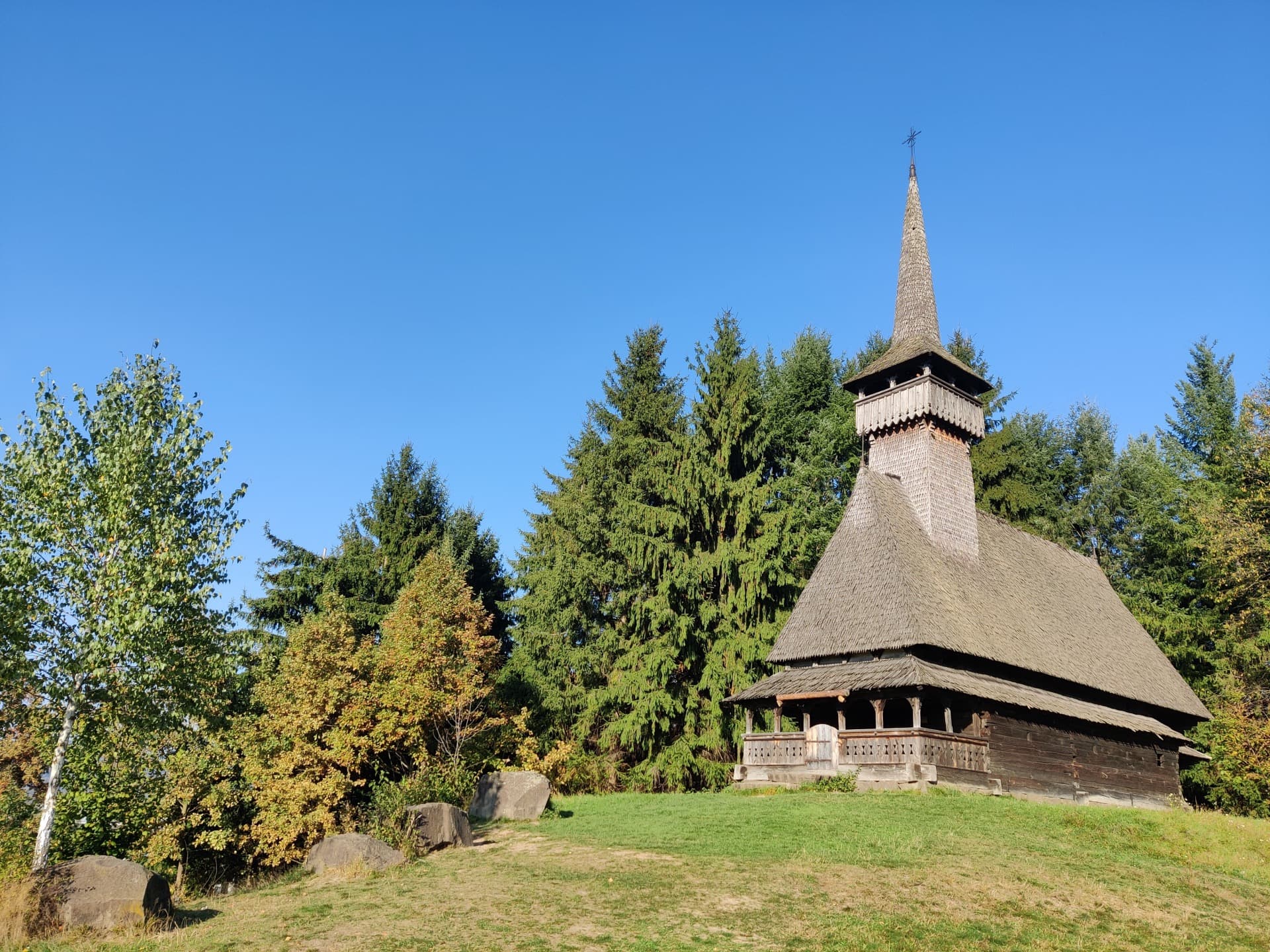
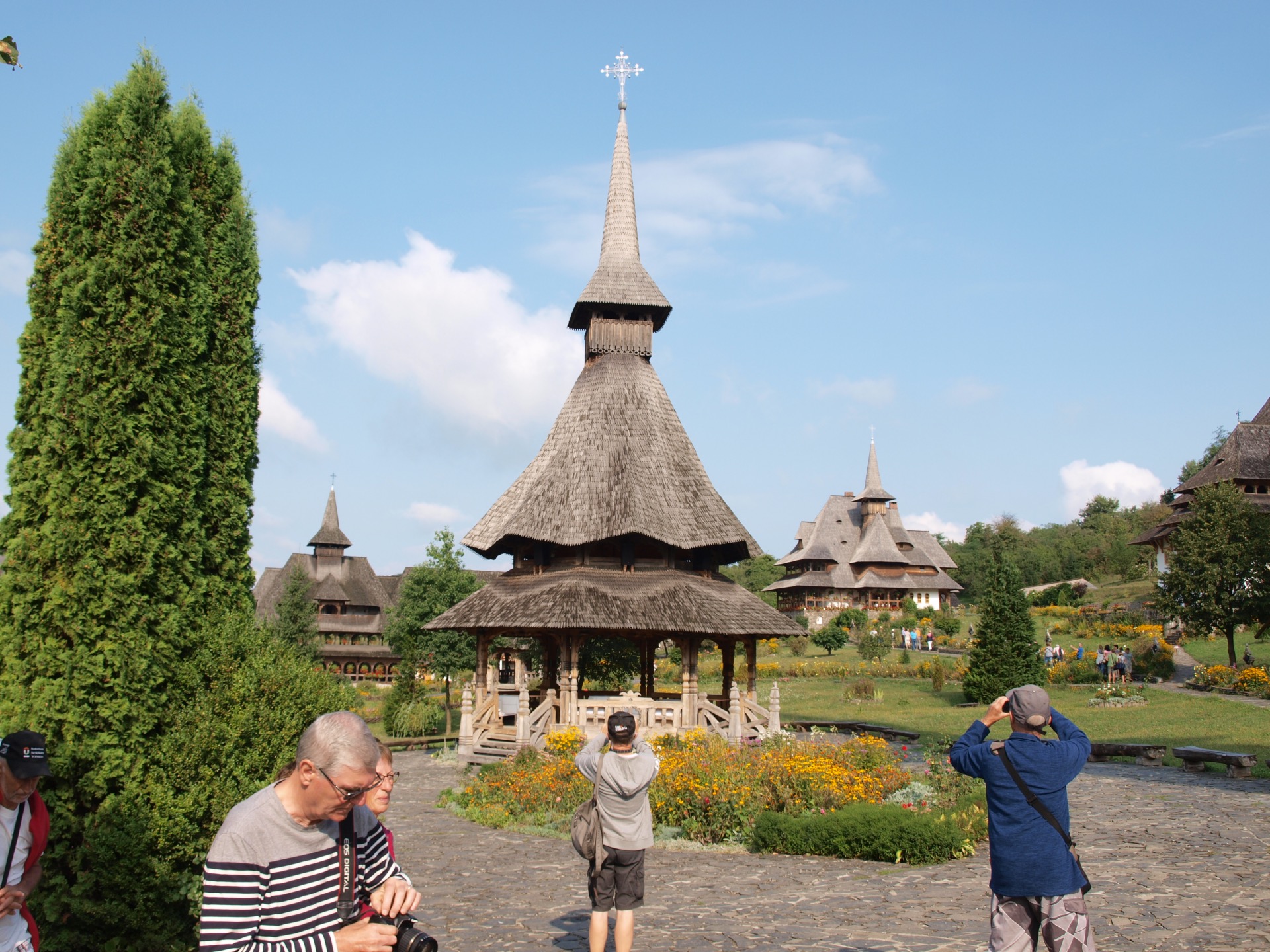
Several Orthodox churches have been reassembled in the museum, complete with narrow spires and double roofs. They are related to those still in use, classified as UNESCO World Heritage in neighboring villages.
Technical buildings
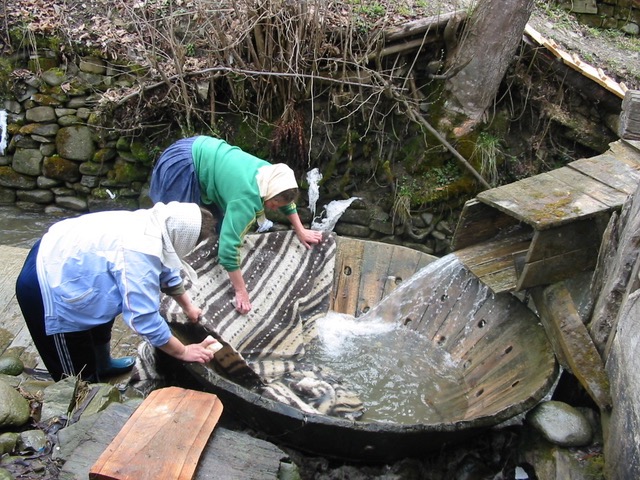
Water mills, wool fulling stations (vâltori), forges and wine presses complete the ensemble and recall the economic self-sufficiency of mountain villages.
Practical information
- Location: Dobăieș hill, on the north-eastern edge of Sighetul Marmației.
- Duration: allow 1.5 to 2.5 hours depending on your interest in architecture and interiors.
- Admission: moderate entrance fee, possible supplement for photography.
- Accessibility: open-air site with sloping paths and uneven terrain; closed shoes recommended.
- Guided tours: available in Romanian, sometimes in English; arrange in advance for English-speaking guides.
When to visit
The museum is open year-round, though the experience varies considerably by season. From May to September, vegetation enhances the buildings and paths are easily walkable. April and October offer soft light and quieter crowds. In winter, snow lends the site a distinctive atmosphere, but some interiors may be closed and walking becomes more demanding.
Summer weekends sometimes coincide with craft demonstrations or traditional festivals; check locally before planning your visit.
How to get there
Sighetul Marmației is in northern Romania, near the Ukrainian border. The town is accessible by train from Cluj-Napoca or Baia Mare; from the town center, the museum can be reached by taxi or on foot in about twenty minutes uphill. By car, parking is available at the site entrance. If exploring Maramureş by road, the museum makes a logical stop before or after the villages in the Iza valley.
Nearby attractions to combine
Maramureş lends itself to a multi-day itinerary centered on peasant traditions and wooden architecture.
- The wooden churches of Ieud, among the oldest in the region.
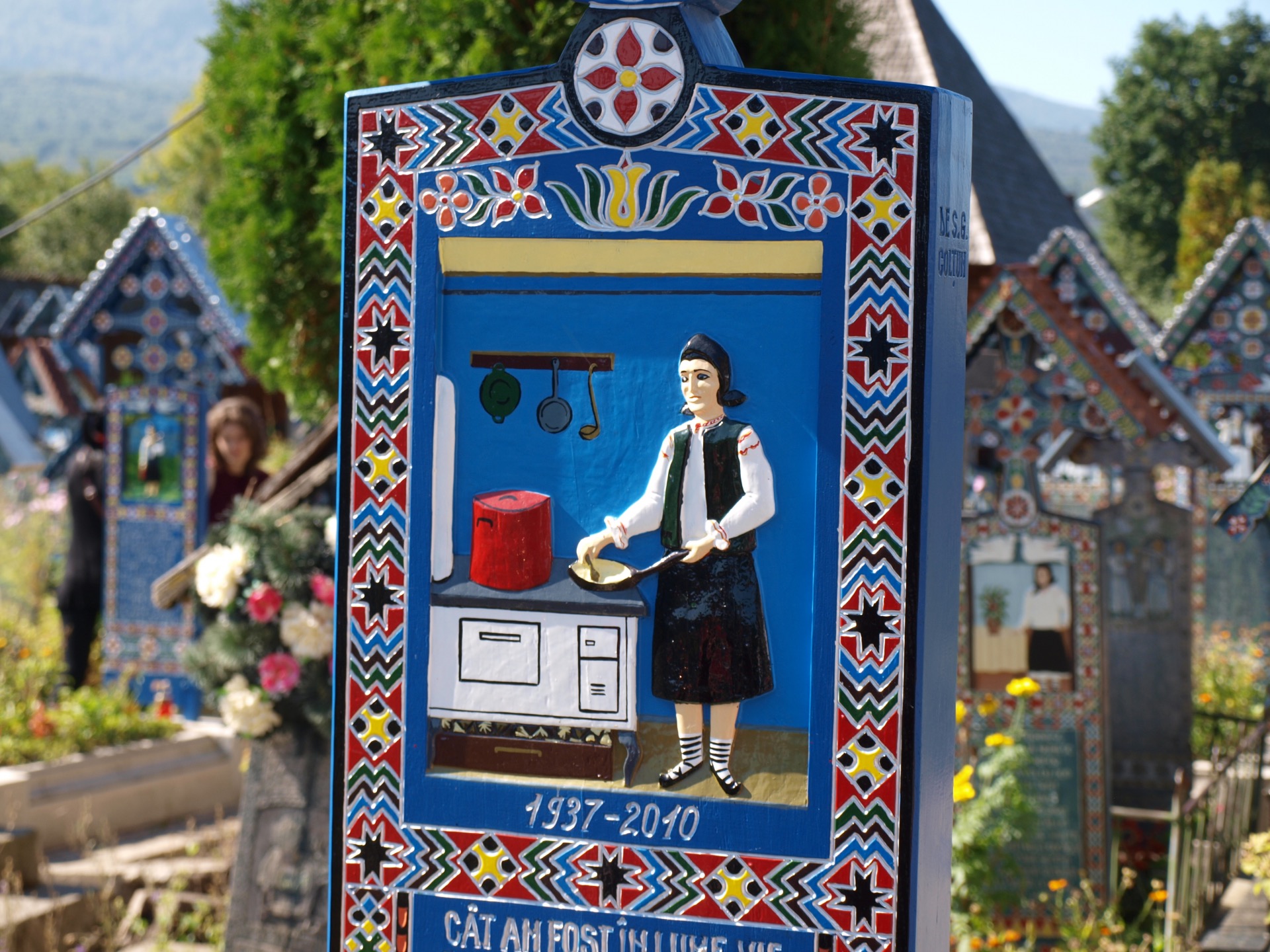
- The Museum of the Romanian Peasant Woman in Dragomirești, devoted to costume and domestic life.
- The « Creasta Cocoșului » geological reserve, for hiking in the Gutâi Mountains.
- The ASTRA Ethnographic Museum in Sibiu, for a national perspective.
Include Sighet in your trip
The Village Museum fits naturally into an itinerary focused on Maramureş, alongside villages, heritage churches and the landscapes of the northern Carpathians. To build a custom itinerary, consult our Romania travel suggestions.
Nearby
Interested in this visit?
We can include it in your personalised itinerary.