The "POPA" Museum in Tarpesti
The "POPA" Museum in Tarpesti
In the heart of Neamț County, the Popa Museum in Tarpesti brings together ethnographic collections, ritual masks and sculptures by the Popa family across 12 rooms and a garden.
In the village of Tarpesti, in the heart of Neamț County in Romanian Moldavia, the Popa Museum houses several decades of heritage collection and artistic creation. Founded by Neculai Popa, a wood sculptor and figure of local folk art, this private museum unfolds its 12 exhibition rooms and sculpture garden on the margins of classical circuits through northern Roumanie.
Why visit the Popa Museum
The venue combines two rarely unified identities: ethnographic museum and artist's workshop. You will find both collections of traditional objects patiently gathered since the 1950s and the personal work of the Popa couple, whose ritual masks and winter spectacle costumes perpetuate living heritage. Tarpesti remains a rural village, which gives the visit an intimate quality, far from the crowds of major museums in Bucharest or Sibiu.
- An independent private museum, open to the public since 1977
- 12 exhibition rooms covering six major themes
- A garden populated by monumental sculptures in wood and stone
- A rare testament to the ritual masks of Moldavian winter festivals
History of the museum and the Popa family
Neculai Popa, a self-taught sculptor born in the region, devoted much of his life to collecting objects representative of Moldavian peasant culture: archaeological pieces, ancient coins, tools, textiles, icons. This private collection gradually expanded until its official opening to the public in 1977, making it one of the oldest private ethnographic museums in Roumanie.
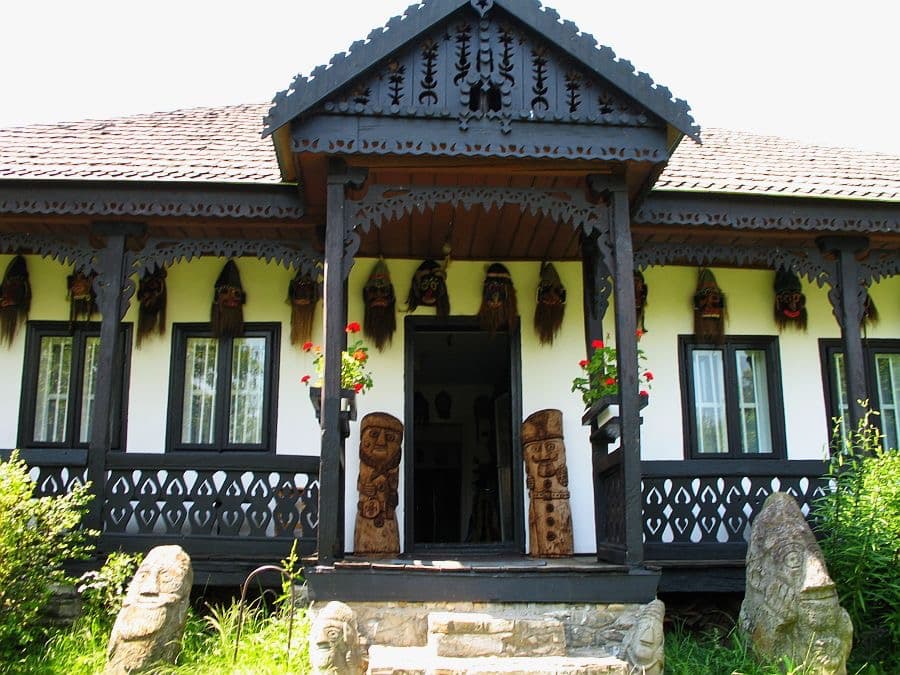
Alongside the collected objects, the artistic production of Neculai and his wife Elena occupies a central place. Their masks made of skin and costumes used during traditional winter spectacles — ritual moments when villagers disguised as bears, goats or allegorical characters parade through the villages — are today displayed as museum pieces in their own right.
What to see in the collections
Ethnographic and historical sections
- Archaeology: objects unearthed in the region, witnesses to the prehistoric and ancient cultures of Moldavia
- Numismatics: ancient coins spanning several periods
- Ethnography: agricultural tools, household objects, textiles and traditional costumes from northern Moldavia
- Religious objects and icons: pieces of popular devotion, some painted on glass or wood
- Naïve painting: pictorial works inspired by peasant traditions
The work of the Popa couple
Several rooms are devoted to the work of Neculai and Elena Popa: ritual masks, stage costumes, sculptures in wood and stone. These pieces document both a personal artistic approach and craftsmanship rooted in Moldavian traditions.
The sculpture garden
In the courtyard surrounding the buildings, monumental sculptures signed by the Popa family are displayed in the open air. This outdoor ensemble extends the visit and allows you to appreciate the sculptor's work on a larger scale.
Practical information
The museum is open year-round, but hours may vary depending on season and visitor numbers. Since Tarpesti is a small village, it is advisable to notify the museum of your visit, particularly outside the summer season. The entrance fee is modest, payable in Romanian lei. Allow 1 to 2 hours to tour the 12 rooms and sculpture garden at a leisurely pace.
- Guided tours often provided by a family member or museum guide
- Explanations primarily in Romanian; some English-language materials available depending on the period
- Wear suitable shoes for walking around the courtyard
How to get to Tarpesti
Tarpesti is located in Neamț County, off the main routes. The nearest town with tourist infrastructure is Târgu Neamț, about twenty kilometers away. From Iași, allow approximately two hours of driving; from Suceava, about one and a half hours.
- By car: the simplest solution, secondary roads are passable but narrow
- By public transport: bus or minibus connections from Târgu Neamț, limited frequencies
- With a driver: recommended option if you combine multiple sites in Neamț County during the day
What to see nearby
Neamț County and northern Roumanie contain several sites that complement a visit to Tarpesti:
- The Museum of the Romanian Peasant Woman in Dragomirești, another major ethnographic stop in the north of the country
- The wooden churches of Ieud, jewels of religious architecture in Maramureș
- The ASTRA Ethnographic Museum in Sibiu, one of Europe's largest open-air museums
- The Creasta Cocoșului geological reserve for a nature break in the Maramureș
Preparing your visit to Roumanie
The Popa Museum fits into an itinerary dedicated to Romanian Moldavia and the ethnographic heritage of the northern part of the country. To build a trip combining private museums, painted monasteries of Bucovine and traditional villages, consult our suggestions for travel to Roumanie.
Interested in this visit?
We can include it in your personalised itinerary.