Corund Village
Corund Village
A Székely village in Transylvania renowned for its traditional pottery featuring blue, green, and yellow floral motifs, and its expansive open-air artisan market.
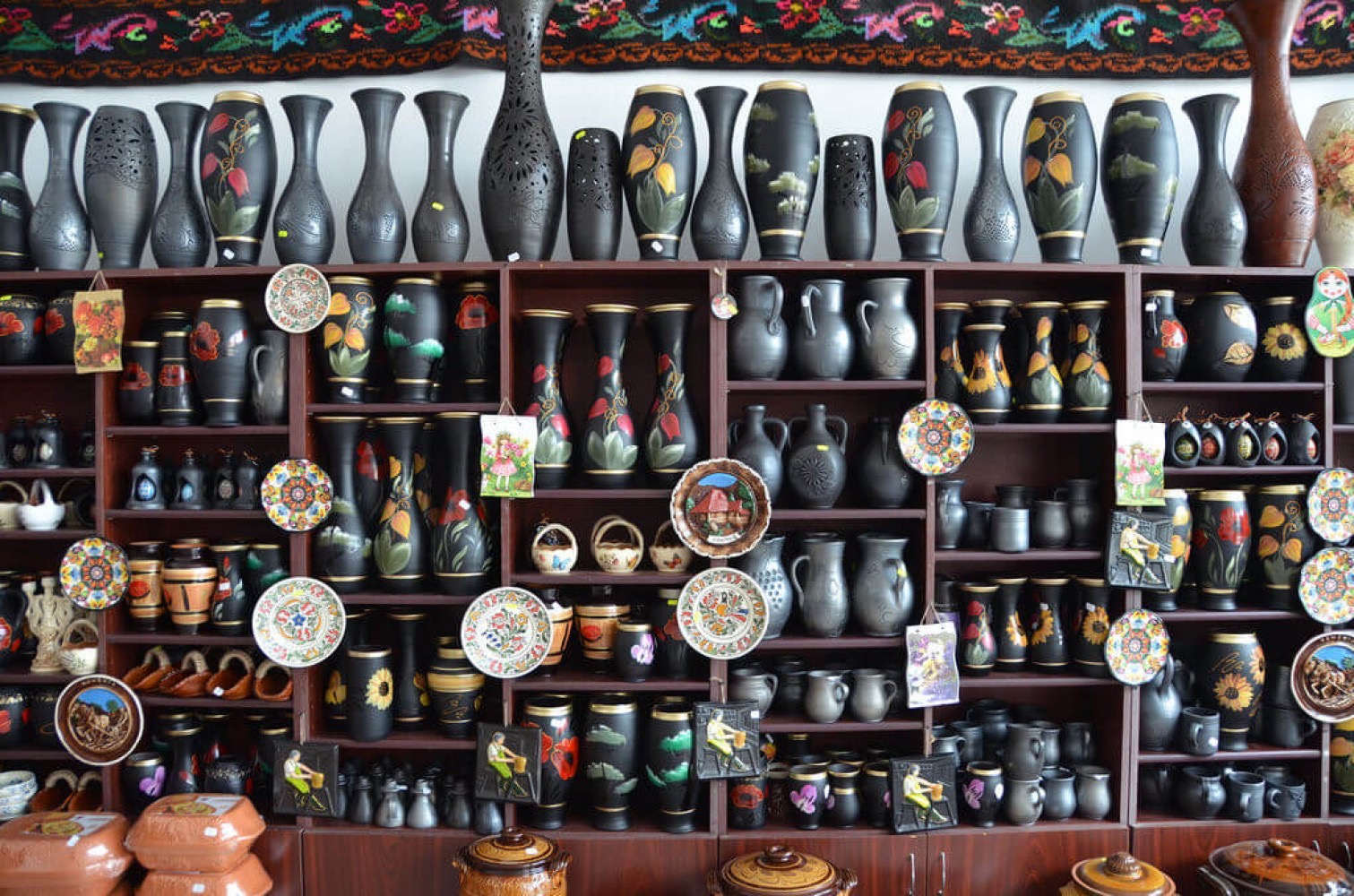
Corund is a village in Harghita County, Transylvania, celebrated for its traditional ceramics. Located on the route connecting Sighișoara to Miercurea Ciuc, it stands as one of the most representative centers of Hungarian pottery in Roumanie. Its main street, lined with colorful stalls, functions as a vast open-air artisan market year-round.
Why Visit Corund
Corund offers a tangible immersion into Székely culture, the Hungarian community settled in Transylvania since the Middle Ages. The village thrives at the rhythm of craftsmanship: potters, woodcarvers, weavers, and embroiderers perpetuate skills passed down through generations. It stands as one of the most authentic stops for those wishing to understand the ethnic and cultural diversity of the region.
The primary draw remains ceramics. Corund is one of the most representative centers of Hungarian pottery in Transylvania, and workshops open to the public allow visitors to observe wheel-throwing, firing, and hand-painted decoration.
History and Ceramic Tradition
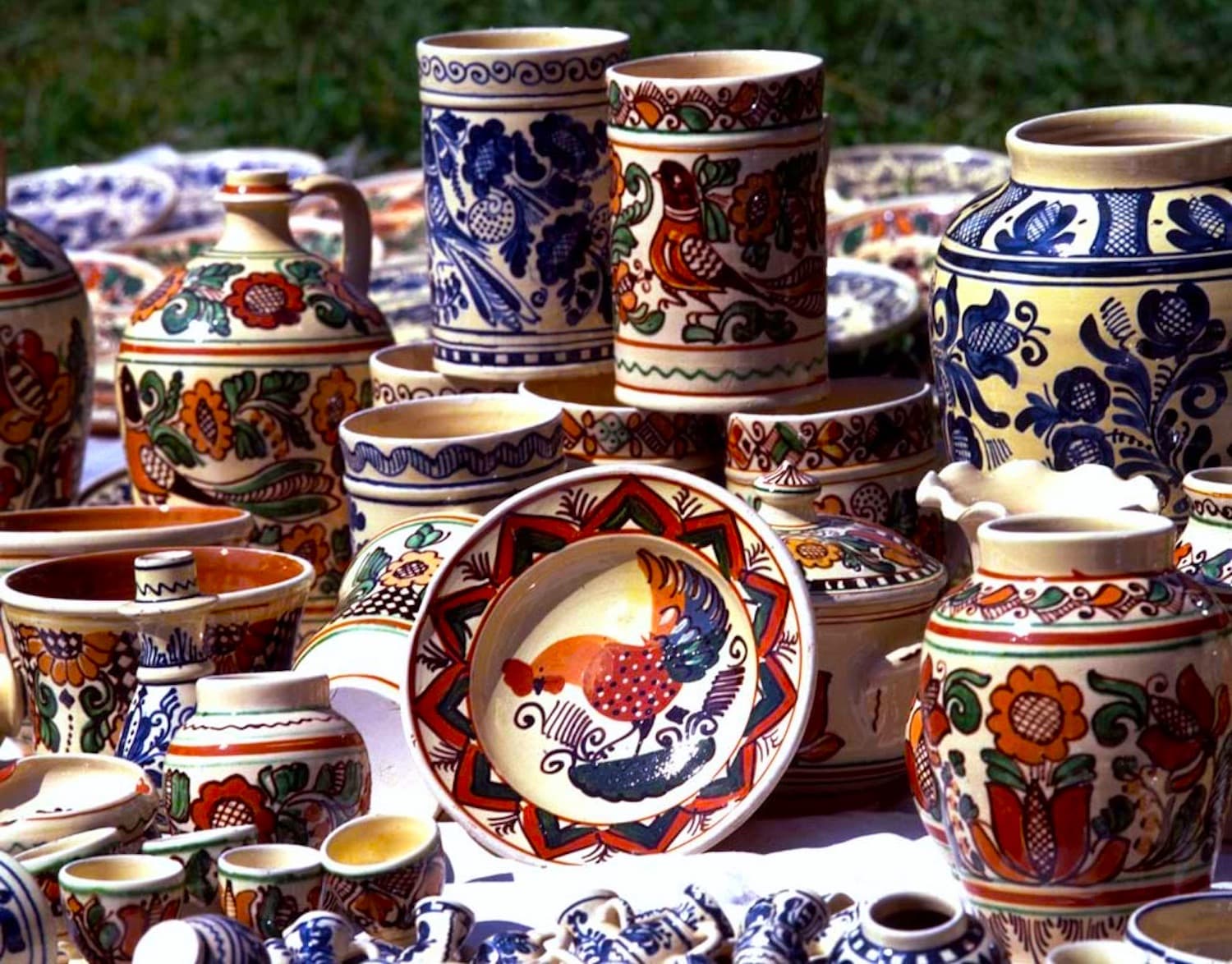
Corund's pottery tradition dates back at least to the 17th century. The earliest written records of the craft date to 1613, and the village long supplied utilitarian tableware to markets throughout the Székely region. In the 19th century, production diversified toward more decorative ceramics, with a repertoire of motifs that characterizes Corund's style today.
The dominant colors of Corund pottery are blue, green, and yellow, featuring countless stylized floral representations. Tulips, daisies, birds, and geometric friezes appear on plates, jugs, bowls, and stove tiles. Each workshop preserves its own variations of patterns, allowing connoisseurs to identify a potter's hand through their distinctive ornaments.
Beyond ceramics, Corund is also known for carved wooden objects, felt hats, and embroidered textiles. The village has been classified among Romanian ethnographic heritage sites due to this unique concentration of traditional crafts.
What to See and Do
The Artisan Market
The village's main street is entirely devoted to artisan sales. Stalls stretch for over a kilometer, offering pottery, wicker baskets, wooden sculptures, embroidered tablecloths, felt hats, and Olténian salt products. Prices vary according to execution quality: you can find everyday pieces at modest rates as well as signed works by recognized master potters.
Pottery Workshops
Several houses in the village offer the opportunity to visit a small pottery workshop and purchase products directly from the artisan. You can watch pieces being thrown on the wheel and decorated with brush work. Some potters are willing to show the traditional kiln and explain the firing stages. A workshop visit typically lasts between 30 minutes and an hour.
The Unitarian Church
At the village center, the Unitarian church reflects the religious uniqueness of the Székely: Corund has a strong Unitarian community, a minority Protestant movement in Roumanie. The building is open for visits outside of services.
Practical Information
- Duration: allow 2 to 3 hours to explore the market and visit one or two workshops.
- Best time to visit: May to September, when most stalls are open continuously. In low season, activity concentrates on permanent workshops.
- Payment: bring cash (Romanian lei); few artisans accept credit cards.
- Purchases: Corund pottery is generally food-safe; confirm with the artisan if you plan to use it in an oven.
- Accommodation: the village has family guesthouses; nearby towns of Praid and Sovata offer more capacity.
Getting There
Corund is located on the national road DN13A, approximately 25 km north of Sighișoara and 30 km southeast of Târgu Mureș. A car is the most practical way to reach the village: the road passes through rolling landscapes characteristic of central Transylvania. Minibus connections (shared taxis) also link Corund to major towns in Harghita County, though frequencies are limited.
From Cluj-Napoca, allow approximately 3 hours; from Brașov, about 2.5 hours.
Nearby
Corund integrates easily into a Székely region itinerary. About ten kilometers away, the village of Praid is home to one of Europe's largest salt mines, open to visitors. The thermal resort of Sovata, famous for its heliothermal salt lake, is 15 km away. Further south, you can reach the scenic Transfăgărășan route or continue to Salina Turda, another emblematic underground site. Fans of defensive architecture will stop at the Corvins Castle in Hunedoara.
Planning Your Visit
Corund is ideally discovered as part of a Transylvania itinerary combining Saxon villages, Székely country, and Maramureș monasteries. To build a tailor-made journey incorporating this artisan stop, consult our suggested itineraries for travel to Roumanie.
Interested in this visit?
We can include it in your personalised itinerary.