ASTRA Ethnographic Museum
ASTRA Ethnographic Museum
At Dumbrava Sibiului, the ASTRA Ethnographic Museum showcases nearly 100 hectares of Romanian rural techniques and vernacular architecture.
Located at Dumbrava Sibiului, a few kilometers southwest of Sibiu in Transylvania, the ASTRA Ethnographic Museum assembles on nearly one hundred hectares of forest and clearings hundreds of rural structures reassembled stone by stone. It is one of Europe's largest open-air museums, and the largest in Romania by area.
Why visit the ASTRA Museum
The site offers a comprehensive panorama of Romanian rural civilization as it functioned until the 20th century. Across its six thematic sections, the museum presents a complex demonstration of preindustrial traditional technology: water mills, pottery workshops, forges, wooden presses, stills, hydraulic sawmills, and weaving installations. To this are added the traditional houses from the region and all historical provinces of Romania, transported and reconstructed on site with their outbuildings.
The interest of the place lies as much in the diversity of pieces as in its setting: a path of several kilometers winds between buildings, runs alongside a lake, and crosses an oak forest. The visit thus combines a nature walk with a concrete reading of a vanished way of life.
Museum history
The museum owes its name to the Transylvanian Association for Romanian Literature and the Culture of the Romanian People (ASTRA), founded in Sibiu in 1861, which played a major role in asserting Romanian culture in Transylvania. The current open-air museum opened to the public in 1963, at the initiative of ethnographer Cornel Irimie, following earlier collections assembled in the 19th century.
Over the decades, the complex expanded to house today more than 400 monuments of vernacular architecture from all regions of the country, as well as tens of thousands of ethnographic objects. It is part of the ASTRA National Museum Complex, which also includes several museums in downtown Sibiu.
What to see on site
Preindustrial rural techniques
This forms the backbone of the route. You will see various types of grain mills in operation (horizontal wheel, vertical wheel, windmill), installations for working wood, hemp, and wool, as well as presses and stills used for oil, wine, and țuică, a plum brandy.
Traditional housing
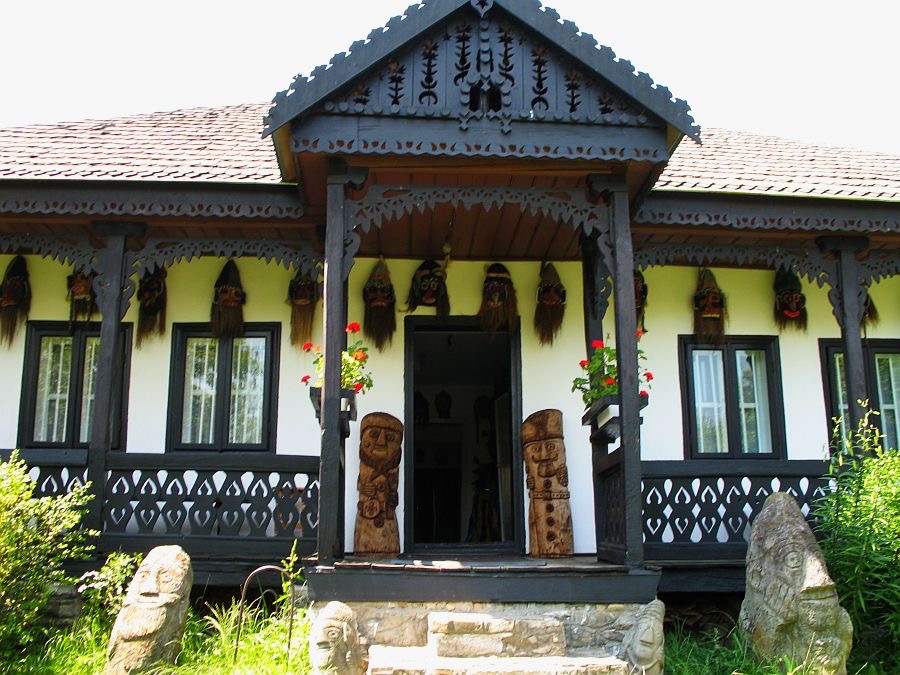
Houses are grouped by major cultural areas: Maramureș, Oltennia, Bucovina, Banat, Dobruja, Danube plains, and mountain zones. Massive timber frames, thatched or shingled roofs, and furnished interiors allow concrete comparison of architectural choices linked to climate and local resources.
Public and religious buildings
The museum has reconstructed several wooden churches, some from Transylvania with characteristic carpentry, as well as village schools, inns, and community buildings. A replica of a rural theater evokes social life beyond agricultural work alone.
Demonstrations and crafts
Depending on the season, artisans hold pottery, weaving, glass painting, or traditional cooking workshops. The museum also organizes seasonal fairs that bring together artisans from across the country.
Practical information
- Location: Dumbrava Sibiului, approximately 4 km from central Sibiu.
- Visit duration: allow a minimum of 3 hours for a quick tour, a half-day to a full day for an in-depth visit.
- Admission: moderate entry fee, with combined tickets possible for other ASTRA Complex museums. Reduced rates for students and seniors.
- Accessibility: main paths are stroller-friendly, but some areas remain unpaved. Good walking shoes are recommended.
- On-site facilities: traditional restaurant, picnic areas, boat rental on the lake in season.
When to visit
The museum is open year-round, but the experience varies greatly by season. From May to September, workshops operate, vegetation is lush, and the lake is accessible: this is the most complete period. Autumn offers remarkable colors on the Dumbrava forest and quieter crowds. In winter, some houses and installations may be closed, but the snow-covered site takes on a particular dimension, especially during the Christmas markets organized in December.
How to get there
From central Sibiu, expect about ten minutes by car or taxi toward Răşinari. Urban buses serving Dumbrava Sibiului stop near the entrance. On foot or by bike, a trail crosses the forest from the southern edge of Sibiu. Sibiu international airport, located about twenty minutes from the site, serves several major European cities.
What to combine in the region
A visit to the museum naturally fits into a Transylvanian stay. An hour's drive away, the Corvins Castle in Hunedoara is one of the country's major Gothic structures. Further north, the Salina Turda salt mine offers a spectacular underground experience. For mountain road enthusiasts, the Transfăgărășan road crosses the Carpathians between Transylvania and Wallachia. Further afield, the Bârsana Monastery in Maramureș extends discovery of the wooden architecture glimpsed at ASTRA.
Frequently asked questions
Frequently asked questions
A minimal visit requires approximately 3 hours. To tour all sections, see workshops in operation, and enjoy the forest setting, plan for a half-day to a full day.
Yes. The nature trails, animals present on some reconstructed farms, and craft demonstrations make the visit accessible to families. The lake and picnic areas offer welcome breaks.
The Dumbrava Sibiului site is the open-air museum dedicated to popular civilization. The ASTRA National Museum Complex also includes several thematic museums in downtown Sibiu, including a folk art museum and a museum of world civilizations.
Not necessarily. Signage in Romanian and English accompanies the buildings. Guided tours can be booked at the entrance to deepen knowledge of ethnographic aspects.
Prepare your trip
The ASTRA Museum fits into a Transylvanian itinerary that combines medieval cities, wooden monasteries, and fortified villages. To build a coherent stay, consult our journeys in Romania and create a program suited to your interests.
Interested in this visit?
We can include it in your personalised itinerary.