Barsana Monastery
Barsana Monastery
In northern Romania, Barsana Monastery stands out for its 56-meter wooden church, among the highest in Europe.
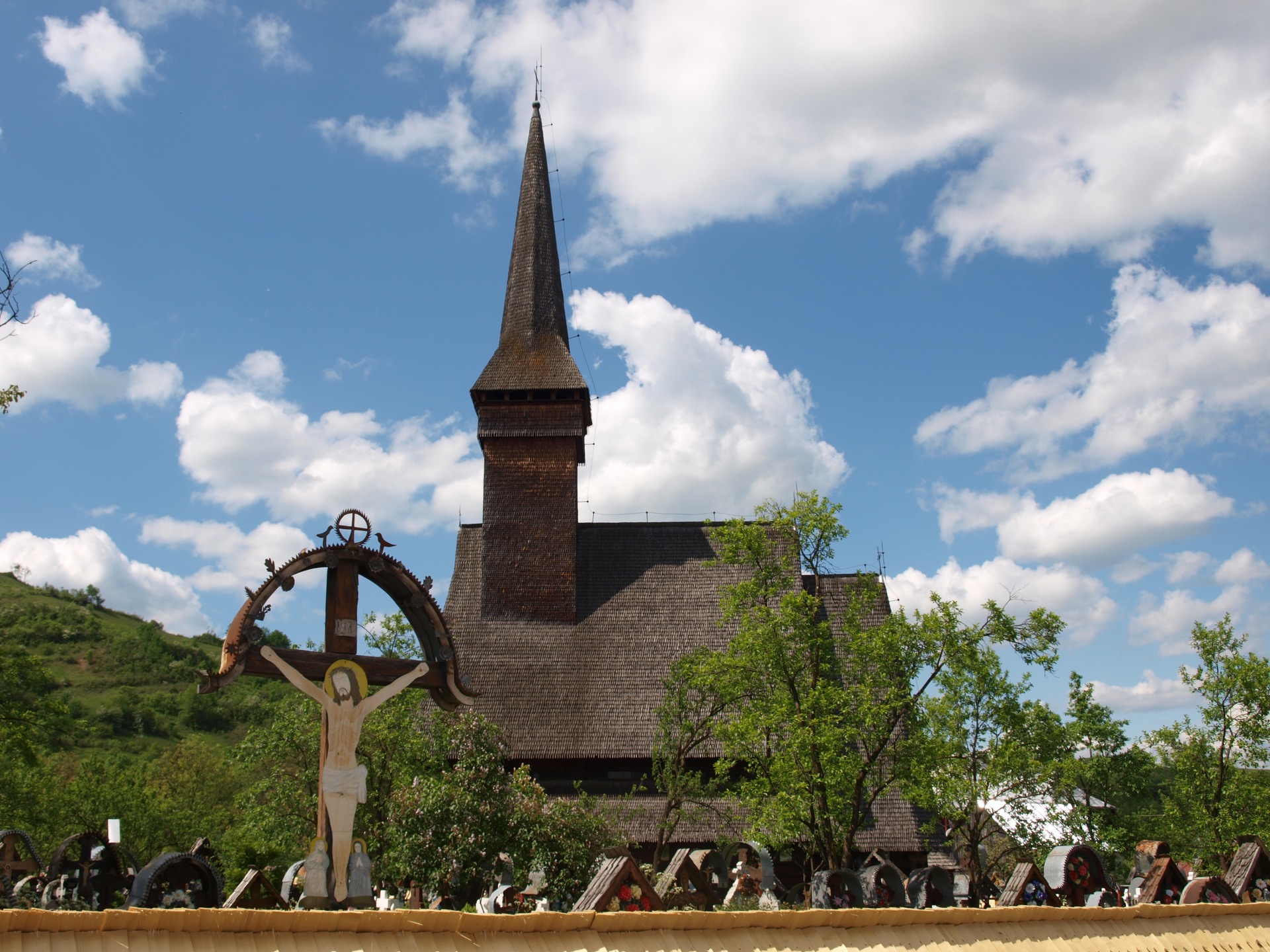
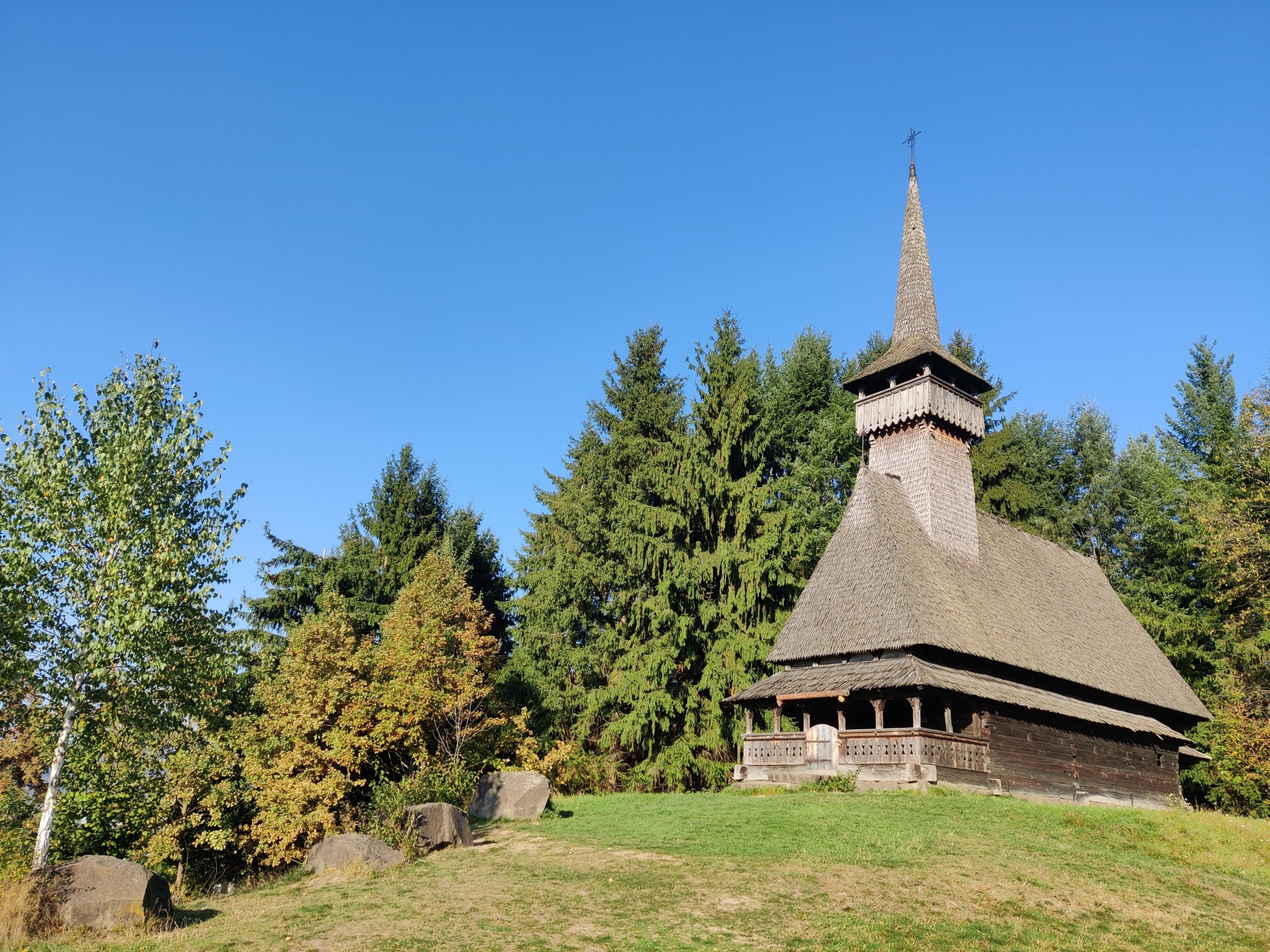
Barsana Monastery rises in northern Romania, in the Maramures region, near the Ukrainian border. This wooden monastic complex, rebuilt from 1992 onward, has become one of the most visited religious and cultural sites in the country's north. Its wooden church, standing 56 meters high, ranks among the tallest in Europe built using this construction technique.
Why visit Barsana Monastery
Barsana embodies the meeting of a centuries-old tradition — the wooden architecture of Maramures, partly inscribed on UNESCO's World Heritage list — and a recent initiative to rebuild a major Orthodox spiritual site. The complex stands out for several reasons:
- A church reaching 56 meters in height, among the continent's tallest wooden structures.
- Entirely crafted by Maramures artisans, respecting techniques passed down through generations.
- Woodworking in which no nails or power tools were used for the major wooden structures.
- A setting of wooded hills, characteristic of the rural Maramures landscape.
- An active convent, home to sixteen nuns who maintain the liturgical life and upkeep of the site.
History of the site
Barsana's religious history runs deep. A first church occupied the location until 1790, when the building was abandoned. The site remained without liturgical use for a long time before the reconstruction project was launched following the fall of communist rule.
Work on the current complex began in 1992, during the post-communist period that witnessed a revival of Orthodox religious buildings across Romania. The monastery was designed as a coherent ensemble: main church, bell tower, convent buildings, summer altar and carved gate, all built in wood according to Maramures traditions. Construction mobilized local carpenters whose expertise relies on traditional joinery — dowels, tenons, mortises — without recourse to metal fasteners for load-bearing structures.
What to see on site
The main church
At 56 meters, the spire dominates the entire complex and remains visible from the surrounding heights. The shingle roof, layered eaves and slender bell tower are characteristic of Maramures wooden churches.
The convent buildings
Around the church are organized the living spaces of the sixteen nuns: cells, refectory, community chapel. Part of the site is open to the public, while the rest is reserved for monastic life.
Gardens and the summer altar
Flower gardens, meticulously maintained, contribute to the site's atmosphere. A carved wooden summer altar allows for services to be held outdoors during fine weather.
Carved details
Portals, balustrades, door frames: wood is worked throughout with geometric and symbolic motifs characteristic of Maramures folk art.
Practical information
- Dress code: proper attire required at entry, shoulders and knees covered. Wraps are sometimes available for visitors.
- Access: entry to the complex is generally free or subject to a modest donation.
- Visit duration: allow approximately 1 to 1.5 hours to explore the site and gardens.
- Photography: permitted outside; inside the church, check signage on site.
- Respect for the place: this is an active convent, silence is expected during services.
When to visit
The most favorable period extends from May to September, when the gardens are in bloom and Maramures roads are easily passable. July and August offer the most stable conditions but may attract more visitors. Spring and early autumn, with the golden foliage of surrounding hills, particularly showcase the wooden architecture. In winter, snow transforms the landscape but access can be more challenging.
How to get there
The monastery is located in the village of Barsana, in Maramures County, in northern Romania. The main access points are:
- From Baia Mare (Maramures capital): approximately 1 to 1.5 hours' drive east.
- From Sighetu Marmației: count approximately 30 to 45 minutes via the DN18 road.
- By car: the most convenient option, Maramures lends itself to an itinerary combining several wooden churches and traditional villages.
- By public transport: buses connect the main towns in Maramures, but frequencies are limited in rural areas.
Nearby attractions
Maramures abounds with UNESCO-listed wooden churches (Ieud, Poienile Izei, Botiza, Surdești). The Merry Cemetery of Săpânța, roughly an hour's drive away, is renowned for its painted crosses featuring humorous epitaphs. The region also lends itself to discovering Romanian rural culture, markets and traditional festivals. To extend your Romanian journey, other major sites merit a visit:
- Corvin Castle in Transylvania.
- Salina Turda salt mine.
- Transfăgărășan Road across the Carpathians.
- The Sphinx and Babele in the Bucegi.
- Danube Delta Museum in Tulcea.
Plan your trip
Barsana Monastery naturally fits into a circuit dedicated to Maramures and northern Romania, a region still preserved from mass tourism. To design an itinerary combining wooden villages, living traditions and Orthodox heritage, consult our Romania travel experiences.
Nearby
Interested in this visit?
We can include it in your personalised itinerary.