The Wooden Churches of Ieud
The Wooden Churches of Ieud
Two exceptional wooden churches in Romanian Maramures: Biserica din deal, UNESCO-listed, and Biserica din vale, nicknamed the wooden cathedral.
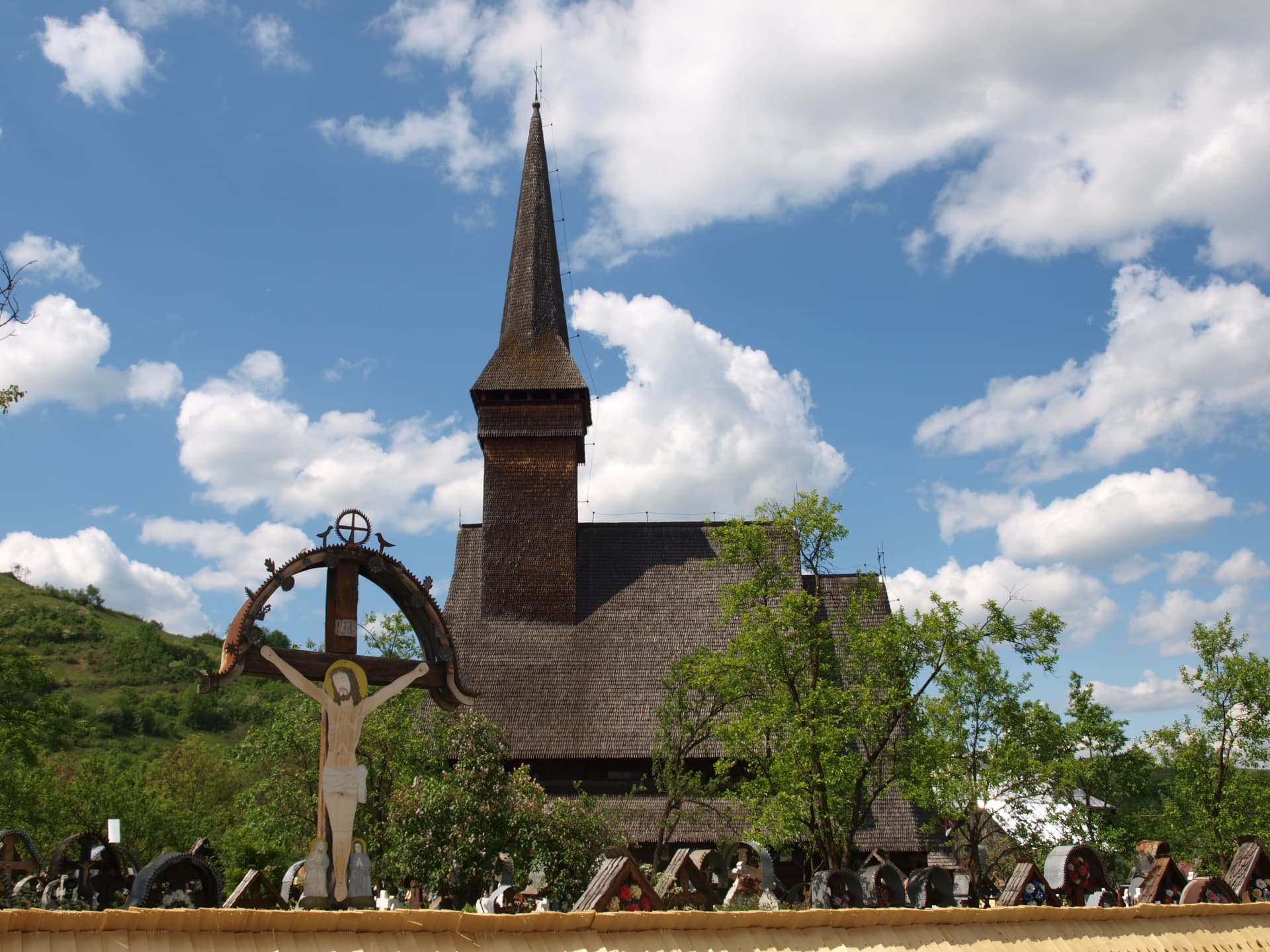
In southern Maramures, the village of Ieud is home to two remarkable wooden churches, testaments to the vernacular culture of northern Roumanie. The oldest, Biserica din deal, ranks among the eight wooden churches of Maramures inscribed on the UNESCO World Heritage list in 1999.
Why visit the wooden churches of Ieud
Ieud brings together in a single village two treasures of Romanian wooden religious architecture. One dominates the hillside, the other nestles in the valley, and each tells a different chapter of local faith: Orthodox for the first, Greek Catholic for the second. This rare denominational duality at the village scale reflects the complex history of Christianity in Maramures.
Visitors will also find a concrete introduction to peasant pictorial art: glass icons, naive murals and carved iconostases form a coherent whole. The detour is worth it both for its heritage value and the quality of the surrounding rural landscape.
History
Biserica din deal, "the Church on the Hill," is considered one of the oldest wooden churches in Maramures. It is associated with the Codex of Ieud, a manuscript in Old Romanian long dated to the late 14th century and rediscovered in its attic in the 19th century—a fundamental document for the history of the Romanian language. The building, made of oak and fir, has survived the centuries thanks to constant maintenance and the strength of its traditional joinery.
"The Church of the Valley" (Biserica din vale), built in the early 18th century, belongs to the Greek Catholic (Uniate) community, born from the union with Rome in 1700. Nicknamed "the wooden cathedral of Maramures" because of its scale, it accompanied the village's liturgical life for three centuries, notably surviving the prohibition of Greek Catholic worship under communist rule.
What to see on site
Biserica din deal (the Church on the Hill)
Built of logs, it displays the hallmarks of Maramures religious architecture: steeply pitched double-sloped roof, pointed bell tower crowned with four turrets, and massive base resting on stone blocks. Inside, 18th-century murals, attributed to iconographer Alexandru Ponehalski, cover the nave and altar.
The building is not always open to visitors: it is advisable to inquire in the village or with a local guide to gain access, often entrusted to a neighbor who holds the keys.
Biserica din vale (the Church of the Valley)
Larger in scale, it houses one of the largest collections of glass icons in Maramures, a folk art typical of Romanian Transylvania. Carved iconostases and interior frescoes complete the ensemble. The nave stands out for its height, uncommon in wooden churches in the region, which justifies its cathedral nickname.
Practical information
- Visit duration: allow 1 to 1.5 hours to see both churches.
- Fees: modest entry, free donations often encouraged for maintenance.
- Interior access: keys are sometimes held by a local resident; be prepared for some flexibility in timing.
- Dress code: shoulders covered recommended, scarf appreciated for women during services.
- Photography: often prohibited indoors; confirm on site.
- Best time: May to October, when Maramures roads are passable without winter constraints.
How to get there
Ieud is located in Maramures county, about twenty kilometers southeast of Sighetu Marmației, the historic capital of the region. From Sighet, allow approximately 30 to 40 minutes by car via roads DN18 then DJ186. No rail link serves the village directly; a rental car or organized transfer remains the most practical solution.
From Cluj-Napoca, the drive takes 4 to 5 hours via Baia Mare. Cluj international airport is the most commonly used entry point for international travelers reaching Maramures.
What to see nearby
Maramures concentrates several major sites accessible from Ieud. The Creasta Cocoșului geological reserve offers a volcanic hike within an hour's drive. Further south, the ASTRA ethnographic museum in Sibiu allows you to continue discovering Romanian rural architecture in an open-air setting.
For lovers of scenic drives, the Transfăgărășan road crosses the Carpathians further south, and Corvin Castle in Transylvania completes a coherent cultural itinerary.
Frequently asked questions
Eight wooden churches in Maramures have been inscribed on the UNESCO World Heritage list since 1999, including Biserica din deal in Ieud.
Yes in principle, but Biserica din deal is not always open. You often need to ask a village resident for the key or be accompanied by a local guide.
Biserica din deal is Orthodox and ranks among the oldest in Maramures. Biserica din vale, built in the 18th century, is Greek Catholic and houses a significant collection of glass icons.
A half-day is enough to see both churches and stroll through the village. By combining with other Maramures villages, plan for a full day.
Include Ieud in your trip
The wooden churches of Ieud fit naturally into a circuit in northern Roumanie, between Maramures and Bukovina. To build a tailor-made itinerary incorporating these UNESCO sites and the rural landscapes of the Carpathians, explore our trips to Roumanie.
Nearby
Interested in this visit?
We can include it in your personalised itinerary.