Cârța Monastery
Cârța Monastery
Romania's sole Cistercian abbey, founded in 1205, Cârța Monastery preserves rare Gothic ruins in southern Transylvania.
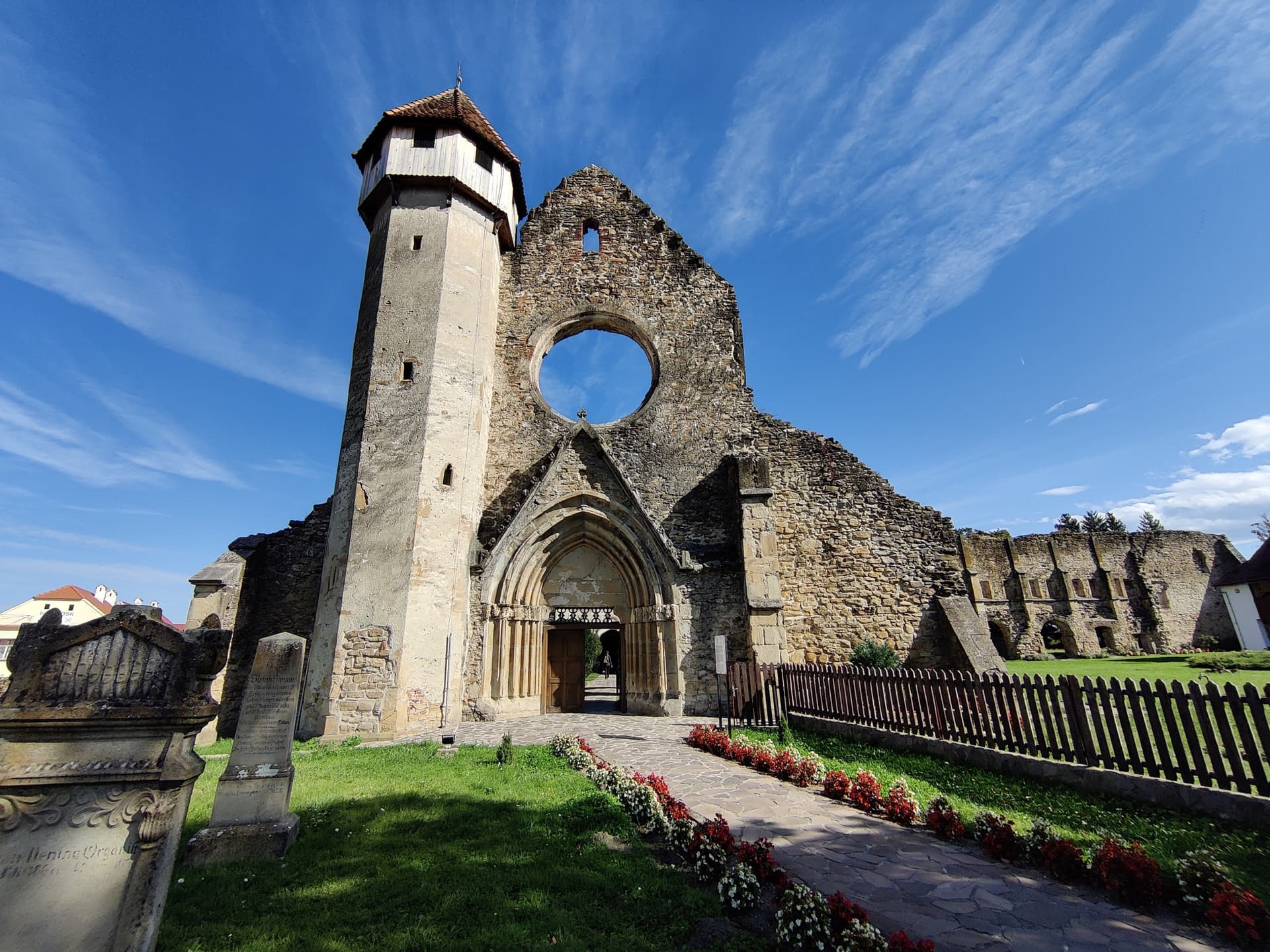
Cârța Monastery is Romania's only Cistercian abbey and the easternmost of all medieval Cistercian abbeys in Europe. Founded in 1205 in southern Transylvania, this partially ruined site preserves the Gothic remnants of a monastery that shaped the region's religious, architectural, and viticultural history.
Why visit Cârța Monastery
- A unique Cistercian site in Romania, testament to the order's expansion toward Eastern Europe in the 13th century.
- Rare Gothic vestiges in Transylvania: colonnades, arcades, and rose windows still legible despite the ruins.
- A transnational history—the abbey was built with the help of artisans from France.
- A distinctive atmosphere, blending monastic cemetery, local legends, and Transylvanian countryside.
- An easy stop to incorporate between Sibiu and Brașov, along the route of fortified Saxon villages.
History of Cârța Abbey
Founded in 1205 by Cistercian monks, Cârța Abbey fits into the order's expansion from Burgundy. Its construction employed artisans from France, explaining the consistency of its Gothic vocabulary with that of the great Western abbeys.
For nearly three centuries, the monastery played a significant role in medieval Transylvania's political and cultural history. It contributed to the spread of Gothic architecture throughout the region and shaped the surrounding agricultural life. It is notably credited with introducing to Romania vine varieties from Burgundy—a fact regularly reported in local historical sources.
The abbey was dissolved in the late 15th century by King Matthias Corvinus, who transferred its possessions to the Evangelical Church of Sibiu. Part of the buildings was then abandoned, while the choir was preserved and converted into a Lutheran church, still in use today.
What to see on site
The ruins of the nave and transept
The most impressive part of the site remains the open-air nave. The collapsed walls reveal colonnades, broken arcades, and rose windows characteristic of Cistercian Gothic. The ensemble provides a clear reading of the original floor plan.
The Evangelical Church
The choir, restored and still active, welcomes the local Evangelical community. The interior, austere in its simplicity, illustrates the transition between Catholic monastic use and Lutheran practice adopted after the Reformation.
The monks' cemetery
The site includes a cemetery where abbey monks were buried. Known for their ascetic way of life, they often died young—a consequence, local tradition holds, of the harsh conditions they imposed on themselves. Legend tells that their ghosts still haunt the place, a tale belonging to Transylvanian folklore.
Architectural detail
Pay attention to the carved capitals, stained-glass fragments, and the tracery of lancet windows. These elements make Cârța a key reference for understanding how Gothic architecture spread toward Eastern Europe.
Practical information
- Duration of visit: allow 45 minutes to 1 hour to tour the site and cemetery.
- Admission: modest entrance fee, payable on site.
- Best season: late spring through early autumn, to enjoy the outdoor areas.
- Accessibility: uneven ground in the ruined section; wear appropriate footwear.
- Hours: open during daylight, with reduced hours outside peak season; check locally before your visit.
How to get there
The monastery is located in the village of Cârța, in Sibiu County, along the DN1 road connecting Sibiu to Brașov via Făgăraș. It lies approximately 50 kilometers east of Sibiu and about ten kilometers west of Făgăraș.
- By car: the most convenient option. The site is signposted from the main road and has parking nearby.
- By train: the Sibiu–Brașov line serves Cârța station, a short walk from the monastery.
- As a roadside stop: Cârța fits naturally into an itinerary between Sibiu, the fortified Saxon villages, and the Făgăraș range.
What to see nearby
Southern Transylvania concentrates several major sites accessible from Cârța:
- The Transfăgărășan road, which begins a few kilometers south and crosses the southern Carpathians.
- Corvin Castle in Hunedoara, one of Romania's most complete Gothic fortresses.
- Salina Turda, a former salt mine converted into a visitable site, further north.
- Bârsana Monastery in Maramureș, to continue exploring Romanian religious heritage.
Frequently asked questions
Frequently asked questions
It is situated in the village of Cârța, Sibiu County, on the DN1 road between Sibiu and Făgăraș, in southern Transylvania.
The abbey was dissolved in the late 15th century by King Matthias Corvinus. Part of the buildings was abandoned, while the choir was preserved and converted into an Evangelical church.
Between 45 minutes and 1 hour are sufficient to explore the ruins, cemetery, and Evangelical church.
Yes. Cârța is Romania's only Cistercian abbey and the easternmost of all medieval Cistercian abbeys in Europe, founded in 1205 with the help of artisans from France.
Yes, the site is open for self-guided exploration. Some explanatory panels are available, but a local guide offers valuable insights into Cistercian history and the Lutheran transition.
Include Cârța in your trip
Cârța Monastery easily integrates into a Transylvania itinerary, combining Saxon heritage, fortified villages, and passages through the Carpathians. To build a customized route, consult our Romania travel ideas.
Interested in this visit?
We can include it in your personalised itinerary.