UNESCO World Heritage Sites in Romania: Cultural Treasures
Romania boasts nine UNESCO World Heritage Sites! Fortresses, wooden and fortified churches, ancient forests—the country and the Transylvania region overflow with treasures from the past.
Romania's UNESCO World Heritage portfolio encompasses nine registered sites. Fortresses, wooden churches, fortified sanctuaries, and primeval forests—the nation and particularly Transylvania are brimming with historical riches. From the Danube Delta to the Roșia Montană mining landscape, explore all of Romania's UNESCO-inscribed sites.
The Danube Delta – Romania's Most Iconic UNESCO World Heritage Site

Situated primarily in Northern Dobruja, the Danube Delta comprises approximately fifteen distributaries. As Europe's second-longest river, this natural treasure (inscribed with UNESCO in 1991) also holds International Biosphere Reserve status, hosting over one thousand plant varieties, 300 bird species, and 45 freshwater fish species! With marshes and lakes dotting the landscape, the Danube Delta attracts canoe and kayak enthusiasts.
Practical Information Location : Tulcea County To Know : Since the Danube Delta holds Biosphere Reserve designation, certain zones remain off-limits to the public. When visiting with a guide, they'll direct you to authorized areas. If exploring independently, respect site regulations. Seven hiking trails and 19 authorized tourist waterways are available. |
Horezu Monastery
Listed by UNESCO in 1993, Horezu Monastery is celebrated for its Brâncovenesc style—an architectural approach recognized for its formal purity and intricate detailing. Designed in 1690, the structure showcases floral motifs and houses exquisite frescoes from the 18th century.
Practical Information Address : Strada Mânăstirii, Romanii de Jos 245803 Opening Hours : Monday to Friday 07:00–20:30; weekends 07:00–21:00 Admission : Monastery entrance free (museum: under €1). |
The Churches of Moldavia

Among Romania's essential UNESCO heritage sites, the Churches of Moldavia merit your attention. Erected between the 15th and 16th centuries, they feature frescoes inspired by Byzantine art, remarkably well-preserved. According to UNESCO, these paintings represent "complete cycles of religious themes. Their exceptional composition, the elegance of the figures, and the harmony of the colors integrate perfectly with the surrounding landscape." The eight churches in this ensemble are:
1. Church of the Beheading of Saint John the Baptist ;
2. Church of the Assumption of the Virgin Mary at Humor Monastery ;
3. Church of the Annunciation at Moldovița Monastery ;
4. Holy Cross Church of Pătrăuți ;
5. Saint Nicholas Church and Catholicon at Probota Monastery ;
6. Saint George Church of Suceava ;
7. Saint George Church at Voroneț Monastery ;
8. Church of the Resurrection at Sucevița Monastery.
Practical Information: The 8 Churches of Moldavia (Overview) Suceava County : (1) Arbore, (2) Humor, (3) Moldovița, (4) Pătrăuți, (6) Suceava ; (7) Voroneț, (8) Sucevița Iași County : (5) Probota |
Village Complexes with Fortified Churches in Transylvania
Inscribed in 1993, Transylvania's village ensembles exemplify the cultural landscape of central Romania. The grouping comprises seven villages distinguished by fortified churches, constructed between the 13th and 16th centuries (subsequently reinforced through the centuries to withstand invasions).
Practical Information: The 7 Listed Villages (by County) Biertan (Sibiu) ; Valea Viilor (Sibiu) ; Câlnic (Alba) ; Dârjiu (Harghita) ; Prejmer (Brașov) ; Saschiz (Mureș) ; Viscri (Brașov). |
Sighişoara's Historic Center

Built in the 12th century, Sighişoara's historic center has been inscribed on the World Heritage List since 1999. It testifies, according to UNESCO, "to the culture of the Transylvanian Saxons, a culture that concludes after 850 years of existence and now endures solely through its architectural and urban monuments." Renowned as Dracula's birthplace, Sighişoara also abounds with references to Bram Stoker's legendary count.
Address : Piața Cetății, Sighișoara 545400 |
The Wooden Churches of Maramureş Ensemble
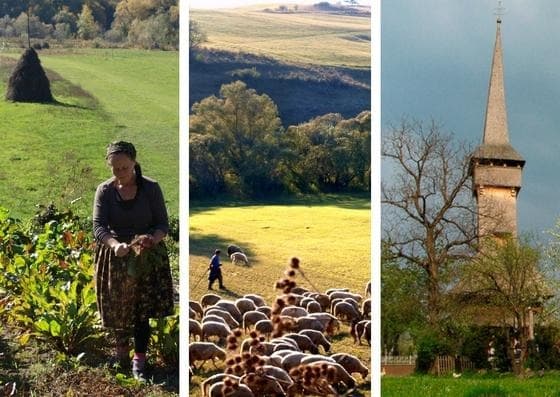
The Maramureş region harbors approximately one hundred churches. Eight of these—deemed the most representative of this rich heritage—were inscribed by UNESCO in 1999. Selected for their construction techniques, preservation status, or pictorial artistry, they exemplify the region's traditional architecture. Built across different eras, they constitute a one-of-a-kind vernacular heritage.
Practical Information: Addresses of the 8 Listed Churches (1) Bârsana Monastery : DJ186 276, Bârsana 437035 |
The Dacian Fortresses of the Orăştie Mountains

The Dacian Fortresses of the Orăştie Mountains date to the first centuries before and after Christ. Built to protect Dacian territories from Roman invasion, they were inscribed on the World Heritage List for their "fusion of military architecture techniques and concepts,