Ulpia Traiana Sarmizegetusa
Ulpia Traiana Sarmizegetusa
Dacia's first Roman colony, Ulpia Traiana Sarmizegetusa preserves a forum, amphitheater and archaeological museum within the Hațeg depression, deep in the Southern Carpathians.
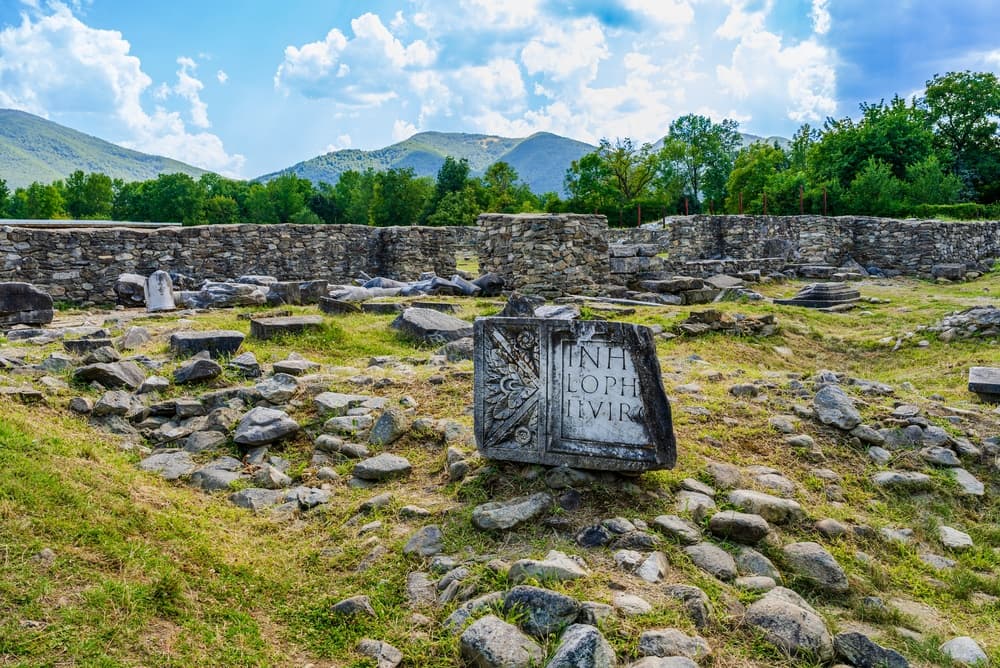
Ulpia Traiana Sarmizegetusa stands as the first and grandest Roman colony ever founded in Dacia, established in the early 2nd century AD. As the administrative capital of the province, it brought together a forum, amphitheater, temples and artisan quarters laid out in the characteristic orthogonal Roman plan. Today, its ruins emerge from lush Carpathian flatlands in Hunedoara County, just kilometers from the modern town of Hațeg. The site holds national historical monument status and remains partially excavated.
Essentials at a Glance
- Entry: Paid admission (museum and archaeological site) — discounts for children and students
- Recommended duration: 1.5 to 2 hours for the site and adjoining museum
- Access: Car recommended from Hațeg (roughly 15 km); no regular direct public transport
- Attire: Hiking shoes advised (uneven terrain)
- Accessibility: Limited for those with mobility restrictions on the open-air archaeological site
What You'll See
The Roman forum, the civic heart of the settlement, remains the best-preserved vestige: reconstructed columns, original paving and temple foundations are still legible. The amphitheater, with its elliptical arena still visible, once hosted gladiatorial combat and public spectacles. Thermal baths, private houses and sanctuaries devoted to Eastern deities round out the ensemble. An on-site museum displays sculptures, inscriptions, coins and everyday objects recovered from excavations.
History and Context
Founded around 108–110 AD by Emperor Trajan following Dacia's conquest, the colony received colonia status from its inception—the highest rank in Roman hierarchy. It should not be confused with Sarmizegetusa Regia, the Dacian capital destroyed during the Dacian Wars, which stands some fifty kilometers to the northeast. Ulpia Traiana flourished until the late 3rd century, when Rome relinquished the province under barbarian pressure. Its stones later served as quarry material for medieval construction throughout the region.
Highlights of Your Visit
The Forum and Its Columns
The reconstructed central plaza offers the finest impression of the city's scale. The upright column shafts allow you to visualize the civic basilica that once bordered the esplanade. This is the logical starting point for any visit.
The Amphitheater
Situated beyond the fortified perimeter, the amphitheater ranks among the few well-preserved examples in Roumanie. The arena and earthen tiers remain perceptible in the landscape, though much of the stonework has vanished.
The On-Site Museum
Adjoining the ruins, it assembles the most significant discoveries: votive altars, sculpted portraits, wax tablets (the oldest in Central Europe), and an extensive Latin epigraphic collection.
The Eastern Sanctuaries
Temples dedicated to Mithras, Isis and other Eastern cults bear witness to the colony's religious diversity. Their understated but well-documented remains illustrate population mobility throughout the Roman Empire.
Photography Tips
Morning light works best on the forum: it rakes across the columns and accentuates the relief of the paving. In summer, tall vegetation can obscure certain remains—prefer May or September. No known photography restrictions exist on the open-air site; check guidelines inside the museum.
Location and Access
The site lies in the commune of Sarmizegetusa, within the Hațeg depression, roughly 15 km southwest of Hațeg and about a hundred kilometers from Deva. A car offers the most practical means. From Deva, allow approximately 1 hour 15 minutes of driving. The Hațeg region is also renowned for its nature preserve and endemic dinosaurs, making it a multi-day destination worth combining.
Nearby Attractions
- Sarmizegetusa Regia — the ancient Dacian capital, perched in the Șureanu Mountains, roughly 50 km to the northeast.
- Corvin Castle (Hunedoara) — a Gothic medieval fortress among Roumanie's most impressive, approximately 60 km away.
- Church of Denșuș — one of Roumanie's oldest churches, partly built with reclaimed Roman materials, just kilometers from the site.
- Retezat National Park — a wild alpine massif with glacial lakes, reachable from the Hațeg depression.
Interested in this visit?
We can include it in your personalised itinerary.