Agapia Monastery
Agapia Monastery
Founded in the 17th century by Vasile Lupu, Agapia Monastery houses a community of nuns and frescoes by Nicolae Grigorescu, Romania's national painter.
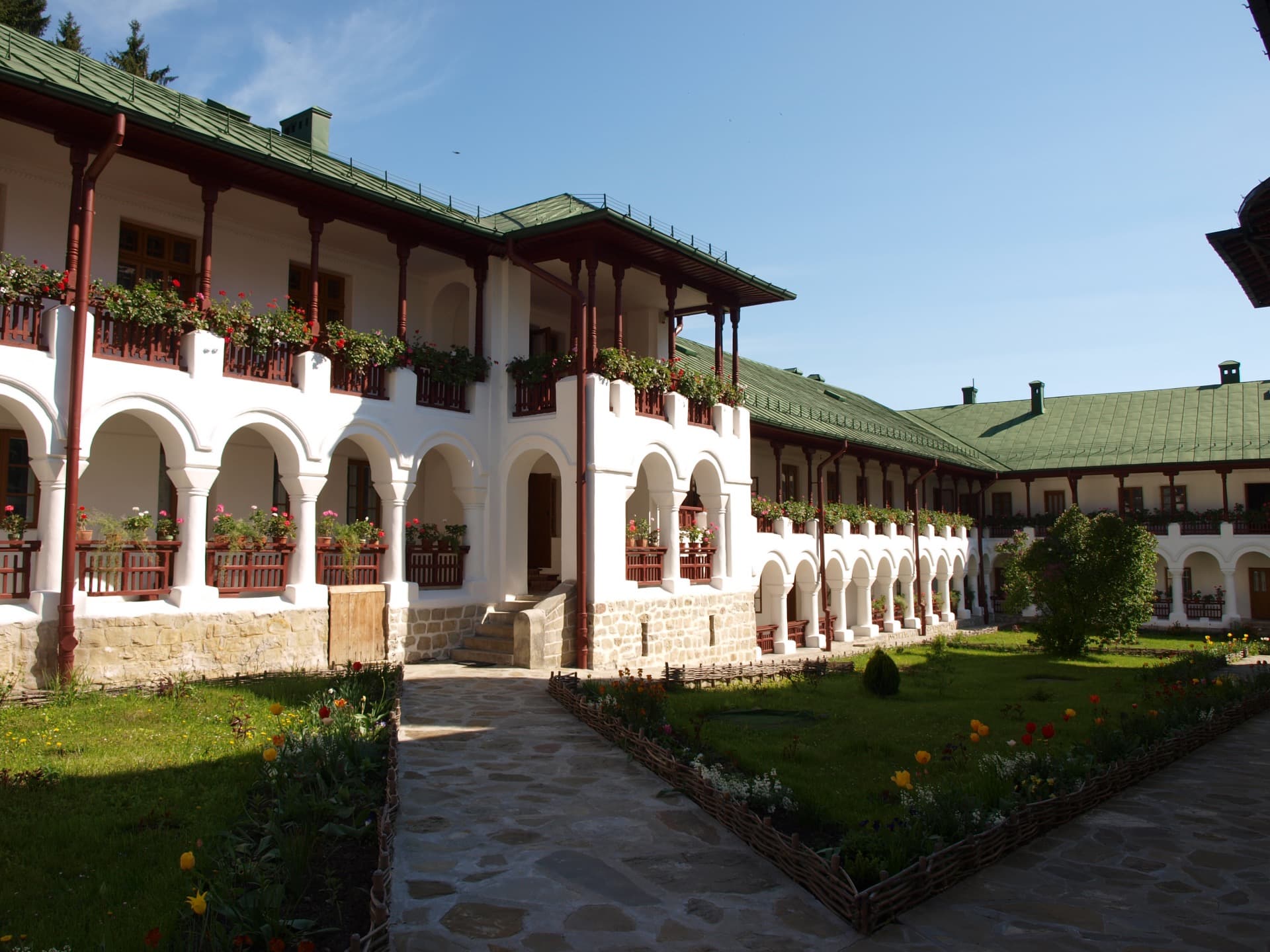
Agapia Monastery, located in Neamț County in Romanian Moldavia, ranks among the country's most significant Orthodox female monastic complexes. Founded in the 17th century in a forested valley of the eastern Carpathians, it brings together traditional monastic architecture, wall paintings by Nicolae Grigorescu, and an active community of nuns living there to this day.
Why visit Agapia Monastery
Agapia is far more than a religious site. It is a place where several layers of Romanian culture converge: a princely foundation from the 17th century, ecclesiastical art of the 19th century, and a living tradition of monastic craftsmanship (embroidery, tapestry, icon painting). The community that inhabits it makes it one of eastern Europe's largest nunneries, and the quality of its interior frescoes grants it an artistic dimension rare for a structure of this scale.
Visitors come as much for the spirituality of the place as to understand how modern Romanian painting took shape, in part here, under the brush of an artist trained in the French Barbizon school.
History of the monastery
The monastery's origins trace back to the 17th century. The present-day building was constructed on the orders of Voivode Vasile Lupu, Prince of Moldavia between 1634 and 1653, on the site of an older hermitage. It was subsequently rebuilt and enlarged several times over the centuries, following various fires and earthquakes that marked the region.
The main church is dedicated to the Holy Archangels Michael and Gabriel. Its interior decoration represents the site's great artistic turning point: the frescoes were executed by Nicolae Grigorescu from 1858 onward, when he was not yet twenty years old. Grigorescu is now regarded as Romania's national painter and founder of modern Romanian painting. Like the constellation of Romanian painters of the 19th century, he pursued his training in Barbizon, France, where he absorbed the naturalism of the French school.
The monastery also played a cultural role: it housed a school for young girls, craft workshops, and a library, helping to spread Romanian language and culture throughout the region.
What to see on site
The Church of the Holy Archangels
The central building, with its trefoil plan typical of Moldavian architecture, impresses with the coherence of its decoration. Inside, Grigorescu's frescoes cover the walls and dome. One recognizes a more human and naturalistic treatment of holy figures than in traditional Byzantine painting—a sign of the modernity the artist introduced into Romanian religious art.
The monastery museum
The museum preserves ancient icons, manuscripts, silver liturgical objects, and embroideries created by the nuns over generations. It is one of the finest places to understand the richness of Moldavian sacred heritage.
The monastic village
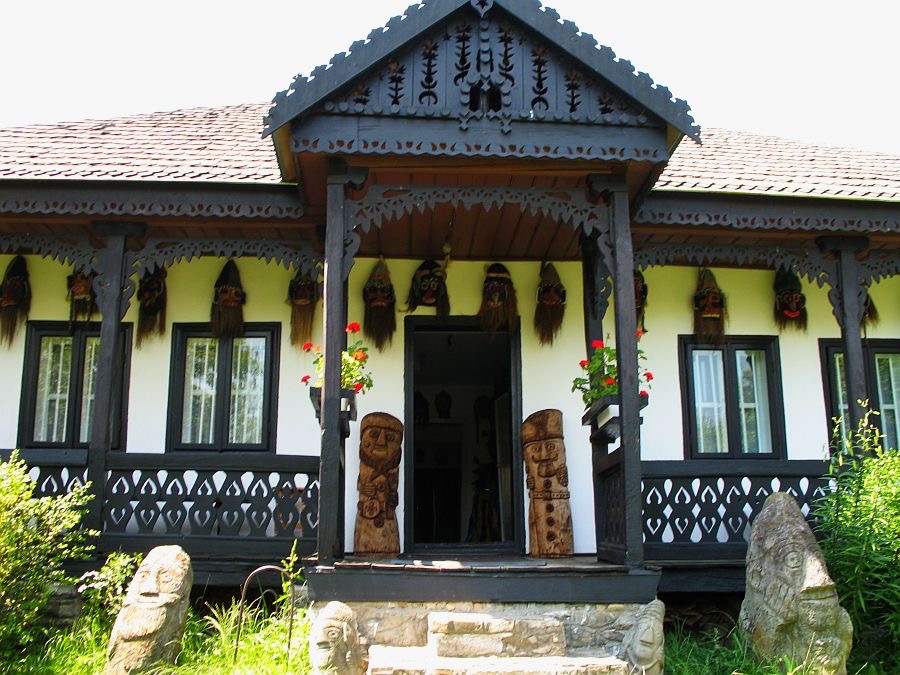
Around the church stand dozens of small white houses sheltering the nuns. This "village" organization is characteristic of Romania's largest female monasteries and gives Agapia a distinctive atmosphere, somewhere between convent and rural hamlet.
The craft workshops
The community perpetuates ancient knowledge: carpet weaving, ecclesiastical embroidery, icon painting. Some workshops are visible or offer their creations for sale.
Practical information
- Dress code: modest attire required (shoulders and knees covered). Scarves or skirts are sometimes provided at the entrance.
- Photography: generally prohibited inside the church to preserve the frescoes.
- Duration of visit: allow 1 to 2 hours for the church, museum, and a walk around the grounds.
- Entry fee: free access to the grounds; a small contribution requested for the museum.
- Silence: this is an active place of monastic life, and respect for quiet is requested.
When to visit
The best period extends from May through October. Spring and summer offer lush vegetation around the monastery, nestled in forest. Autumn, particularly in September and October, transforms the surrounding hills into a landscape of warm colors highly photogenic. Winter is possible, though snow may complicate access, and some areas may be less accessible.
Major Orthodox festivals (Easter, the Feast of the Holy Archangels on November 8, the Assumption) draw many pilgrims: the atmosphere is intense but the site becomes very crowded.
How to get there
The monastery sits in Neamț County, about 9 km from the town of Târgu Neamț and roughly fifty kilometers from Piatra Neamț. The region is served from Iași (the historic capital of Romanian Moldavia) and from Bucharest, which is farther away. A car remains the most practical option: the road leading to the monastery winds through a forested valley and already forms part of the experience. Buses and minibuses also connect Târgu Neamț, from where one can continue by taxi.
Agapia fits easily into a circuit of Moldavian monasteries, which often includes Văratec (just a few kilometers away), Neamț, Sihăstria, and the celebrated painted monasteries of Bucovina.
What to see in the region
Romania offers many complementary sites to extend a cultural and natural itinerary:
- Corvin Castle, one of central Europe's most impressive Gothic fortresses.
- Transfăgărășan Road, a spectacular traverse of the southern Carpathians.
- Salina Turda, a former salt mine transformed into a unique underground site.
- The Danube Delta Museum, to understand the delta ecosystem before exploring it.
- The Sphinx and Babele, rock formations in the Bucegi mountains tied to Romanian folklore.
Preparing your trip
To incorporate Agapia into a broader itinerary across Moldavian monasteries and Carpathian landscapes, consult our selection of journeys in Romania and build a tailor-made route through spiritual heritage, historic cities, and nature.
Interested in this visit?
We can include it in your personalised itinerary.