Deva Citadel
Deva Citadel
Perched on a 378-meter volcanic neck, Deva Citadel has watched over the Mureș Valley since the 13th century. Practical guide to visiting.
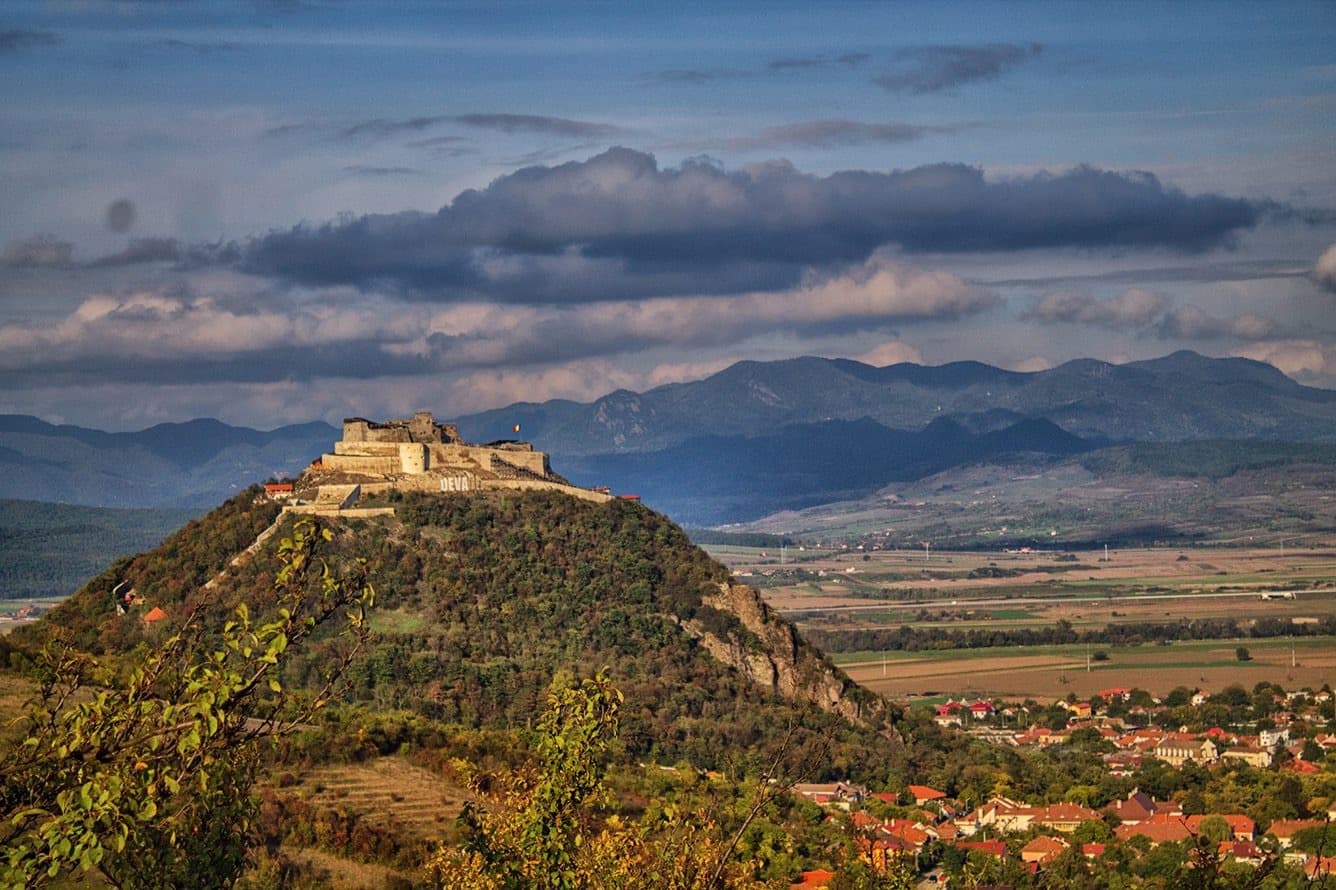
Deva Citadel dominates the town from the summit of a 378-meter volcanic plug, in the heart of western Transylvania. A medieval fortress built in the 13th century, it played a central role for over five centuries in defending southern Transylvania. Today fully restored, it can be visited for its unique geological setting, its tiered fortifications, and the panoramic views it offers over the Mureș Valley.
Why visit Deva Citadel
Three reasons make this visit worthwhile for anyone exploring Transylvania:
- An unusual natural site: Cetății Hill is a volcanic neck—that is, the fossilized chimney of an ancient volcano—which rises abruptly from the Mureș plain.
- A legible medieval fortress: the walls, bastions, and successive courtyards allow you to understand the evolution of a stronghold from the 13th to the 19th century.
- A 360° view of the Mureș Valley, the southern Carpathians to the south, and the Apuseni Mountains to the north.
History of the fortress
The citadel is first mentioned in a document dated 1269, placing its construction in the second half of the 13th century. It rises above earlier fortifications, with traces of Dacian and Roman structures identified on the hill. Its primary function: to monitor the Mureș Valley, a strategic corridor linking Transylvania to the Pannonian plain.
Over the centuries, the fortress changed hands several times. It belonged successively to the Hungarian crown, to major Transylvanian noble families, then served as a prison under the Austro-Hungarian Empire. It was here that the antitrinitarian theologian Ferenc Dávid, founder of the Unitarian Church of Transylvania, died in 1579, imprisoned within the citadel.
The site's military history came to an abrupt end in 1849: during the Hungarian Revolution, the powder magazine exploded accidentally, destroying much of the interior buildings. The citadel was then abandoned. Restoration campaigns carried out in the 2000s and 2010s consolidated the walls, reconstructed certain structures, and installed a funicular for access.
What to see on site
The three defensive lines
The fortress is organized in three lines of defense tiered up the hillside. The outer defensive line and its pointed bastions date from the 16th-17th century modifications, designed to withstand artillery. The middle defensive line and upper citadel preserve older medieval elements, including wall sections from the 13th century.
The inner courtyard and ruins
At the summit, the central courtyard provides access to the remains of residential buildings and the chapel. On-site panels recount the architectural evolution of the site and present archaeological objects discovered during excavations.
The panorama
From the high ramparts, the view encompasses the Mureș Valley, the town of Deva below, and on clear days, the snow-capped peaks of the Carpathians to the south. The viewpoint is one of the most expansive vantage points in the region.
Local legends
The most famous is that of "master Manole of Deva": according to tradition, the master builder's wife was walled in alive within the foundations to make the fortress stand firm—a local variant of the Balkan foundational sacrifice myth, also found in the legend of the Argeș Monastery.
Practical information
- Duration of visit: allow 1.5 to 2.5 hours depending on your pace and time spent on the ramparts.
- Access to the summit: an inclined funicular connects the base to the upper citadel in a few minutes; a hiking trail also permits the climb on foot (30 to 45 minutes, with sustained elevation gain).
- Rates: reasonable entrance fee, additional charge for the funicular. Tickets purchased at the base of the hill.
- Season: the site is most pleasant from April to October. In winter, the funicular may be closed depending on weather conditions.
- What to bring: closed-toe shoes (uneven paving, stairs), water, sun protection in summer (little shade on the ramparts).
How to get there
Deva is located in Hunedoara County, in western Transylvania, on the A1 motorway connecting Sibiu to Arad. The town is approximately 1.5 hours' drive from Sibiu, 2 hours from Timișoara, and 3.5 hours from Cluj-Napoca. Deva train station is served by trains connecting Bucharest to Arad and Budapest. From the town center, the funicular base is accessible on foot in about ten minutes; a parking area is provided nearby for motorized visitors.
What to combine in the region
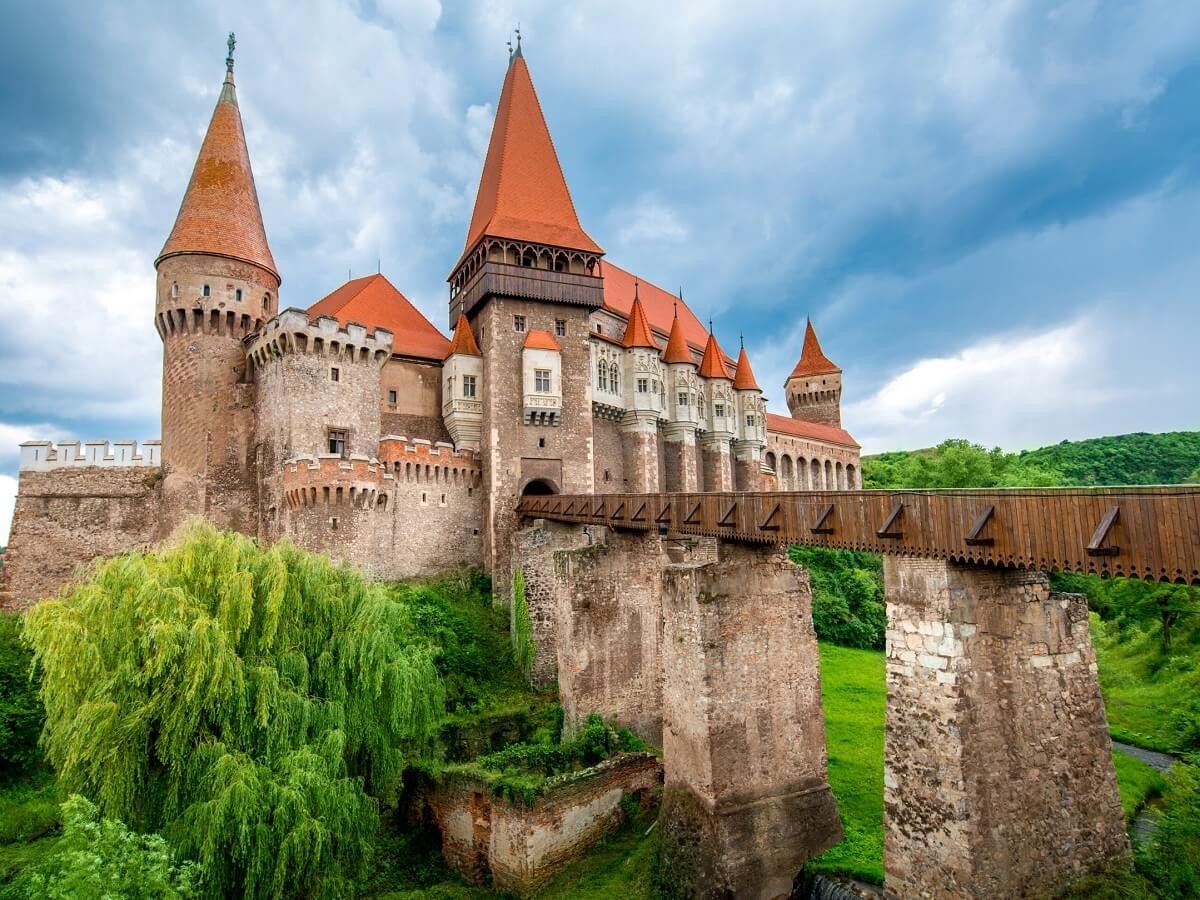
The citadel lends itself well to an itinerary through western Transylvania. Just thirty kilometers away stands the Corvin Castle at Hunedoara, one of the most impressive Gothic castles in Central Europe. Further north, Salina Turda offers an immersion into a salt mine transformed into a spectacular underground site. For mountain road enthusiasts, the Transfăgărășan road cuts through the southern Carpathians just a few hours away.
Planning your trip to Roumanie
Deva Citadel naturally integrates into a Transylvanian circuit, between medieval castles, Saxon villages, and Carpathian landscapes. To build your tailor-made itinerary, consult our journeys through Roumanie.
Interested in this visit?
We can include it in your personalised itinerary.