Ciocănești Village
Ciocănești Village
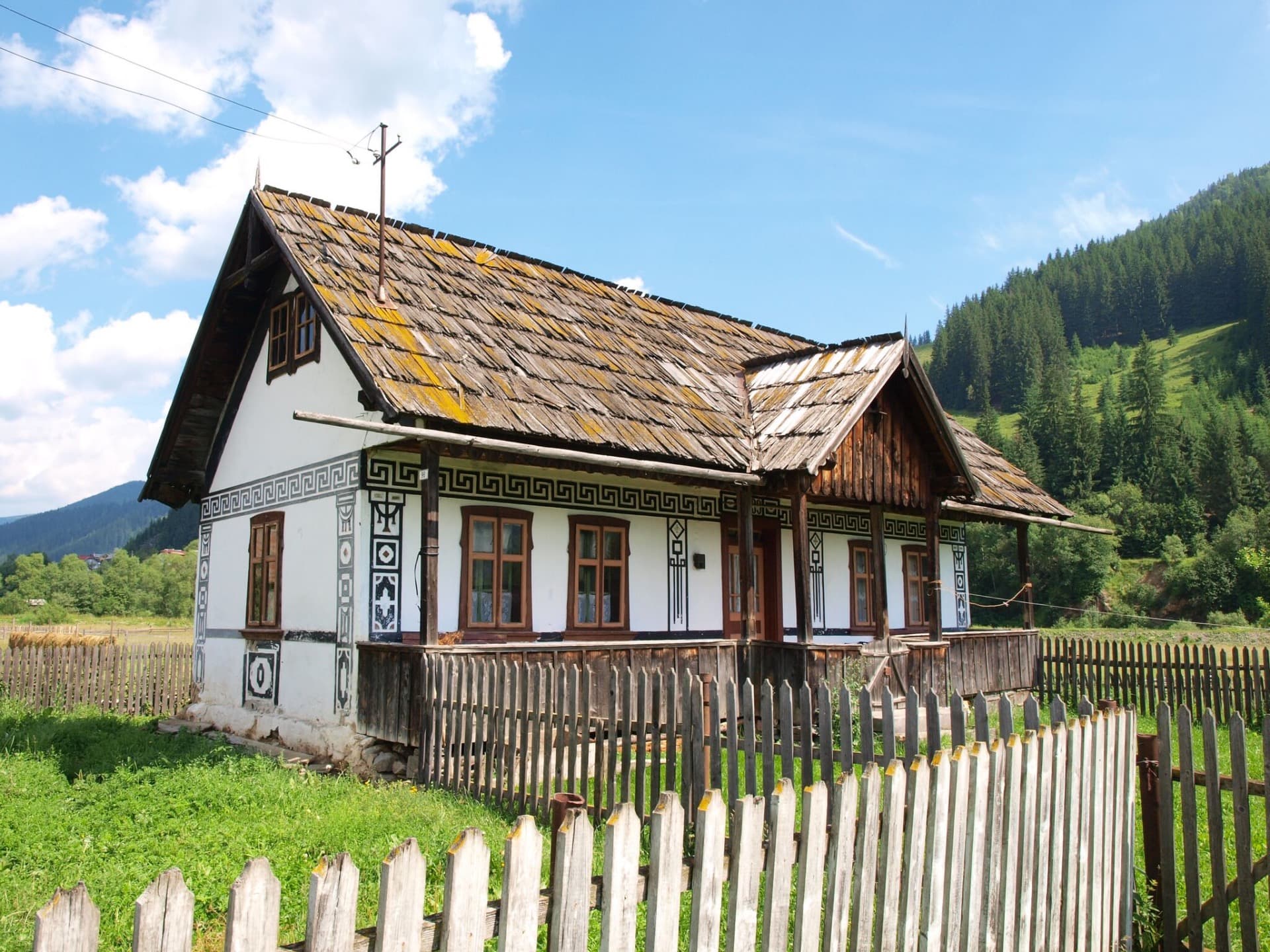
In Romanian Bucovine, Ciocănești stands out for the painted stucco decorations on its facades, inspired by the embroidery of traditional regional costumes.
Ciocănești is a village in the Bucovine region of northern Romania, where the facades of houses are adorned with painted stucco motifs inspired by traditional embroidery. This distinctive visual character, born from a local initiative in the 1960s, makes it a singular destination on the route to the painted monasteries of Suceava County.
Why visit Ciocănești
The village's appeal lies in a collective ornamental tradition: since the 1960s, residents have decorated the outer walls of their homes with painted stucco patterns that mirror the designs of traditional costume embroidery worn in the region. This initiative, passed down through generations, gives the village a cohesive visual character that is rarely found at this scale elsewhere in Romania.
Beyond its aesthetics, Ciocănești is a living village, rooted in the pastoral and artisanal traditions of Bucovine. Embroidery, egg painting, and peasant cuisine remain daily practices here, allowing visitors to combine cultural exploration with rural immersion.
A tradition born in the 1960s
The idea of decorating facades arrived in the 1960s. Residents began adding painted stucco decorations when renovating their homes, drawing directly from the embroidery patterns on regional shirts and costumes. These motifs eventually became, over the decades, a sign of belonging and an identity marker for the community.
This practice is part of a broader context: Bucovine is a region where folk art — embroidery, woodwork, egg painting, monastic frescoes — holds a central place in local culture. Ciocănești has become one of its most accessible showcases.
What to see in the village
The decorated facades
Walking through the village streets is the main activity. You'll observe geometric patterns on house walls — diamonds, rosettes, stars — and the oak leaf, frequently depicted. These are the same designs found in the embroidery of traditional garments worn by residents of the region, creating a visual continuity between textile and architecture.
The Museum of Painted Eggs
Ciocănești is home to a small museum dedicated to painted eggs, another emblematic craft of Bucovine. The collection brings together pieces from the village and various regions of Romania, featuring diverse patterns and techniques.
Workshops and local production
Several homes welcome visitors and showcase embroidery pieces, decorated eggs, and local products (sheep cheese, honey, jams). Conversations with artisans help you understand the coherence between the patterns painted on facades and those embroidered on traditional costumes.
When to visit
The village can be visited year-round, but the liveliest periods coincide with local festivities. The painted egg festival, held in spring around the Easter season, attracts artisans and visitors. Summer (June-August) offers the best conditions for exploring the region and combining Ciocănești with the painted monasteries. In winter, under snow, the colorful facades take on new dimension, and the nearby resort of Vatra Dornei offers seasonal activities.
Practical information
- Allow 1 to 2 hours to walk through the village and visit the painted egg museum.
- Access to the village is free; the museum and some workshop-homes charge a modest fee.
- Several family guesthouses (pensiuni) offer accommodation and the chance to extend your stay.
- Bring cash: card payments are not always available in rural areas.
How to get there
Ciocănești is located in Suceava County, in the upper Bistrița Aurie valley, away from major highways. From Suceava, allow approximately 2 hours of driving toward the southwest. From Vatra Dornei, a spa resort and regional hub, the village is about thirty minutes by car away. A rental car remains the most practical way to explore Bucovine; some bus services operate from Vatra Dornei but with limited frequency.
What to combine in the area
The Bucovine region concentrates several sites of interest to weave into a single itinerary: the UNESCO-listed painted monasteries (Voroneț, Sucevița, Moldovița, Humor), the Vatra Dornei resort, and the Eastern Carpathian landscape. Heading west, Barsana Monastery in Maramureș offers another perspective on wooden religious architecture.
To structure a broader journey, you can pair Ciocănești with stops like the Transfăgărășan road, Corvin Castle in Transylvania, or Turda Salt Mine.
Preparing your trip
Ciocănești fits naturally into a Bucovine circuit or a more comprehensive tour of northern Romania. To build a tailor-made itinerary and make the most of local traditions, explore our Romania journeys.
Interested in this visit?
We can include it in your personalised itinerary.