Corvin Castle
Corvin Castle
A 15th-century Gothic fortress built by Ioan de Hunedoara in Hunedoara, Corvin Castle combines military architecture, grand halls, and the legends of Transylvania.
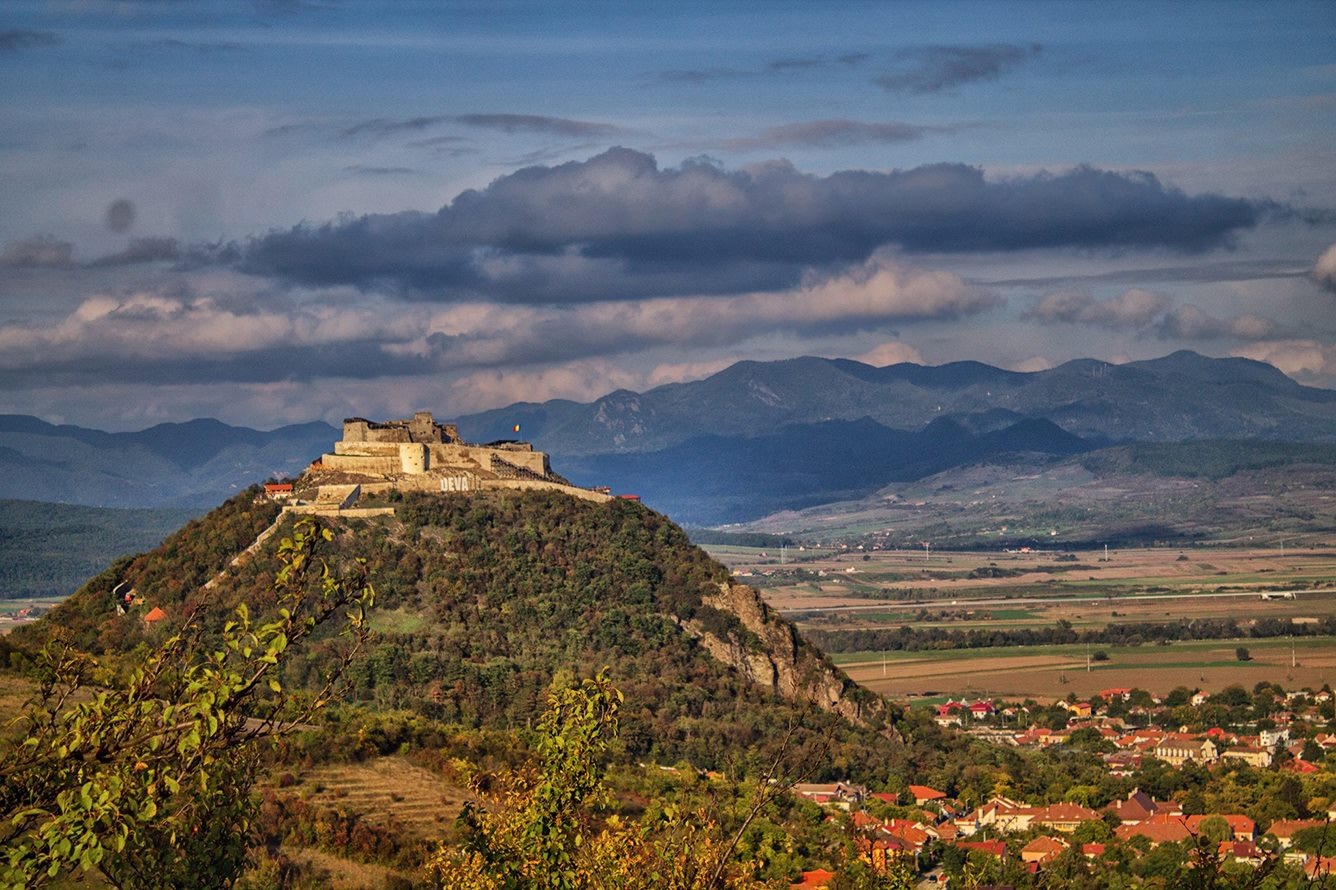
Corvin Castle dominates the town of Hunedoara in the Transylvania region, perched on a cliff above the Zlasti stream. Built in the 15th century by Ioan de Hunedoara (Iancu de Hunedoara, known in Hungarian as János Hunyadi), it stands as one of Roumanie's most significant examples of civil and military Gothic architecture. Also known as Hunedoara Castle, Corvinesti or Huniazi Castle, this vast fortified complex combines towers, bastions and a keep beneath roofs of polychrome tiles.
Why visit Corvin Castle
- A 15th-century Gothic ensemble preserved in its medieval form, with successive restorations that have transformed it into a museum.
- Rare architecture in Roumanie: round and square towers, projecting bastions, a vaulted banquet hall, spiral staircases and tall ceramic-tiled roofs.
- A history tied to the Hunyadi dynasty, one of Central Europe's most powerful families, and legends linking the castle to the figure of Vlad III the Impaler.
- A cohesive site to visit in half a day, accessible from Deva, Sibiu or Timișoara.
A fortress of the Hunyadi dynasty
The castle was built in the 15th century by Ioan de Hunedoara, voivode of Transylvania and regent of the Kingdom of Hungary, on the site of an earlier fortification. The location, chosen for its defensive qualities, occupies a rocky spur surrounded by the Zlasti stream. Work begun around the 1440s transformed the military structure into a princely residence, equipped with a great Knights' Hall and a Diet Hall.
His son, Matthias Corvin, the future King of Hungary (1458-1490), continued the work and permanently associated the castle with the Corvin family name (from the Latin corvus, the raven, which appears on their coat of arms). In the following centuries, the building changed hands several times and suffered fires, notably in 1854, which destroyed much of the timber framework. Restoration campaigns in the 19th and 20th centuries gave the monument its current Neo-Gothic appearance, with some liberties taken regarding its medieval state.
The legend of Vlad the Impaler
Local tradition has it that Vlad III Țepeș, prince of Wallachia known in the West as the Impaler, was held prisoner in a cell of the castle for several years on the orders of Matthias Corvin. The duration and exact conditions of this captivity are debated among historians, but this episode contributes to the site's appeal for visitors interested in figures that inspired the Dracula myth.
What to see at the castle
The Knights' Hall and the Diet Hall
The Knights' Hall is one of the most striking rooms: a long vaulted hall with ogival ribs resting on marble columns, it served for banquets and receptions. On the upper floor, the Diet Hall hosted assemblies and preserves fragments of 15th-century frescoes depicting scenes from Hunyadi's life.
The access bridge and inner courtyard
Entry is via a long wooden bridge resting on four stone pillars, which spans the Zlasti ravine. The inner courtyard allows you to observe the juxtaposition of construction phases and the external staircase leading to the upper floors.
The Ne boisa Tower and the Turkish Well
The Ne boisa Tower ("do not be afraid") is a cylindrical tower connected to the rest of the castle by a covered passage. In the centre of the courtyard, the Turkish Well is associated with a legend: three Turkish prisoners allegedly dug into the rock for years with the promise of being freed if they found water. The well's stone reportedly bears an inscription recalling this episode.
Museum spaces
The castle now houses collections presenting period furnishings, weapons, armours and the history of the Hunyadi family. The cellars and former prisons can also be visited.
Practical information
- Duration: allow 1.5 to 2 hours to tour the halls and courtyards.
- Hours: the castle is open year-round, with extended hours in high season (April-October) and a weekly closure day in low season. Check before your visit.
- Admission: moderate entry fee, with a surcharge for photography. Reduced rates for students and seniors.
- Accessibility: numerous staircases and uneven floors; the visit is not suitable for people with reduced mobility.
- Best time: early morning or late afternoon to avoid crowds, especially in summer.
How to get there
The castle is located in the centre of Hunedoara, in Hunedoara county, about 20 km south of Deva.
- From Deva: 25-30 minutes by car via DJ687, or regular bus service from the bus station.
- From Sibiu: approximately 2-2.5 hours' drive via the A1, about 130 km.
- From Timișoara: 2.5-3 hours' drive, roughly 170 km via the A1.
- By train: Hunedoara is served by a secondary line; it is often simpler to get off at Deva (station on the Bucharest-Arad line) and continue by bus or taxi.
A paid car park is provided near the castle.
What to combine in the region
A visit to Corvin Castle fits well into a Transylvania itinerary. About an hour away, Salina Turda, a former salt mine converted into a spectacular underground site, is worth the detour. Further east, Bran Castle draws visitors following the Dracula myth. For mountain road enthusiasts, the Transfăgărășan road crosses the Carpathians between Sibiu and Wallachia. Further north, the Barsana Monastery, in Maramureș, showcases the region's wooden architecture.
Frequently asked questions
Frequently asked questions
Local legend has it that Vlad III Țepeș, prince of Wallachia who inspired the character of Dracula, was imprisoned at the castle on the orders of Matthias Corvin. The historical reality of this captivity is debated among scholars, but the castle is associated with this episode in popular culture.
Allow 1.5 to 2 hours to tour the main rooms (Knights' Hall, Diet Hall), the courtyard, the well and museum spaces. Add extra time if you take a guided tour.
Explanatory panels are in Romanian and English. Audio guides or English-speaking guided tours may be available depending on the season; ask at the ticket office or contact a travel operator.
Yes, with a weekly closure day and reduced hours in low season (November-March). Check the current opening hours before your visit.
Bran Castle, in the southern Carpathians, is smaller and primarily associated with the Dracula myth through tourism. Corvin Castle is a larger Gothic complex, rooted in the real history of the Hunyadi dynasty in the 15th century.
Include Corvin Castle in your trip
Corvin Castle is a highlight of a Transylvania itinerary, to combine with Sibiu, Saxon towns and the Carpathians. To build a tailor-made itinerary including Hunedoara and the country's other major sites, consult our Roumanie travel suggestions.
Interested in this visit?
We can include it in your personalised itinerary.