Peleș Castle
Peleș Castle
Former summer residence of the Romanian royal family, Peleș Castle rises its neo-Renaissance turrets above Sinaia, in the Carpathians.
Peleș Castle, the former summer residence of the Romanian royal family, stands at the edge of Sinaia, in the southern Carpathians. Built between 1873 and 1883 under the reign of King Carol Ist of Hohenzollern, the building blends German neo-Renaissance architecture, neo-Baroque interiors, and German-inspired woodwork. It ranks among the most richly decorated castles in Central Europe and is one of the most visited sites in Romania.
Why visit Peleș Castle
Peleș is not a defensive fortress but a pleasure residence desired by a 19th-century European sovereign. Its visit appeals for several reasons:
- Neo-Renaissance architecture designed by architects Wilhelm Doderer, Johannes Schultz, and later Karel Liman—exceptional in the Romanian context.
- Richly decorated interiors: 160 rooms, about thirty of which are open to the public, featuring wooden sculptures, stained glass, tapestries, and weapons collections.
- An engineering feat for its time: it was among the first castles in Europe equipped with electricity (produced by its own hydroelectric power station) and central heating.
- A mountain setting on the forested foothills of the Bucegi massif, at approximately 800 meters altitude.
History of the castle
In 1866, Carol Ist of Hohenzollern-Sigmaringen ascended the throne of Romania. Charmed by the Prahova valley, he acquired an estate near the Sinaia monastery and had the foundation stone of a summer residence laid in 1873. Construction stretched over ten years for the first phase; the castle was inaugurated in 1883, though enlargements and renovations continued until 1914.
Several architects succeeded one another. It was Karel Liman who gave the building its definitive silhouette and orchestrated technical modernization: electricity, an elevator, central heating, and a motorized retractable roof for the great hall. Peleș became the center of political and cultural life in the young Romanian kingdom.
After King Michael Ist's forced abdication in 1947, the communist regime confiscated the estate. Closed during the Ceaușescu period, the castle reopened as a museum from 1990 onward. Restitution to the royal family was negotiated in the 2000s, with the Romanian state remaining the museum's administrator.
What to see inside
The standard visit covers the ground floor and, depending on the ticket chosen, the upper floors. A few rooms not to miss:
The grand hall of honor
The masterpiece of the residence, this hall crowned with a retractable glass roof is entirely clad in carved walnut woodwork. The bas-reliefs draw inspiration from great European artistic works.
The weapons hall
It houses one of Eastern Europe's most important collections of weapons and armor: approximately 4,000 pieces from the 14th to 19th centuries, including a 16th-century German equestrian armor.
The library
Over 10,000 leather-bound volumes, and a secret passage behind one of the bookshelves, which once led to the royal apartments.
The themed rooms
- Florentine room: inspired by Italian Renaissance palaces, with a gilded ceiling.
- Moorish room: marble fountain, Hispano-Moorish-inspired décor.
- Turkish room: tapestries and Eastern silks.
- Music room, given to Queen Elisabeth by the Maharaja of Kapurthala.
- Private theater with 60 seats, decorated by Gustav Klimt and Franz Matsch.
Pelișor Castle
A few hundred meters away, this second Art Nouveau building served as residence for the future King Ferdinand and Queen Marie. It can be visited separately and complements the estate's discovery.
Practical information
- Duration of visit: allow 1 to 1.5 hours for the ground-floor circuit, 2 to 2.5 hours if you add the upper floors and Pelișor.
- Tickets: moderate rates, with different levels depending on which floors you visit. A photography surcharge is collected at the entrance.
- Guided tour: mandatory for groups accompanied by a museum guide; commentary available in several languages depending on visitor flow.
- Weekly closure: the castle is traditionally closed one or two days per week, as well as for annual maintenance (typically in November). Check the official calendar before traveling.
- Interior access: overshoes provided to protect the parquet floors; large bags must be left at the cloakroom.
When to visit
Peleș lends itself to year-round visiting, though the experience varies considerably with the seasons.
- May to June and September: mild temperatures, gardens in bloom or autumn colors, moderate crowds. The most pleasant period.
- July and August: peak season, significant queues mid-day. Prioritize an early morning opening.
- December to March: spectacular winter atmosphere with snow on the roofs, but access sometimes difficult and reduced opening hours. Can be combined with a ski stay in Sinaia.
How to get there
Sinaia is located approximately 125 km north of Bucharest, on the road and rail axis connecting the capital to Brașov.
- By train: frequent connections from Bucharest North (Gara de Nord) and Brașov, allow 1.5 to 2 hours. Sinaia station is central.
- By car: via DN1 / E60; during peak season, the Bucharest-Sinaia stretch can be very congested on weekends.
- From the station to the castle: approximately 30 minutes on foot uphill through the park, or local taxi. A paid parking lot is available near the entrance.
What to see in the area
The Sinaia region lends itself well to a 2- or 3-day circuit in the Carpathians:
- The Sinaia monastery, founded in 1695, in the immediate vicinity of the castle.
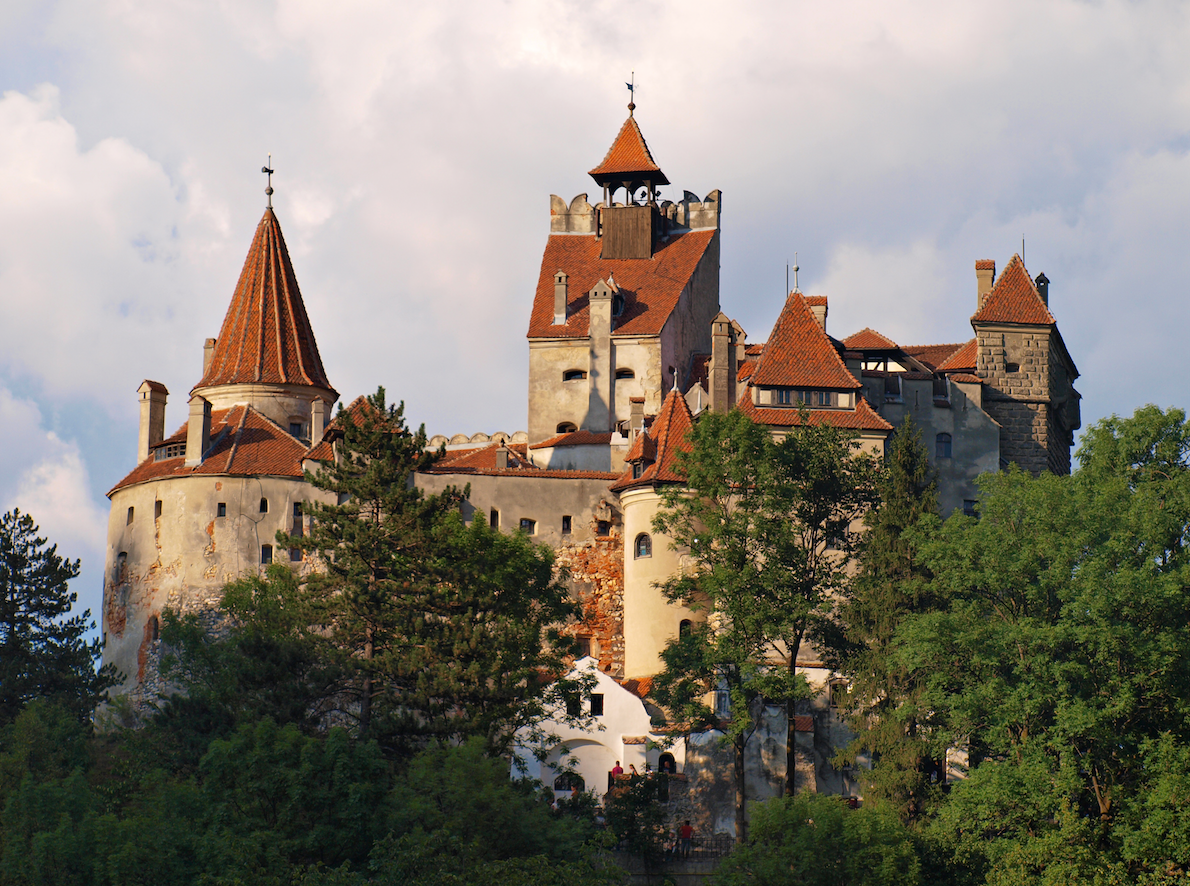
- Bran Castle, an hour's drive away, associated with the Dracula legend.
- Corvin Castle in Hunedoara, more austere and medieval, to be combined on a Transylvanian itinerary.
- The Transfăgărășan road, a spectacular mountain road, accessible in summer.
- Salina Turda salt mine, in central Transylvania, for an unexpected underground experience.
- Bârsana monastery, in Maramureș, if you extend northward in the country.
Frequently asked questions
Frequently asked questions
No. Interior visits are conducted exclusively with a museum guide, in groups formed at the entrance. The exterior, terraces, and gardens are, however, freely accessible.
Tickets are purchased on-site. During peak season (July-August, holiday weekends), arriving early in the morning helps avoid long queues.
Yes, subject to a surcharge paid at the entrance for photography or video. Flash and tripod use is regulated.
Allow 1 to 1.5 hours for the basic circuit, and up to half a day if you add the upper floors, Pelișor Castle, and a stroll through the park.
It's technically possible but very tight. It's more comfortable to spread the visit over two days, spending a night in Sinaia or Brașov.
Incorporating Peleș into your trip
Peleș Castle fits naturally into an itinerary linking Bucharest with the historic regions of Transylvania and Maramureș. To design a tailor-made circuit blending royal heritage, Saxon villages, and Carpathian landscapes, explore our trips to Romania.
Nearby
Interested in this visit?
We can include it in your personalised itinerary.