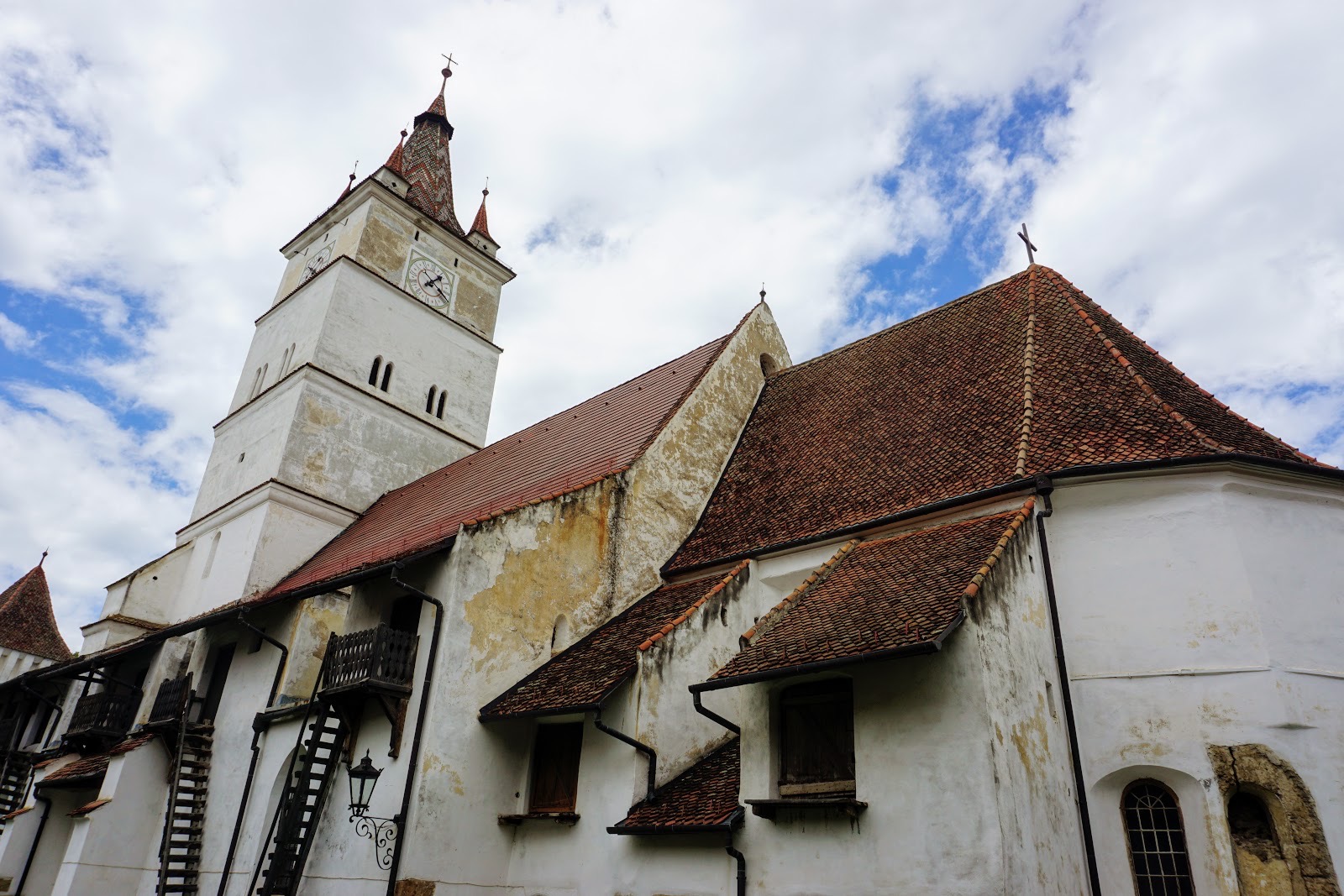
Calnic Fortress
Calnic Fortress
13th-century Saxon peasant fortress inscribed on UNESCO's World Heritage List in 1999, a testament to the defensive system of German villages in Transylvania.
Calnic Fortress stands at the heart of the village of the same name, in Alba County, Transylvania. This fortified medieval complex, built by local nobility and later transformed by the Saxon community, ranks among the rare peasant fortresses in Romania inscribed on the UNESCO World Heritage List since 1999. Away from major tourist routes, the site offers rare testimony to the defensive organization of Saxon villages in Transylvania between the 13th and 16th centuries.
Why visit Calnic Fortress
Calnic is one of seven fortified Saxon villages in Transylvania recognized by UNESCO in 1999, alongside Biertan, Viscri, Prejmer and Saschiz. Its unique feature: unlike most of its neighbors, it is not a fortified church but a residential fortress of noble origin, later ceded to the village community to serve as collective defense.
The village today bears the imprint of the German settlers who arrived in Transylvania from the 12th century onward. Low houses with colorful facades, barns lined along the central street, regular layout inherited from Saxon land division: arriving at Calnic immerses you in a still-legible rural Transylvania.
The appeal of a visit also lies in the site's manageable scale. Allow 1 to 1.5 hours to tour the walls, climb to the keep and visit the chapel. This combines well with other Saxon stops the same day.
History of the fortress
Construction dates to the 13th century. It was undertaken by the Kelnek family (Calnic), a lineage of local nobility, who first erected a fortified residence centered on a rectangular stone keep, the Siegfried Tower. At this time, the fortress had no communal purpose: it housed a feudal family and their retinue.
In 1430, the Kelneks sold the entire complex to the Saxon community of the village. This change of ownership brought profound transformation. The inhabitants, organized as a free commune under Saxon law, converted the residence into a refuge fortress. A second wall was added, the Chapel of Saint Mary was fitted within the walls, and supplies storage and reserve chambers were cut into the thickness of the curtain walls.
This adaptation responded to a constant threat: Ottoman and Tatar raids that regularly swept through Transylvania in the 15th and 16th centuries. At Calnic as elsewhere, the Saxon strategy was to shelter the population, livestock and provisions behind solid walls while danger passed.
Its inscription on the UNESCO World Heritage List in 1999 recognized both the authenticity of the structure and its value as testimony to a unique village defense system in Europe.
What to see on site
The Siegfried Keep
The centerpiece of the complex, the keep rises to about twenty meters. Several levels are accessible by successive wooden staircases. At the top, the parapet walk offers an open view over the village, red-tiled roofs and surrounding hills.
The Chapel of Saint Mary
Set within the inner courtyard, the small chapel preserves fragments of medieval frescoes and modest liturgical furnishings, characteristic of Saxon Lutheran communities after the Reformation.
The walls and storage chambers
The concentric double wall, with its corner towers and loopholes, illustrates the transition from noble residence to peasant fortress. The old storage rooms built against the inner walls were used to stockpile lard, grain and barrels during periods of siege.
The museum and exhibitions
Part of the buildings hosts temporary exhibitions devoted to Saxon heritage, local archaeology and site restoration.
Practical information
- Location: village of Calnic, Alba County, central Transylvania.
- Duration of visit: 1 to 1.5 hours for the entire site.
- Best season: April to October, when the site is most accessible and lighting is favorable for photography.
- Admission: modest entrance fee, possible additional charge for climbing the keep.
- What to bring: closed-toe shoes; the keep's staircases are steep and narrow.
How to reach Calnic
The village is located approximately 15 km southeast of Sebeș, on the route linking Sibiu to Alba Iulia. From Sibiu, allow about 1 hour's drive; from Alba Iulia, roughly 30 minutes. A car remains the most practical option: public transport serving the village is rare and infrequent. The nearest airports are Sibiu and Cluj-Napoca.
What else to explore in the region
Calnic fits logically into a Saxon itinerary in Transylvania. Within an hour's drive, the Corvins Castle at Hunedoara complements your discovery of Romanian medieval military architecture. Further north, the Salina Turda salt mine offers a spectacular underground experience. To venture toward the Carpathians, the Transfăgărășan road crosses the massifs from Sibiu, and even farther on, the Barsana Monastery showcases wooden architecture in Maramureș.
Frequently asked questions
No. This is a Saxon peasant fortress of medieval origin, built in the 13th century by local nobility and later ceded to the Saxon community in 1430. The confusion sometimes arises from mistranslation: in Romanian, the adjective designates the village community, not the Roman Empire.
Calnic was inscribed on the World Heritage List in 1999 as part of the ensemble of Saxon villages in Transylvania with their churches and fortresses. Its excellent state of preservation and the unique character of a residential fortress converted into a village fortress motivated this recognition.
Allow 1 to 1.5 hours on site to tour the walls, climb the keep and visit the chapel. Adding travel time and a stop in the village, plan a half-day from Sibiu or Alba Iulia.
The site remains open for much of the year, but April to October is the most comfortable period. In winter, hours are reduced and certain interior accesses may be restricted.
To incorporate Calnic into a complete circuit through Transylvania and other regions of the country, explore our tailored Romania journeys.
Interested in this visit?
We can include it in your personalised itinerary.