Rarau Mountains
Rarau Mountains
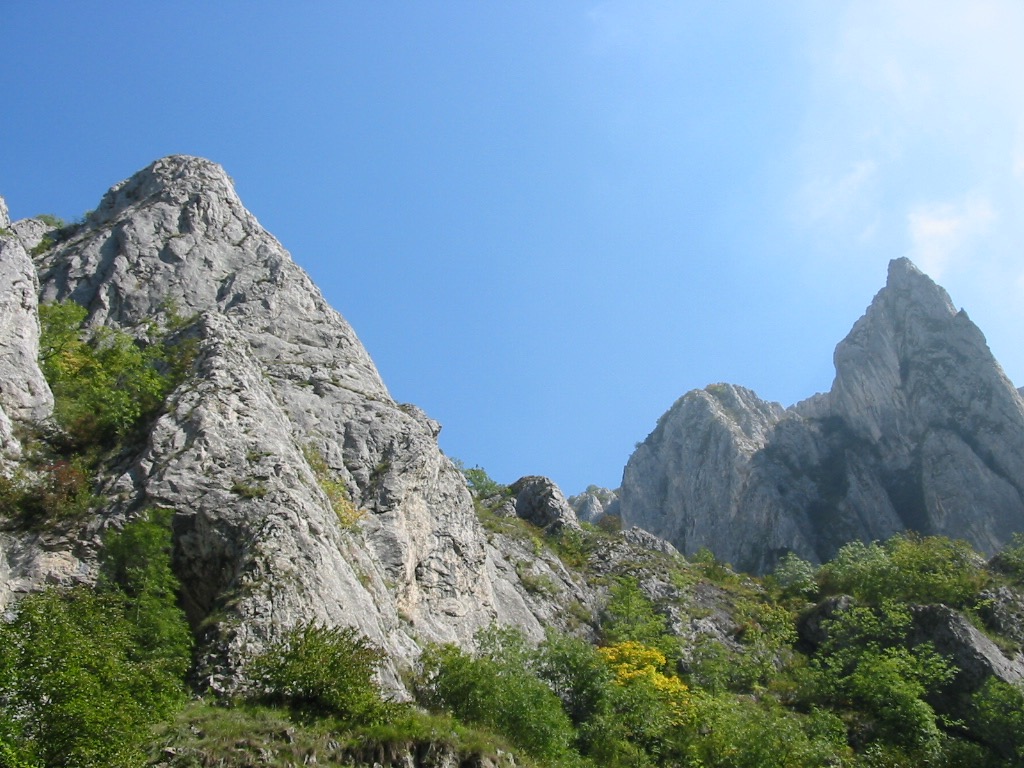
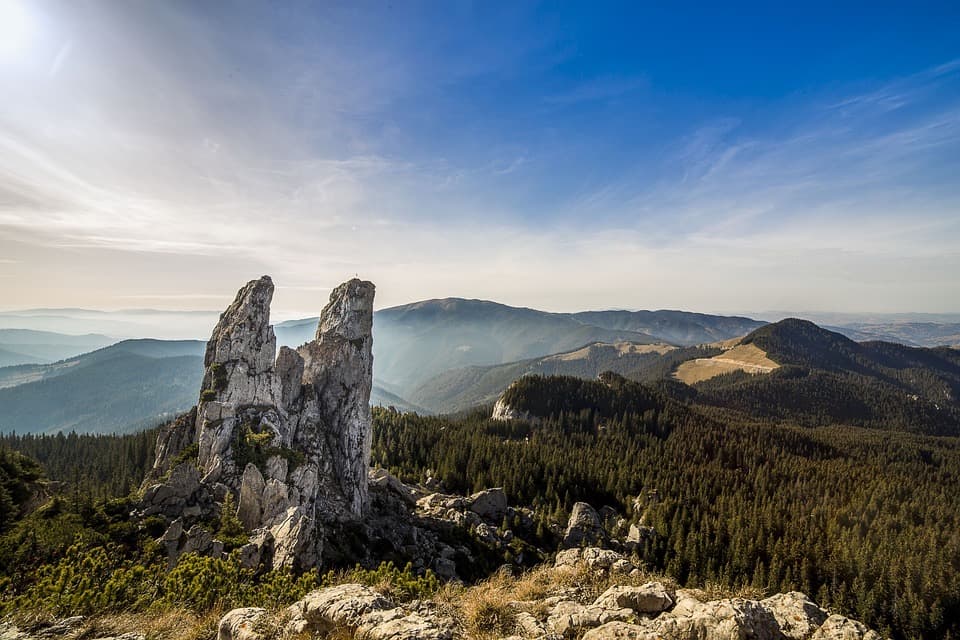
A massif of the Eastern Carpathians, Rarău is renowned for Pietrele Doamnei, Mesozoic limestone towers bearing fossils of corals and ammonites.
Rarau Mountains: a limestone balcony of the Eastern Carpathians
The Rarău-Giumalău massif belongs to the Eastern Carpathians, in northern Roumanie, on the border between historic Bucovina and Moldavia. Rising to just over 1,600 metres, it remains one of the most accessible hiking destinations in the north of the country. Its silhouette is marked by a series of limestone towers known as Pietrele Doamnei — the Lady's Stones — an emblematic rock formation of the massif and signature of the local landscape.
Less crowded than the Southern Carpathians and the massifs around Brașov, Rarău lends itself to a day excursion or a multi-day stage, complementing a visit to Bucovina's painted monasteries.
Why hike in Rarău
- Spectacular geology: Mesozoic limestone towers containing fossilized corals and ammonites, witnesses to an ancient sea floor uplifted by Carpathian orogeny.
- Easy access: marked trails from Rarău cabin, with short routes suited to casual hikers.
- Sweeping panorama over the neighbouring Giumalău massif and, on clear days, Bucovina's peaks.
- Nature and culture combined: Rarău monastery, nestled below the summit, adds a heritage dimension to your visit.
What to see and do
Pietrele Doamnei (the Lady's Stones)
This is the most visited curiosity on the massif. It is an alignment of limestone towers ranging in height from less than 10 metres to over 70 metres. These rocky pinnacles result from the progressive fragmentation of an ancient limestone peak through freeze-thaw cycles: water seeping into fissures freezes, expands and eventually detaches entire blocks. Around the towers, variable-sized talus slopes have accumulated on the slopes at the foot of the cliff faces.
Fossils of corals and ammonites visible in the rock recall that this limestone formed in a marine environment more than a hundred million years ago. A popular legend associates the site with a noble fugitive who took refuge here during a Tatar invasion — hence the name "Lady's Stones".
Rarau's summit and panorama
From the ridge, views extend over forested Giumalău, the Bistrița and Moldova valleys, and the foothills of Bucovina. Several trails converge on the viewpoint, including a short loop from Rarău cabin.
Rarau Monastery
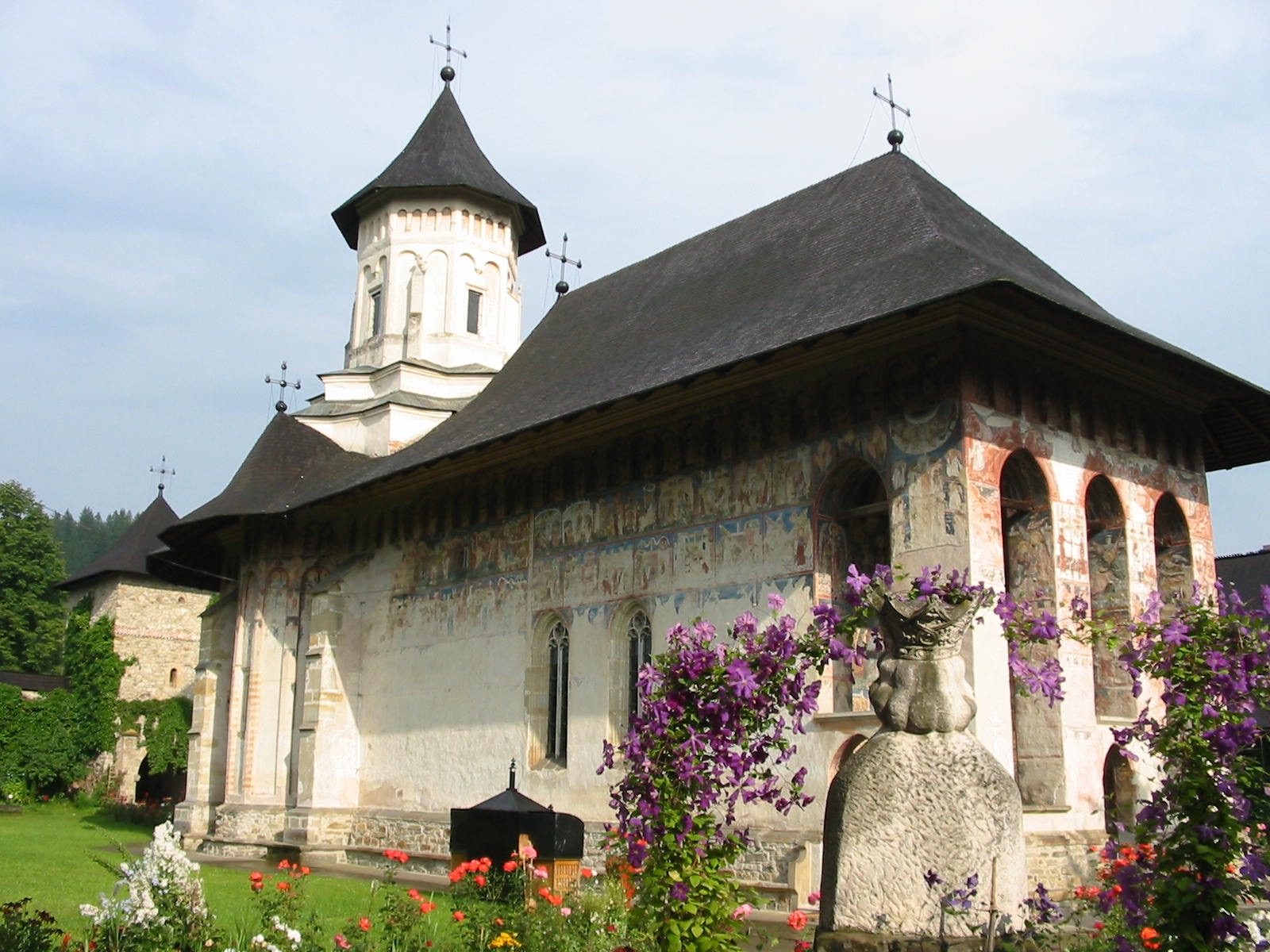
Situated at the forest edge, this small Orthodox monastery is a peaceful stop before or after climbing to Pietrele Doamnei. It belongs to the Bukovinian monastic tradition, though not to the circle of UNESCO-listed painted monasteries.
Wildlife, flora and spruce forests
The massif is covered in spruce and beech forests, with subalpine meadows above 1,500 metres. Marmots, chamois (at altitude), black grouse and, more rarely, traces of brown bears can be spotted. Alpine flora — gentians, edelweiss, Carpathian rhododendron — flowers in early summer.
When to visit Rarău
The hiking season runs roughly from late May to early October, with peak crowds in July-August. September offers striking autumn colours and quieter trails. In winter, the area is snow-covered for several months; it suits snowshoeing and ski touring, but access becomes more demanding and some high-altitude lodges close. Avoid summits in poor visibility, which is common in spring.
How to get there
The two main entry points are Câmpulung Moldovenesc and Vatra Dornei, two small towns served by train from Suceava and Cluj-Napoca.
- From Câmpulung Moldovenesc: a forest road (asphalt then gravel) climbs to Rarău plateau and its cabin. Allow roughly one hour by car, more depending on road conditions.
- From Vatra Dornei: access via the wilder south-facing slope, usually combined with a traverse to Giumalău.
- On foot: several marked trails connect valley villages to Rarău cabin (3 to 5 hours' ascent depending on starting point).
Practical information
- Level: the Pietrele Doamnei loop from the cabin is accessible to casual hikers (1 to 2 hours return). Ridge routes to Giumalău require a full day and good fitness.
- Equipment: ankle-supporting hiking boots, windproof layer, water, snacks. Weather changes quickly at altitude, even in summer.
- Accommodation: Rarău cabin offers overnight stays; guesthouses and hotels are concentrated in Câmpulung Moldovenesc and Vatra Dornei.
- Free access: no entrance fee for the massif itself.
To combine in the region
Rarău integrates naturally into a circuit through Bucovina and neighbouring Maramureș:
- The wooden churches of Ieud, witnesses to Maramureș's religious heritage.
- The Museum of the Romanian Peasant in Dragomirești, to understand traditional rural life.
- The geological reserve of Creasta Cocoșului, another remarkable rock formation in the Carpathians.
- The ASTRA ethnographic museum, to extend the cultural dimension of your journey.
Prepare your trip
Rarău is ideal for a stay combining hiking, geology and Bukovinian heritage. To build a bespoke itinerary incorporating the massif, painted monasteries and Maramureș villages, consult our trips to Roumanie.
Interested in this visit?
We can include it in your personalised itinerary.