Neamt Monastery
Neamt Monastery
Nicknamed the 'Jerusalem of Romanian Orthodoxy,' Neamt Monastery is the oldest monastic settlement in Moldavia, founded in the late 14th century.
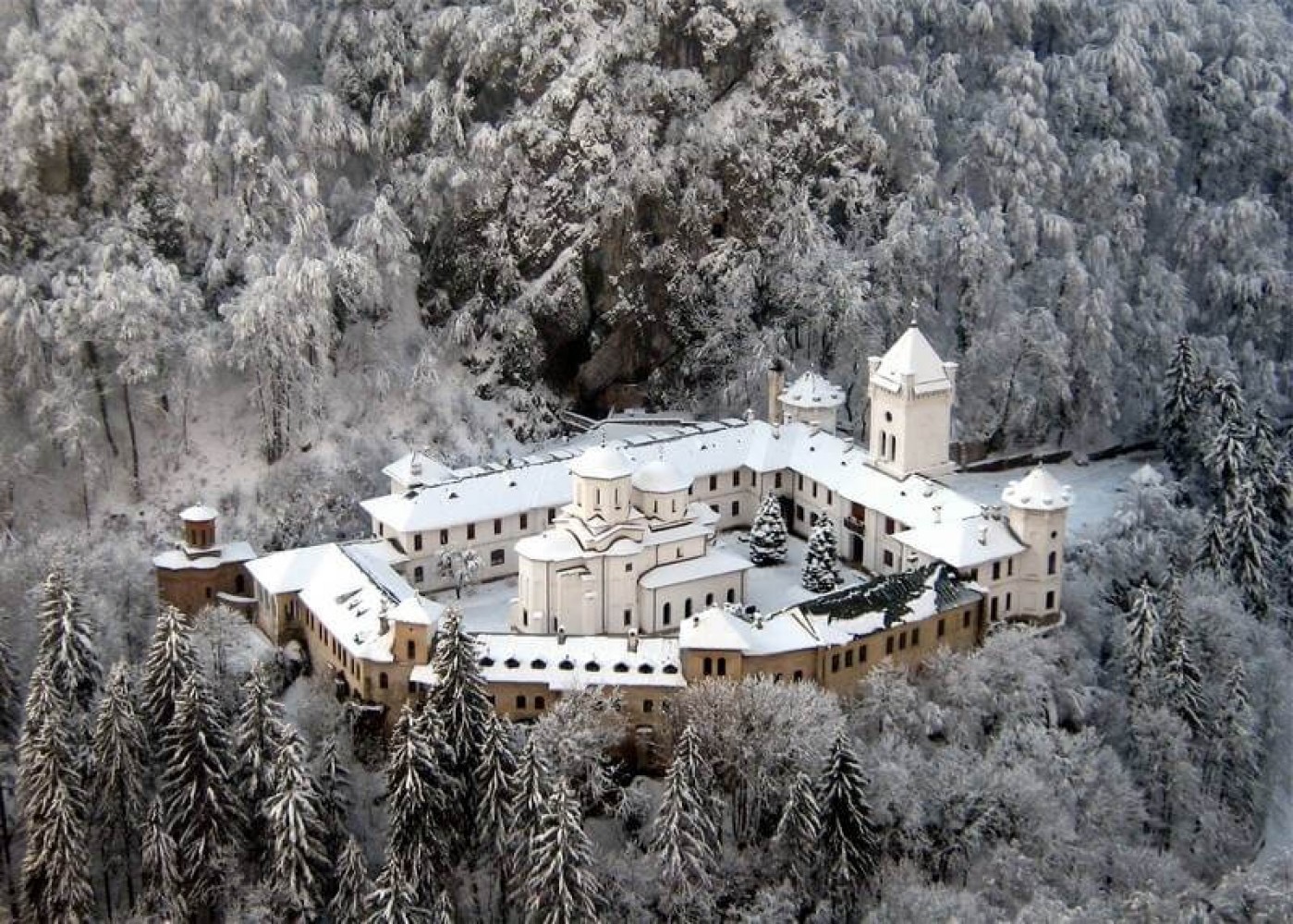
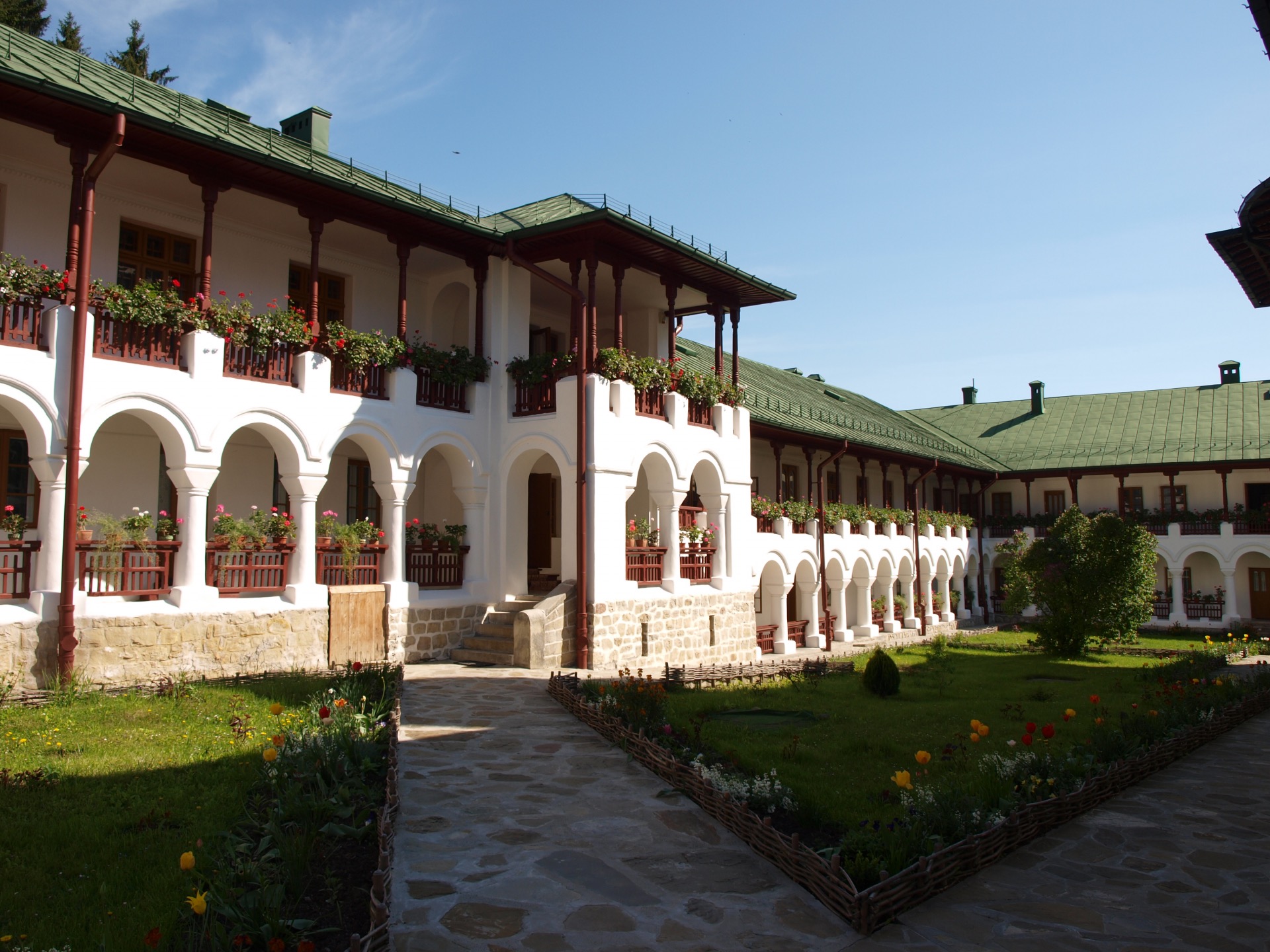
Neamt Monastery is an Orthodox monastery for monks located in Neamt County, in the northeast of historic Roumanie. Founded during the reign of voivode Petru Mușat (late 14th century), it constitutes the oldest and largest monastic settlement in Moldavia, to the point of being nicknamed the 'Jerusalem of Romanian Orthodoxy.' Nestled in a wooded valley of the eastern Carpathians, about fifty kilometers from Piatra Neamț, the site brings together a 15th-century mother church, several chapels, an ancient library and a museum of religious art.
Why visit Neamt Monastery
Neamt Monastery is far more than a religious building: it is a cultural hub that shaped, over six centuries, the spiritual and intellectual life of Moldavia. Several reasons justify the detour for those traveling in Roumanie:
- An authentic Moldavian architectural ensemble, including the main church founded by Stephen the Great following his victory at Lipnic (1471).
- A monastic library rich in ancient manuscripts, among the most important in the country.
- A museum of religious art housing icons, liturgical embroideries and objects of worship from the 15th to 19th centuries.
- A preserved natural setting, at the edge of Neamt Mountains National Park, ideal for hiking.
- Active monastic life: the site remains inhabited by a community of monks, which sets Neamt apart from a mere monument.
History of the monastery
A princely foundation (14th century)
Tradition attributes the founding of the monastery to voivode Petru I Mușat, who ruled Moldavia in the last quarter of the 14th century. A first wooden church is said to have been erected at that time, in a clearing of the Nemțișor valley, away from trade routes but near the fortified city of Neamt.
The golden age under Stephen the Great
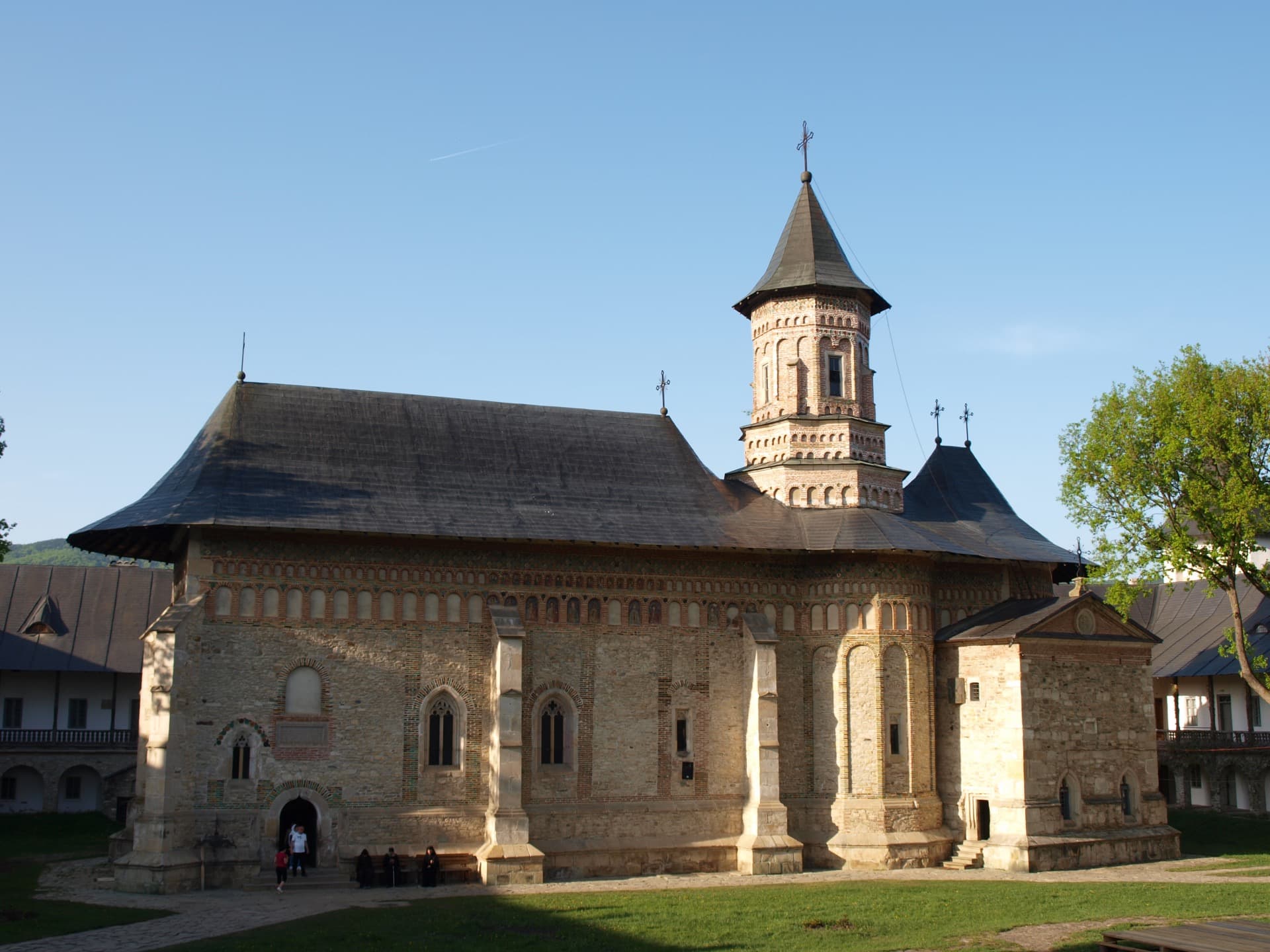
It was under the reign of Stephen the Great (1457-1504) that the monastery flourished. The prince had built there, in 1497, the Church of the Ascension which remains the heart of the complex today. This church established the codes of Moldavian style: trefoil plan, wide overhanging roof, facades animated by niches and glazed ceramics. Stephen endowed the institution with estates, villages and privileges, making Neamt the country's first monastic center.
A center of copying and printing
In the 15th and 16th centuries, the scriptorium at Neamt became a major workshop for copying Slavonic manuscripts. The monk Gavril Uric, active in the early 15th century, produced illuminated gospels preserved in several European libraries. In the 19th century, the monastery housed one of Moldavia's first printing presses.
Reforms and hardships
In the 18th century, the arrival of staretz Paisios Velichkovsky (1722-1794) revived spiritual life and inscribed Neamt in the hesychast movement that radiated throughout the Orthodox world. The site subsequently weathered several fires, including that of 1862, followed by reconstructions. Under communist rule, monastic activity was restricted but never interrupted.
What to see on site
The Church of the Ascension
Central building of the complex, it illustrates the maturity of Moldavian style. Inside, the original frescoes have been partially repainted in the 19th century, but the carved iconostasis and tombs of the founders merit attention. Appropriate dress code required (shoulders and knees covered, scarf recommended for women).
The monastery museum
Housed in the convent buildings, it presents icons from the 15th to 18th centuries, liturgical embroideries, silver objects and several illuminated manuscripts. Allow 30 to 45 minutes for the visit.
The library
Rich with several thousand volumes, including incunables and Slavonic manuscripts, it can only be visited with prior permission, but a selection of pieces is displayed in the museum.
The annexed chapels
- Saint George Chapel, the older one, located apart from the main enclosure.
- The Pocrov hermitage, about 4 km away, accessible by a forest trail.
- The Vovidenia hermitage, where patriarch Nicodim Munteanu lived.
Practical information
- Access: free entry to the monastery grounds; the museum has a modest fee.
- Hours: open daily from morning to sunset; the museum closes earlier and on certain weekdays, verify before departure.
- Duration of visit: allow 1.5 to 2.5 hours to combine church, museum and nearby chapels.
- Dress code: shoulders and knees covered required; wraps are sometimes provided at the entrance.
- Photography: permitted outside, restricted inside churches and in the museum.
- Accommodation: the monastery has rooms for pilgrims, by direct reservation; a few family-run guesthouses can be found in surrounding villages.
When to visit
The monastery is accessible year-round, but each season offers a different experience:
- May to September: the most comfortable period, with mild temperatures and hiking trails to the hermitages accessible.
- Late August: the feast of the Dormition of the Mother of God (August 15 in the shifted Julian calendar) attracts many pilgrims; crowded atmosphere, accommodations fully booked.
- October: the surrounding forests offer a remarkable autumnal palette.
- Winter: the site remains open, snow intensifies the contemplative character of the place; plan for appropriate transport.
For a quieter cultural visit, favor mid-week outside major Orthodox feast days.
How to get there
The monastery is located in the municipality of Vânători-Neamț, about 15 km northwest of the city of Târgu Neamț and 50 km from Piatra Neamț.
- By car: from Iași (about 100 km) or Suceava (about 70 km), expect 1.5 to 2 hours of driving. Parking available at the complex entrance.
- By bus: regular connections from Târgu Neamț; journey about twenty minutes.
- By train: the nearest station is Pașcani, connected to the national network; you must then continue by bus or taxi.
- By organized tour: Neamt figures in most Moldavian monastery itineraries, often paired with Voroneț, Sucevița and Moldovița.
What to combine in the region
Northeast Roumanie concentrates exceptional religious and natural heritage. A few complementary stops to expand your itinerary:
- Neamt Fortress (Cetatea Neamțului), medieval citadel overlooking Târgu Neamț.
- The wooden churches of Ieud, in Maramureș, testimonies to vernacular architecture listed as UNESCO World Heritage.
- The Museum of the Romanian Peasant in Dragomirești, to further explore rural traditions.
- The Creasta Cocoșului geological reserve, for lovers of volcanic landscapes.
- The ASTRA Ethnographic Museum in Sibiu, further south, for perspective on traditional Roumanie.
Integrate Neamt into a trip to Roumanie
Neamt Monastery naturally fits into a circuit dedicated to the monasteries of Bucovina and Moldavia, which combines religious heritage, rural traditions and Carpathian landscapes. To prepare a bespoke itinerary and benefit from advice from local agencies, consult our trip to Roumanie page.
Interested in this visit?
We can include it in your personalised itinerary.