The Cacica Salt Mine
The Cacica Salt Mine
A former Austro-Hungarian mine hand-excavated in Bucovina, Cacica preserves its galleries, underground chapel and the memory of its Polish miners.
About fifty kilometres from Suceava, in Bucovina, the village of Cacica is home to one of Romania's oldest worked salt mines. Excavated by hand in the late 19th century under the Austro-Hungarian Empire, it retains the atmosphere of a period worksite: narrow galleries, timber impregnated with fuel oil, vertiginous staircases. A visit here blends industrial intrigue, the memory of the local Polish community, and underground curiosities such as a dance hall and a chapel.
Why visit the Cacica salt mine
- An authentic Austro-Hungarian mine: galleries excavated by hand, little transformed by mass tourism, unlike other more developed sites across the country.
- A living Polish heritage: Cacica was founded by Polish settlers who came to work the salt; the community remains present today, and its Catholic church is an important pilgrimage site in Romania.
- Unusual underground spaces: a dance hall carved from salt, a small museum and an underground chapel bear witness to a community life that far exceeded the bounds of mining work.
- A stop on the route of Bucovina's monasteries: the site fits easily into a cultural itinerary in north-eastern Romania.
History of the Cacica mine
Industrial salt extraction at Cacica began in the late 19th century, when Bucovina belonged to the Austro-Hungarian Empire. Imperial authorities brought in families of Polish miners, principally from the Kraków and Bochnia regions, where salt extraction was a centuries-old tradition. These Catholic settlers established themselves permanently, giving rise to one of Romania's oldest Polish communities.
For several decades, salt was extracted with picks, by hand, in galleries supported by thick timber frames. To protect the timber from salt moisture, miners impregnated it with fuel oil — hence the distinctive smell that still permeates the underground corridors today. The mine continued to be worked in the 20th century and remains partially operational, alongside its opening to the public.
The village's Polish identity has survived changes in borders. Cacica's Catholic basilica, built for the mining community, became a recognized Marian sanctuary and welcomes thousands of pilgrims each year, both Polish and Romanian.
What to see in the mine
The historic galleries
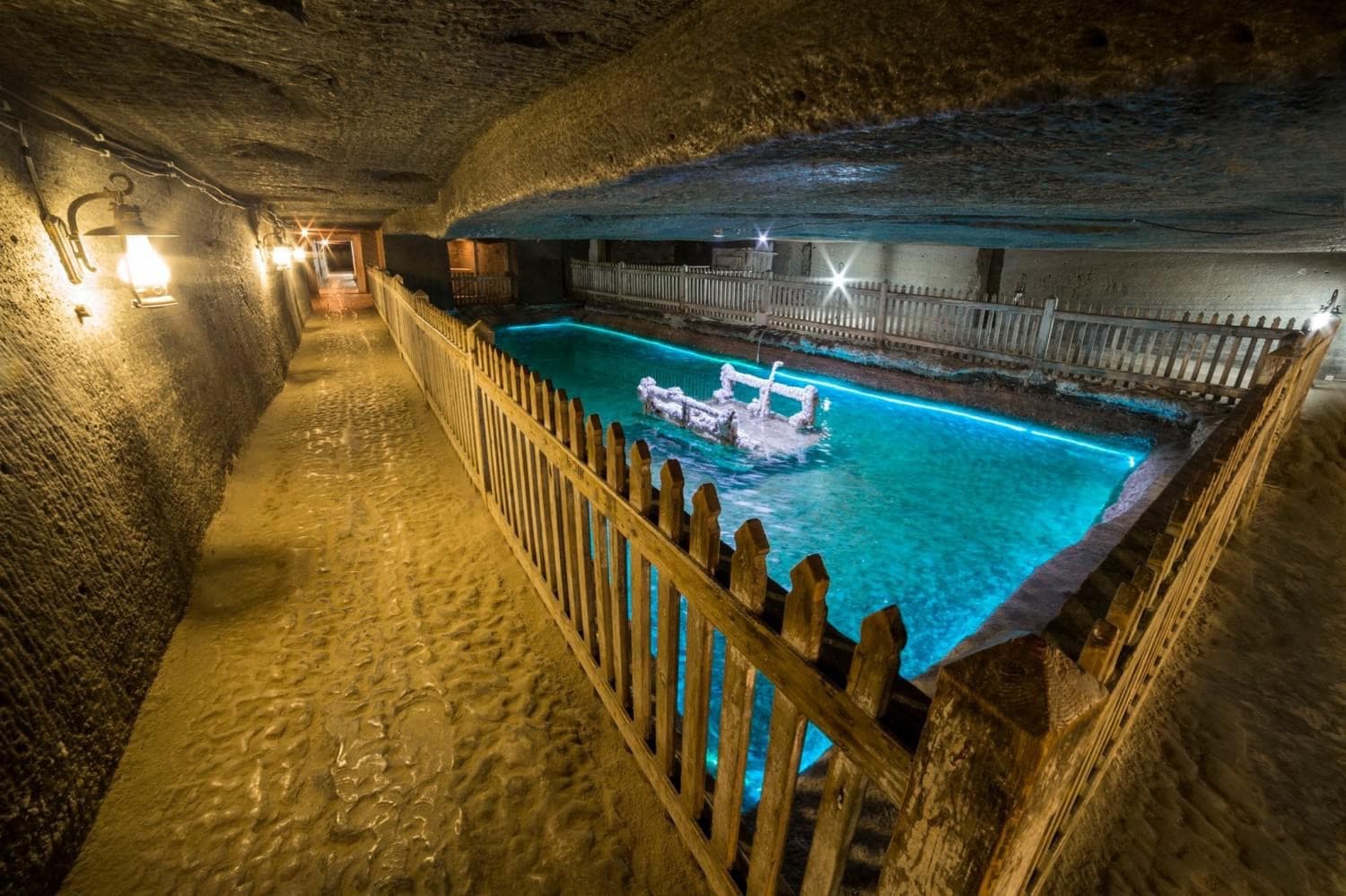
The visit is made on foot, descending 200 steps carved into the salt rock. The galleries are narrow and supported by dark timber; the smell of fuel oil, used to impregnate the wood, is immediately perceptible. It is a raw experience, little themed, which reminds at every step that you stand in a mine carved by hand.
The underground chapel
Arranged in a salt cavity, the Chapel of Saint Barbara — patron saint of miners — was used by workers for mass and prayers. Carved from salt, it ranks among the most striking elements of the route.
The dance hall and salt lake
Further on, a vast vaulted hall once served the mining communities for parties and balls. The visit also includes a small museum presenting miners' tools and working conditions, as well as a lake of salt-saturated water.
Good to know before descending
- People with claustrophobia may feel uncomfortable: the galleries are narrow and lighting is limited.
- The temperature remains cool at all times; bring a jacket, even in summer.
- The 200 steps must be descended and then climbed back up on foot: the visit is not suitable for people with reduced mobility.
Practical information
- Location: village of Cacica, Suceava county, Bucovina. Car access recommended from Suceava (approximately 45 minutes).
- Duration of visit: allow 1 to 1.5 hours underground, not including waiting time.
- Admission: moderate entrance fee, possible surcharge for photography.
- Hours: daily opening in tourist season, reduced hours off-season. Check before travelling.
- Guided tour: essentially in Romanian; some explanations in English or Polish depending on available guides.
- Nearby: Cacica's Catholic basilica, a major pilgrimage site, can be visited free of charge a few minutes' walk away.
What to combine in the region
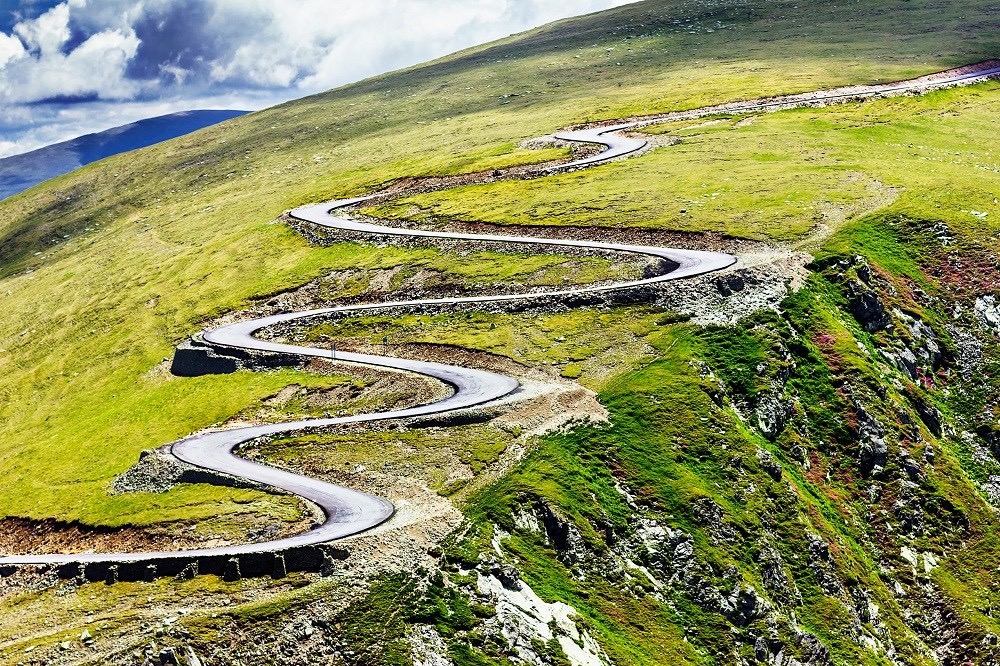
The Cacica mine fits naturally into a circuit through Bucovina and beyond. If the underground experience impressed you, Salina Turda in Transylvania offers a very different, far more spectacular and museum-like presentation. To extend your discovery of northern Romania, the Bârsana monastery in Maramureş illustrates the traditional timber architecture of the eastern Carpathians. Further south, Corvin Castle and the Transfăgărășan road complete a wide-ranging cultural and scenic itinerary.
Include Cacica in your Romania trip
The Cacica salt mine is an original stop for those wanting to venture off the beaten path in Bucovina and encounter the industrial, religious and migratory history of the region. Our local advisors can include it in a bespoke itinerary, combined with Bucovina's painted monasteries or villages in Maramureş. Discover our itinerary ideas on our Romania travel page.
Nearby
Interested in this visit?
We can include it in your personalised itinerary.