Salina Turda
Salina Turda
A former Transylvanian salt mine converted into an underground theme park: navigable lake, bowling alley, and amphitheater more than 100 meters beneath the surface.
A former salt mine transformed into an underground theme park, Salina Turda combines industrial heritage with playful reinvention. Located about thirty kilometers southeast of Cluj-Napoca, the site attracts hundreds of thousands of visitors each year who descend more than one hundred meters underground into galleries carved over nearly a thousand years of salt extraction.
Why Visit Salina Turda
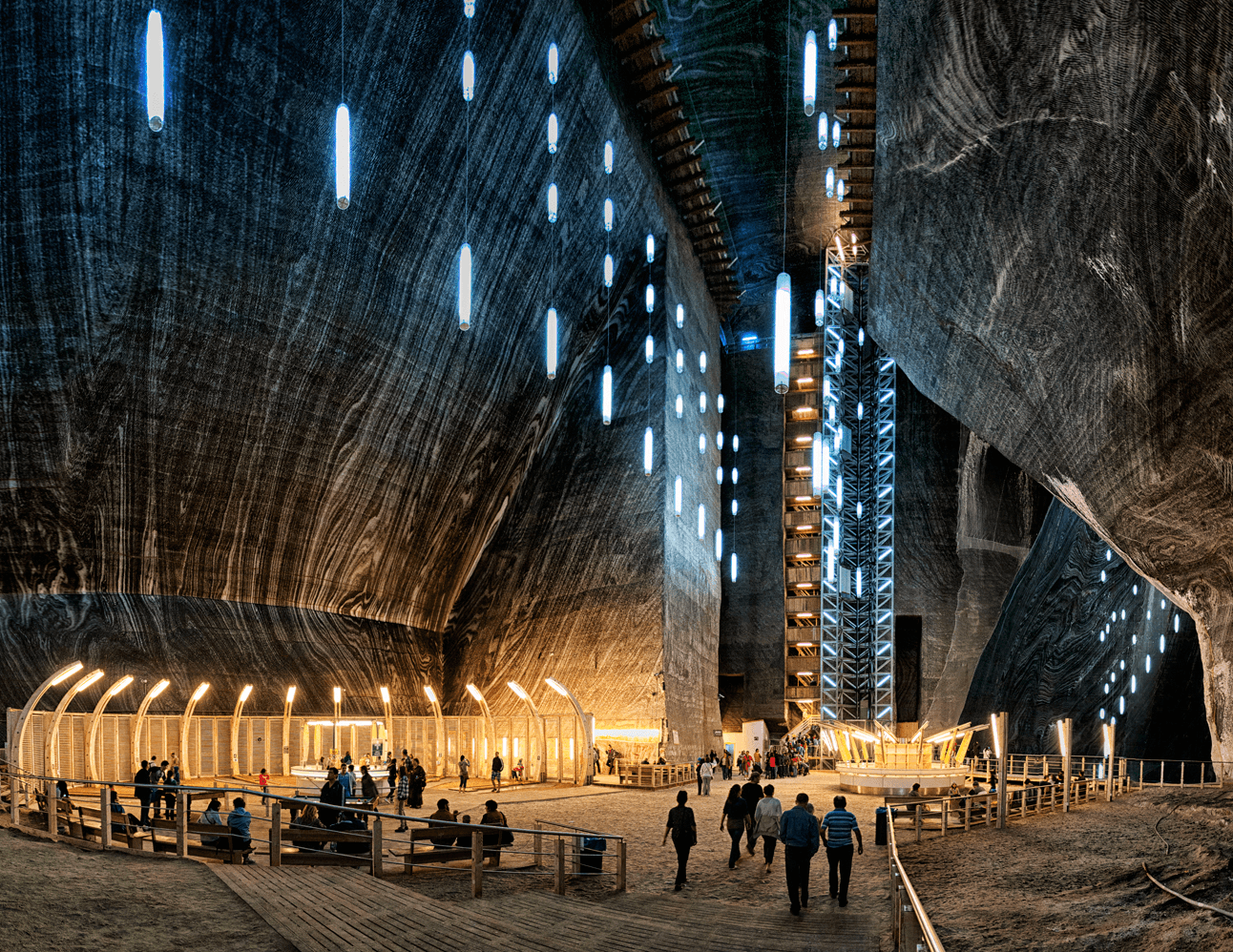
Salina Turda is unlike any other repurposed mine in Europe. Beneath the vault of the Rudolf chamber, approximately 42 meters below ground level and over 110 meters below the surface, a genuine leisure center has been developed: an amphitheater, multi-sport field, bowling lanes, and mini-golf coexist with the old wooden winches and dark salt walls. Even deeper, a navigable underground lake in the Terezia mine occupies the bottom of the shaft. The salt-saturated air, stable temperature around 11–12 °C year-round, and atmospheric lighting designed by architects from the Pranzini studio place the experience between heritage tour and immersive journey.
A Thousand Years of Salt Mining
Salt has been mined in Turda since Roman antiquity, but the mine as visitors experience it today took shape from the 17th century onward. It is documented and became known during the reign of Maria Theresa, Empress of Austria-Hungary, under whom exploitation was modernized in the 18th century. Three main shafts structure the site: Iosif, Terezia, and Rudolf, opened between 1690 and the late 19th century.
A notable feature of this mine: work was performed solely by paid laborers, never by enslaved people or convicts, unlike other salt operations in Central Europe. Industrial extraction ceased in 1932, displaced by the less expensive deposits of Praid and Ocna Mureș. During World War II, the galleries served as air-raid shelters, then as storage chambers for local cheese. Tourist conversion began in the 1990s and culminated in a complete renovation from 2008–2010, funded by European grants.
What to See and Do in the Mine
The Rudolf Mine and Its Leisure Center
This is the most spectacular space. The chamber, roughly 80 meters long and over 40 meters deep, houses the great underground Ferris wheel, bowling lanes, a multi-sport field, mini-golf, and an amphitheater used for occasional concerts. Old wooden staircases spiral down along the walls.
The Underground Lake of the Terezia Mine
At the bottom of the Terezia chamber, a salty lake of a few meters' depth has formed through seepage. Small boats allow visitors to tour it for about twenty minutes. Soft lighting reveals the salt concretions and stalactites that line the walls.
The Iosif Mine and Its Echoes
More understated, the Iosif chamber is known for its acoustics: a word spoken there echoes for over ten seconds. An observation platform allows visitors to view the shaft's depth from the upper level.
The Museum and Extraction Machinery
Along the route, several winches, horse-driven mills, and period tools are preserved in situ, accompanied by explanatory panels in Romanian and English.
Practical Information
- Duration: allow 2 to 3 hours to explore the galleries and enjoy the activities.
- Admission fees: moderate entrance fee, with additional charges for boat rides on the lake and activities (bowling, mini-golf).
- What to bring: bring a jacket, even in summer. Temperatures remain cool and humidity is high.
- Accessibility: an elevator serves the Rudolf level, though some parts of the mine are accessible only by stairs.
- Recommended for: families, industrial heritage enthusiasts, travelers seeking unique experiences. Those with asthma often appreciate the salt-rich air.
When to Visit Salina Turda
The mine is open year-round since interior temperature remains constant. Peak tourist season runs from June to August, with possible queues mid-day. For a quieter experience, choose April–May or September–October, or arrive at opening time in the morning. Romanian weekends and public holidays should be avoided if you seek tranquility.
How to Get There
Salina Turda is located in the town of Turda, approximately 30 km southeast of Cluj-Napoca. From Cluj, allow 40 minutes by car via the A3 highway then the DN1 road. Regular buses connect Cluj's bus station to Turda in about 1 hour. From Sibiu, allow approximately 2.5 hours by road. Parking is available at the site entrance.
What to Combine in the Region
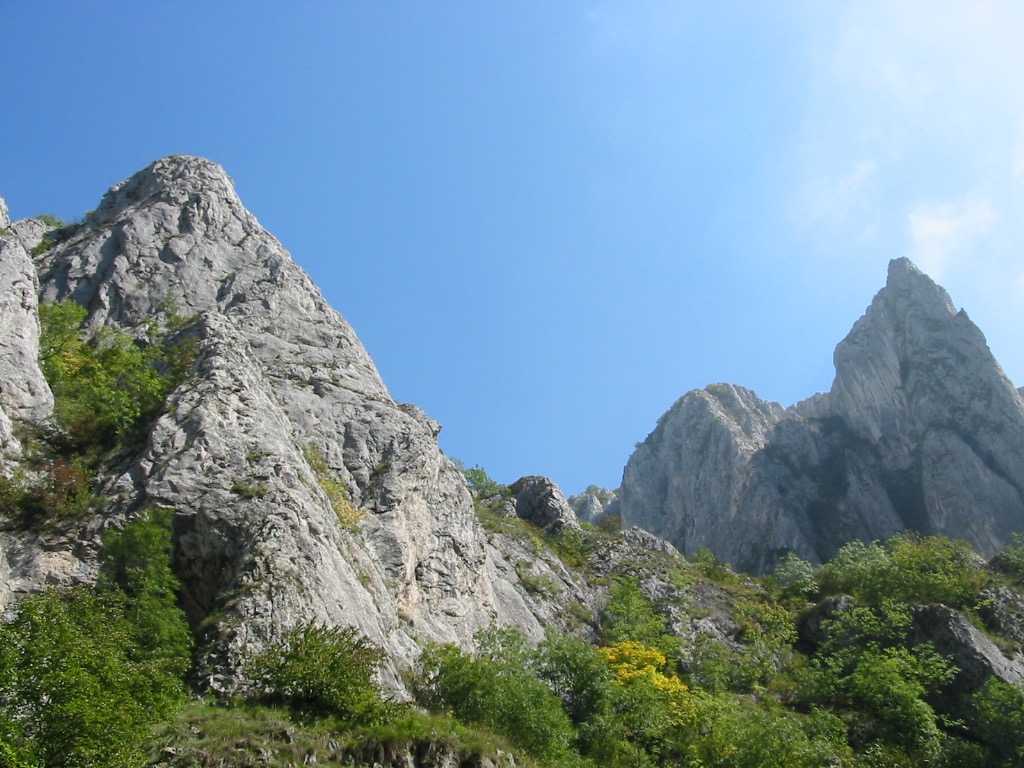
Turda fits naturally into a Transylvanian itinerary. The Turda Gorges (Cheile Turzii), 7 km away, offer striking contrast with the underground visit through their hiking trails. Further afield, the fortified village of Biertan and its UNESCO-listed fortress church illustrate Saxon heritage. To understand peasant traditions, the ASTRA Ethnographic Museum in Sibiu ranks among Europe's largest open-air museums. Nature lovers can venture to the Creasta Cocoșului geological reserve in Maramureș.
Frequently Asked Questions
Frequently asked questions
The mine descends to approximately 112 meters below the surface. The main tourist level, the Rudolf chamber, is located about 42 meters below ground level.
Booking is not mandatory, but it is recommended in summer and on weekends to avoid queues.
Yes, the site is very family-friendly thanks to its recreational activities (bowling, boats, mini-golf). Strollers can use the main elevator.
Allow 2 to 3 hours for a full visit, longer if you plan multiple underground activities.
The salt-saturated air is reputed to benefit respiratory health. No structured medical protocol is enforced: a simple visit is sufficient to experience the benefits.
Include Salina Turda in Your Journey
Salina Turda fits naturally into a Transylvanian circuit, between Cluj-Napoca, Sibiu, and Saxon villages. To build a custom itinerary featuring this distinctive mine and other regional sites, consult our Roumanie travel suggestions.
Interested in this visit?
We can include it in your personalised itinerary.