Tismana Monastery
Tismana Monastery
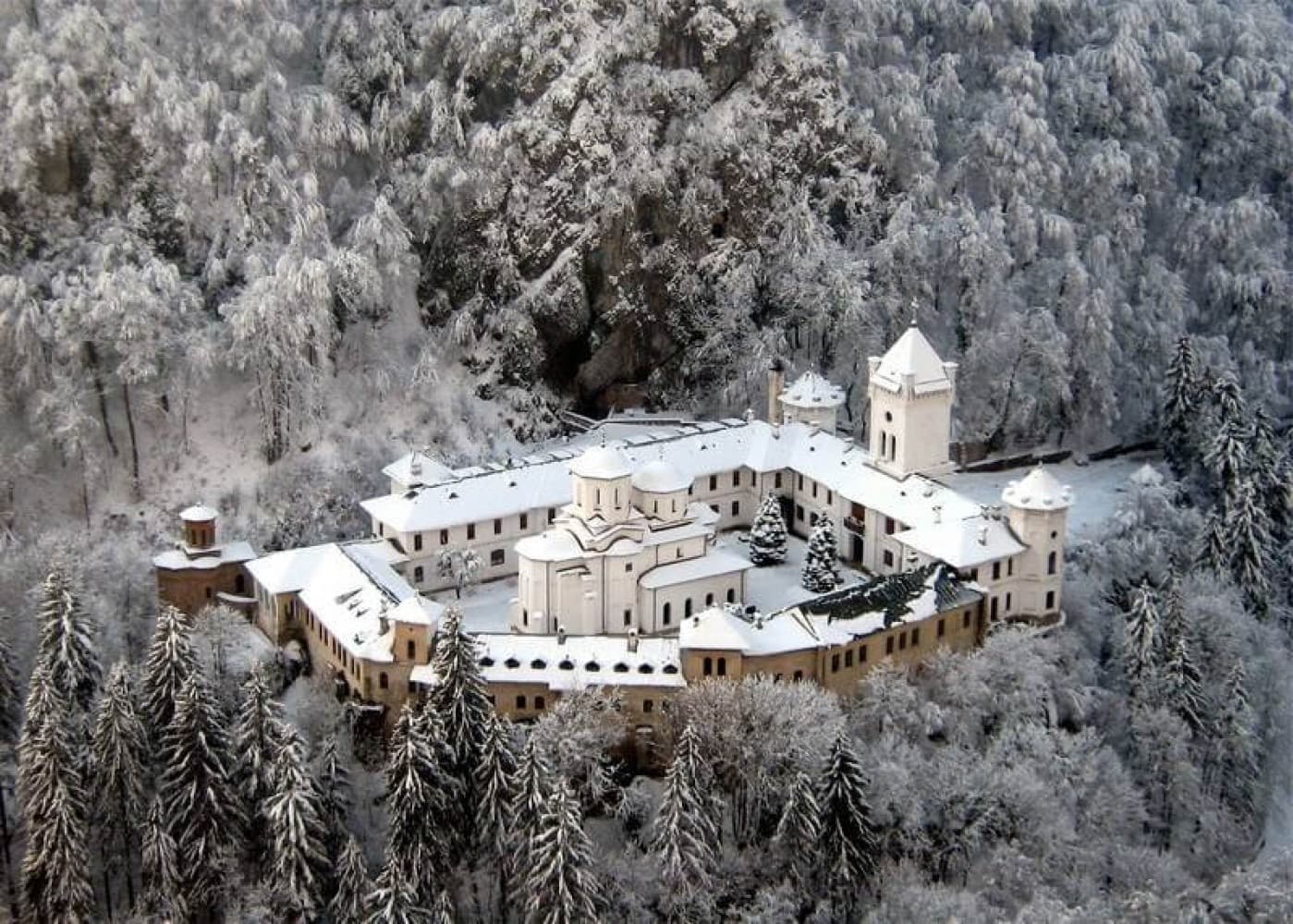
Some 30 km from Târgu Jiu, the fortified Tismana Monastery, founded in the 14th century by Saint Nicodemus, has watched over Mount Stârmina for more than six centuries.
About thirty kilometers from Târgu Jiu, nestled among the steep forests and limestone cliffs of the southern Carpathians, Tismana Monastery clings to the slopes of Mount Stârmina. Nicknamed locally "the heart of Oltenia," it ranks among the oldest Orthodox monasteries in Wallachia and remains, more than six centuries after its founding, an active pilgrimage site.
Why Visit Tismana Monastery
Tismana appeals equally to history enthusiasts and travelers seeking natural wonders. The monastery combines several characteristics rare in Romania:
- a foundation dating to the late 14th century, making it one of the oldest monastic complexes in Wallachia;
- fortified architecture, with medieval walls and corner bastions, testimony to centuries when monasteries needed to defend themselves;
- a remarkable natural setting, perched on a cliff face, near a waterfall and grotto said to have served as a retreat for its founder;
- a singular historical role: this is where the treasure of the National Bank of Romania was hidden during World War II.
Allow 1 to 2 hours to explore the complex, longer if you extend your visit with a walk through the national park surrounding the site.
History of the Monastery
Foundation by Saint Nicodemus
The monastery is attributed to Nicodemus of Tismana, a monk of Serbo-Greek origin who came to organize monastic life in Wallachia in the late 14th century. Its construction spanned the reigns of Radu I and Mircea the Old, two voivodes who actively supported the project. According to tradition, Nicodemus first lived as a hermit in a nearby cave before establishing the monastic community.
Archaeological excavations conducted in 1970 uncovered, four meters from the main church, the ruins of an ancient place of worship likely dating to the Roman period. This discovery suggests the site had a religious vocation long before the arrival of Orthodox monks.
A Place of Refuge Through the Centuries
Its defensive position meant Tismana served as a refuge on several occasions. The monastery notably sheltered precious manuscripts and objects during Ottoman invasions. The most striking event dates to World War II: between 1944 and the war's end, the reserves of gold from the Romanian National Bank were hidden in a cavity at the site, safe from bombardment and foreign troops.
What to See On Site
The Main Church
The central church, dedicated to the Dormition of the Virgin, preserves frescoes restored in the 19th century as well as medieval elements. The iconostasis and tombs of several abbots are visible. Appropriate dress is required at the entrance.
The Walls and Bastions
The fortified enclosure, with its corner towers, frames the inner courtyard and gives the monastery the appearance of a small citadel. It is one of the rare monastic complexes in Wallachia to have preserved this defensive character so clearly.
The Grotto and Waterfall
A marked trail leads to the grotto attributed to Saint Nicodemus, located in immediate proximity. A waterfall cascades from the rocky slope just below the monastery—it is said to have given the site its name, from the Slavic word for yew tree ("tisa"). Wear good shoes for the trail, which can be damp in places.
The Monastic Museum
A small collection displays ancient icons, manuscripts, liturgical objects, and documents evoking the hidden treasure episode. The visit is brief but helpfully illuminates the site's history.
Practical Information
- Dress code: shoulders and knees covered; a scarf appreciated for women inside the church.
- Entry fees: free access to the grounds; modest contribution for the museum.
- Photography: permitted outside, restricted or forbidden inside the churches (signage on site).
- Services: parking nearby, small shops selling monastery honey, icons, and handicrafts.
- Visit duration: 1 to 2 hours, to be extended if you include the grotto and park.
When to Visit
The most pleasant period runs from May to October, with peak tourism in July–August. Spring offers lush vegetation around the waterfall; autumn brings striking colors on the wooded slopes. In winter, access remains possible but the mountain road can be snow-covered, and some trails are closed. Avoid major Orthodox holidays (Easter, Dormition on August 15) if you seek tranquility: the site receives many pilgrims then.
How to Get There
The monastery sits above the village of Tismana, in Gorj County.
- From Târgu Jiu: approximately 30 km via road DN67D, or 40 to 50 minutes by car.
- From Bucharest: allow 4 to 5 hours by road via the A1 motorway then DN67.
- By public transport: buses connect Târgu Jiu to Tismana; from the village, the ascent to the monastery is on foot (steep climb) or by taxi.
A car remains the most practical option for combining Tismana with other regional sites.
What to See in the Region and Beyond
Oltenia and neighboring regions boast several sites that complement a visit to Tismana well:
- in Târgu Jiu, Constantin Brâncuși's sculptural ensemble (Endless Column, Table of Silence, Gate of the Kiss);
- the Jiu Gorges and Domogled–Valea Cernei National Park for hiking;
- further north, in Maramureș, the wooden churches of Ieud and the Museum of the Romanian Peasant at Dragomirești;
- the Creasta Cocoșului geological reserve for volcanic landscapes;
- in Transylvania, the ASTRA ethnographic museum in Sibiu;
- in Dobruja, Enisala Fortress overlooking the Danube Delta.
Frequently asked questions
In the late 14th century, during the reigns of Radu I and then Mircea the Old, at the initiative of the monk Nicodemus of Tismana.
Yes, it is today an active convent open to visitors in respect of the sacred space.
During World War II, the gold reserves of the Romanian National Bank were hidden there to protect them from bombardment and occupation.
Allow 1 to 2 hours for the monastery alone, and a half day if you add the grotto, waterfall, and a walk through the surrounding wooded area.
Plan Your Journey
Tismana fits naturally into an itinerary through Oltenia or a broader trip connecting Bucharest to the southern Carpathians. To build your Romania itinerary, consult our Romania travel guide and its custom circuit suggestions.
Interested in this visit?
We can include it in your personalised itinerary.