Sambata Monastery
Sambata Monastery
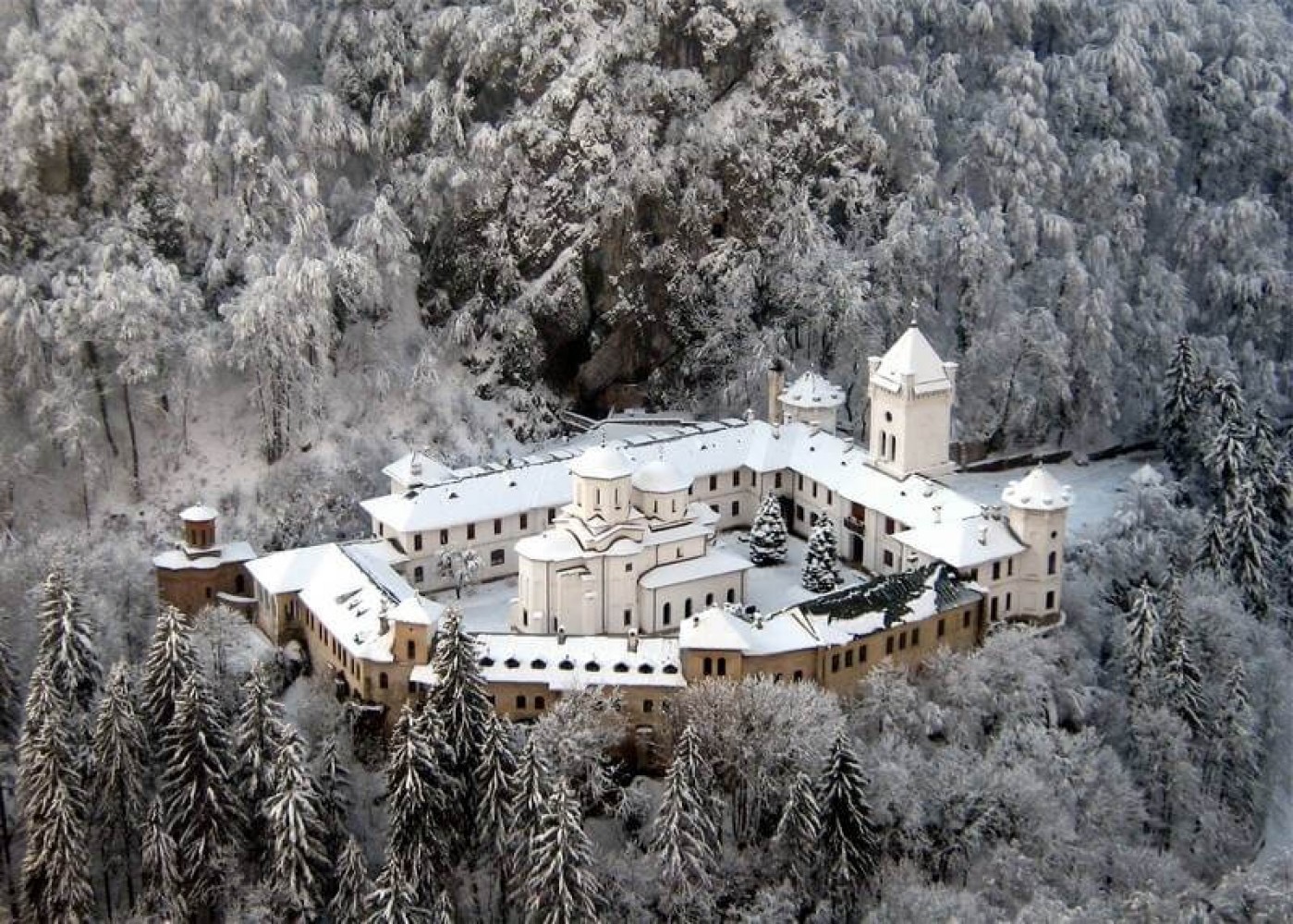
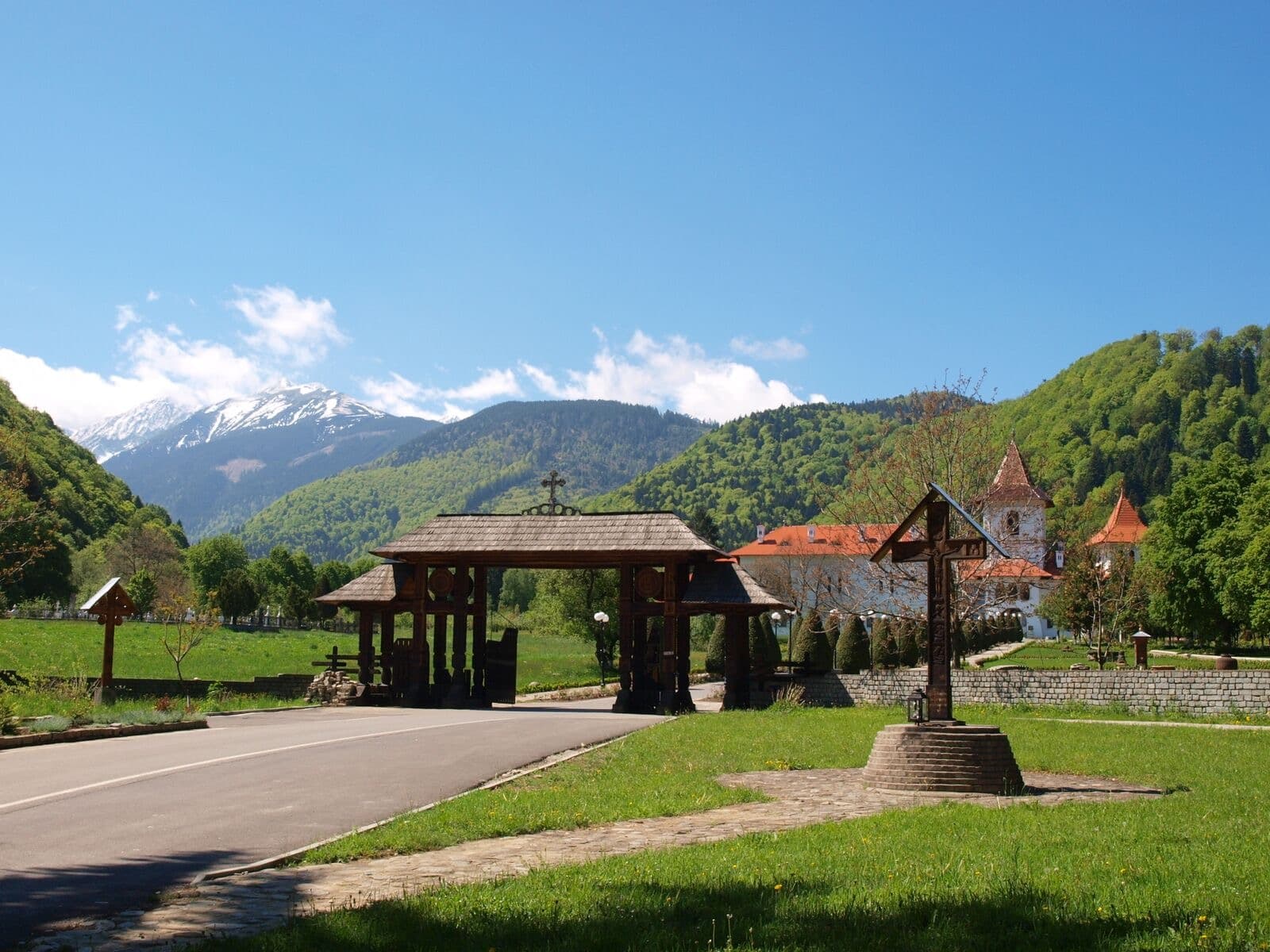
At the foot of the Făgăraș Mountains, Sâmbăta Monastery, founded by Constantin Brâncoveanu, is home to a community of monks and a glass icon workshop.
At the foot of the Făgăraș Mountains, in the village of Sâmbăta de Sus, Brâncoveanu Monastery (also known as Sâmbăta Monastery) stands as a spiritual pillar of Romanian Orthodoxy. Founded in the late 17th century by Prince Constantin Brâncoveanu, this monastery of monks dedicated to the Assumption of Mary remains renowned throughout Roumanie for its glass icon workshop and its mountain setting, approximately 25 km southwest of Făgăraș.
Why visit Sâmbăta Monastery
- A living monastic complex, occupied by a community of Orthodox monks.
- A renowned glass icon painting workshop, a technique popular in Transylvania.
- Architecture of the Brâncovenesc tradition, blending Byzantine, Ottoman and Baroque influences.
- A natural site at the foot of the Făgăraș, a starting point for hikes into high alpine terrain.
- Free access to the grounds and church, with respect for the place of worship.
History of the monastery
The monastery was founded toward the end of the 17th century by Constantin Brâncoveanu, Prince of Wallachia from 1688 to 1714. He had a stone church built in an area then part of Transylvania, at a time when Romanian Orthodoxy faced religious and political pressure.
In the 18th century, under Habsburg authority, the site suffered a brutal setback: in 1785, Austrian general Preiss ordered the demolition of much of the buildings as part of the suppression of Orthodox monasteries in Transylvania. Only the ruins of the church survived, remaining for a long time a symbol of religious resistance.
Reconstruction was launched in the 1920s by Metropolitan Nicolae Bălan, and the complex was progressively restored and enlarged throughout the 20th century. The glass icon workshop, heir to a Transylvanian tradition dating back to the 18th century, contributed to the site's growing reputation.
What you can see on site
The main church
The church, in Brâncovenesc style, features a sober façade and an interior adorned with frescoes. The stone sculptural decoration around the portals and windows is typical of this school of art developed under Brâncoveanu.
The workshop and glass icon museum
The monastery houses a collection of icons painted on glass, a technique popular in Transylvanian villages. The displayed pieces illustrate the main themes of Orthodox iconography: the Virgin and Child, scenes from the life of Christ, patron saints.
The library and monastic buildings
Around the cloister, you will see the monks' cells, the library and buildings for welcoming pilgrims. Part of the complex remains reserved for monastic life and is not accessible to visitors.
The grounds and spring
A spring of water considered miraculous by the faithful is located near the church. The surrounding park, crossed by the Sâmbăta River, extends the visit to the first foothills of the Făgăraș.
Practical information
- Access: free entry to the grounds and church; modest contribution requested for the icon museum.
- Dress code: proper attire required (shoulders and knees covered), as in any Orthodox monastery.
- Photography: permitted outdoors; generally forbidden inside the church and museum.
- Duration of visit: allow 1 to 2 hours for the monastery and museum, more if you extend your time with a walk in the valley.
- Accommodation: the monastery offers lodging for pilgrims; several guest houses are available in Sâmbăta de Sus and nearby villages.
When to visit
The monastery can be visited year-round. Late spring and summer (May to September) offer the best conditions, with long days and easy access to mountain trails. Autumn, in September-October, highlights the Făgăraș forests in golden hues.
Winter is more contemplative: frequent snow, reduced crowds, but secondary roads can sometimes be challenging. Avoid if possible the major feast of the Assumption (August 15), very busy with pilgrims, unless you specifically wish to experience this popular fervor.
How to get there
The monastery is located about 25 km southwest of Făgăraș, in central Transylvania, and roughly a hundred kilometers from Brașov or Sibiu.
- By car: from the DN1/E68 highway between Brașov and Sibiu, take the exit toward Sâmbăta de Sus, then follow the signs for « Mănăstirea Brâncoveanu » for about ten kilometers.
- By public transport: trains and buses serve Voila or Făgăraș; a taxi or local transfer is then necessary to reach the monastery.
- By organized tour: many circuits in Transylvania include the monastery on the Brașov–Sibiu route.
What to combine in the region
The monastery is part of a broader Transylvanian itinerary. Several sites complement your visit:
- The ASTRA Ethnographic Museum in Sibiu, one of Europe's largest open-air museums.
- The wooden churches of Ieud, in Maramureș, to continue discovering Romanian religious architecture.
- The Romanian Peasant Woman Museum at Dragomirești, dedicated to rural traditions.
- The Creasta Cocoșului geological reserve, for lovers of volcanic landscapes.
Include Sâmbăta Monastery in your journey
A spiritual and cultural stop at the foot of the Făgăraș, Brâncoveanu Monastery fits well into an itinerary combining Brașov, Sibiu and rural Transylvania. To build a custom stay that includes this site and other monastic stops, consult our travel to Roumanie.
Interested in this visit?
We can include it in your personalised itinerary.