Humor Monastery
Humor Monastery
Built in 1530 in Bucovina, Humor monastery is celebrated for its profound red Byzantine frescoes and its pioneering role in Moldavian architectural style.
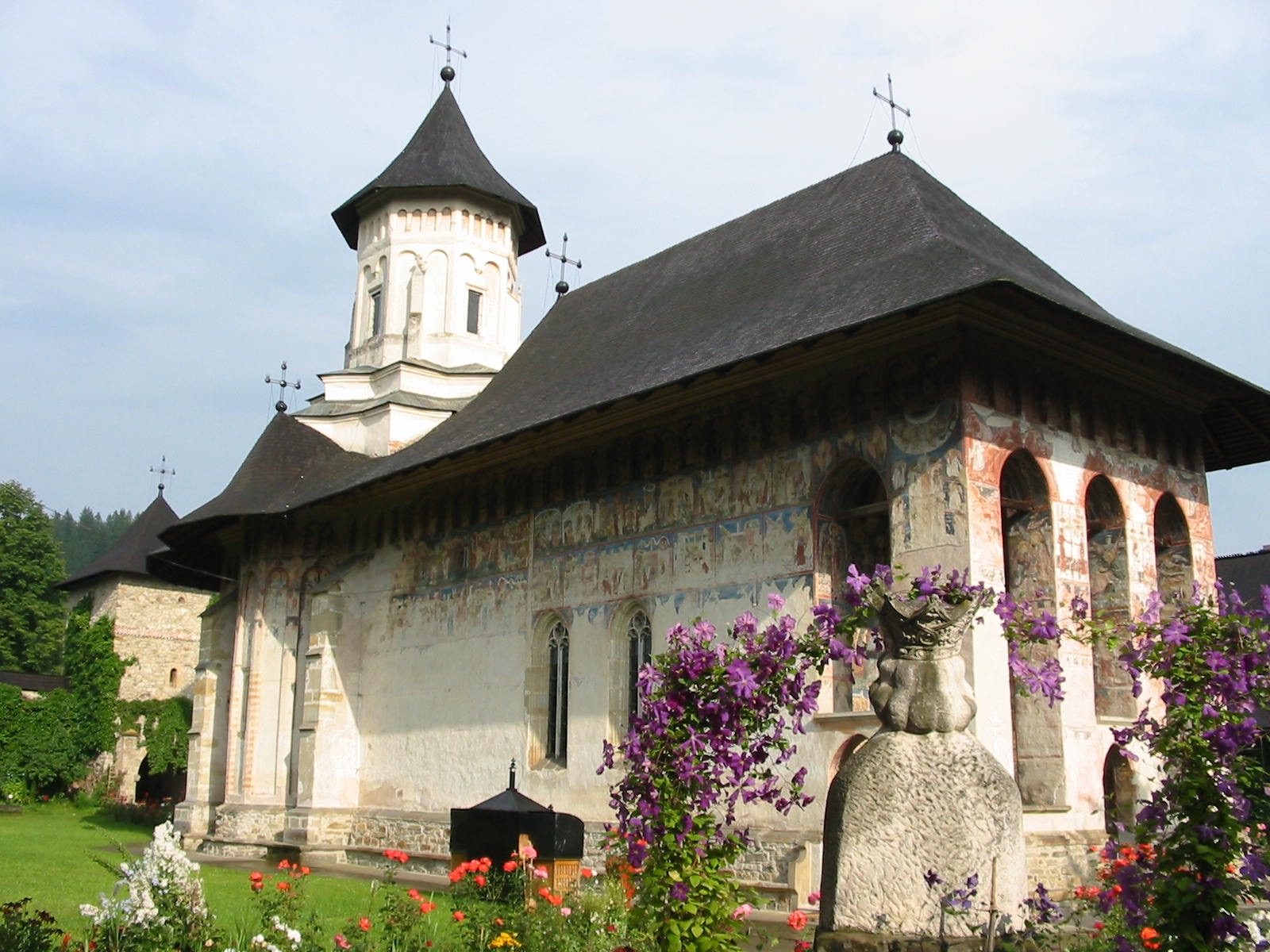
Humor monastery ranks among the eight painted monasteries of Bucovina in northeastern Romania, inscribed on the UNESCO World Heritage list. Built in 1530 under the reign of voivode Petru Rareș, it stands out for its exterior frescoes dominated by a deep red, which has become its visual signature.
Why visit Humor monastery
- A collection of polychrome Byzantine frescoes from the 16th century, preserved both outside and inside the church.
- A building considered one of the founding milestones of Moldavian architectural style.
- The introduction of the open exonarthex, an innovation later adopted by several monasteries in the region.
- A preserved rural setting, nestled at the foot of Bucovina's wooded hills, away from major tourist routes.
History of the monastery
Humor monastery was built in 1530 by logothete Toader Bubuiog, a high-ranking dignitary of the Moldavian court, near the ruins of an older church. Construction took place during the reign of Petru Rareș, son of Stephen the Great, a prosperous period for religious building in Moldavia.
The exterior frescoes were painted in 1535 by artist Toma de Suceava. They follow a precise iconographic program: the Last Judgment on the western facade, the Akathist hymn to the Virgin and the Siege of Constantinople on the southern facade, all rendered in a palette dominated by ochre red, in contrast to the blue of Voroneț or the green of Arbore.
The building marks a break with previous architectural tradition. It is often cited as the first fully realized example of Moldavian style, which combines Byzantine trilobate plan, high-pitched roofing with broad eaves, and exterior painted decoration. It is also at Humor that the open exonarthex first appears—an arcaded vestibule preceding the church entrance, which would become a recurring feature of Moldavian religious buildings in the 16th century.
Closed under Habsburg rule in the late 18th century, the monastery was reopened in 1991 and today houses a community of nuns.
What to see on site
The exterior frescoes
The southern facade, the best preserved, displays the Akathist Hymn to the Virgin across 24 stacked scenes and a representation of the 1453 Siege of Constantinople, transposed into a Moldavian imaginary world. The western facade bears the Last Judgment, organized in horizontal registers.
The church interior
The naos houses narrative frescoes depicting the life of Christ and military saints, as well as the votive portrait of founder Toader Bubuiog presenting the church model to the Virgin. The mineral pigments retain notable intensity.
The open exonarthex
The first of its kind in Moldavia, this arcaded vestibule serves as a threshold between the exterior and the liturgical space. Its vault and walls are entirely painted.
The defensive tower
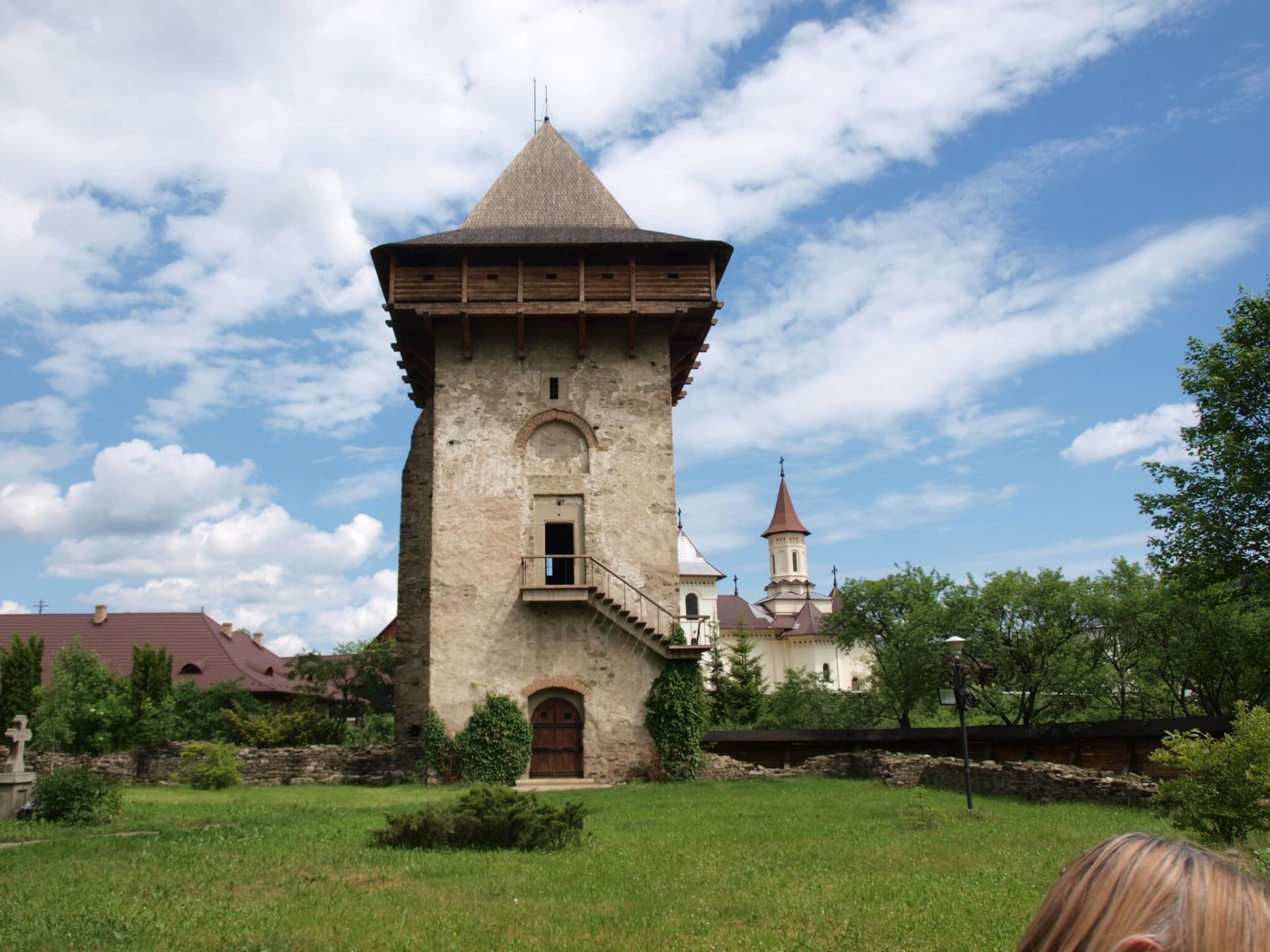
Built in 1641 by voivode Vasile Lupu, this stone tower stands 30 meters high and served as an observation post. It can be visited and offers views over the enclosure and surrounding valley.
The small museum
Several rooms display manuscripts, liturgical embroideries, and religious objects from the monastery's treasury.
Practical information
- Visit duration: allow 1 to 1.5 hours to tour the enclosure, observe the frescoes in detail, and climb the tower.
- Admission: modest entrance fee, small surcharge for photography.
- Dress code: shoulders and knees covered; wraps are sometimes available at the entrance.
- Languages: explanatory panels in Romanian and English; an English-speaking guide is recommended to grasp the iconographic program.
- Accessibility: uneven ground in the courtyard, steps at the church entrance.
When to visit
The period from May to September offers the best conditions: mild temperatures, long days, and oblique light in late afternoon that reveals the nuances of the exterior frescoes. July and August see the most visitors; May-June and September allow for a quieter visit. In winter, snow highlights the red facades beautifully, but secondary roads in Bucovina can be challenging.
How to get there
The monastery is located in the village of Mănăstirea Humorului, approximately 6 km from Gura Humorului, the main town in the painted monasteries area. Gura Humorului is served by train from Suceava (about 1 hour) and Cluj-Napoca. From Gura Humorului, a taxi or rental car will reach the site in about ten minutes. Many visitors combine Humor with Voroneț, located about twenty kilometers away, as part of a Bucovina monastery circuit.
What to combine in the region
Bucovina and neighboring Maramureș to the north form a dense ensemble of rural and religious heritage. Several sites complement a visit to Humor:
- The wooden churches of Ieud, in Maramureș, another UNESCO religious heritage site.
- The Museum of Romanian Peasant Woman at Dragomirești for Maramureș ethnography.
- The Creasta Cocoșului geological reserve for a nature break.
- The ASTRA Ethnographic Museum in Sibiu, further south, for an overview of Romanian rural architecture.
Frequently asked questions
Frequently asked questions
Yes. It is part of the Painted Monasteries of Moldavia, inscribed on the World Heritage list, recognized for its 16th-century exterior frescoes.
Voroneț is known for its deep blue, Humor for its ochre red. Both buildings are located about twenty kilometers apart and are often visited on the same day.
Interior photography is generally subject to a surcharge and respect for ongoing services. Flash is forbidden to preserve the pigments.
Yes, a community of nuns has lived there since its reopening in 1991. Visits are permitted outside service times.
Include Humor in a Romania circuit
Humor monastery fits naturally into an itinerary combining Bucovina, Maramureș, and Transylvania. To build a tailor-made journey around the painted monasteries and Romanian rural heritage, explore our Romania travel packages.
Nearby
Interested in this visit?
We can include it in your personalised itinerary.