The Apuseni Mountains
The Apuseni Mountains
A karst massif of the Western Carpathians, the Apuseni Mountains are home to glaciated caves, gorges and traditional villages in the Land of the Moți.
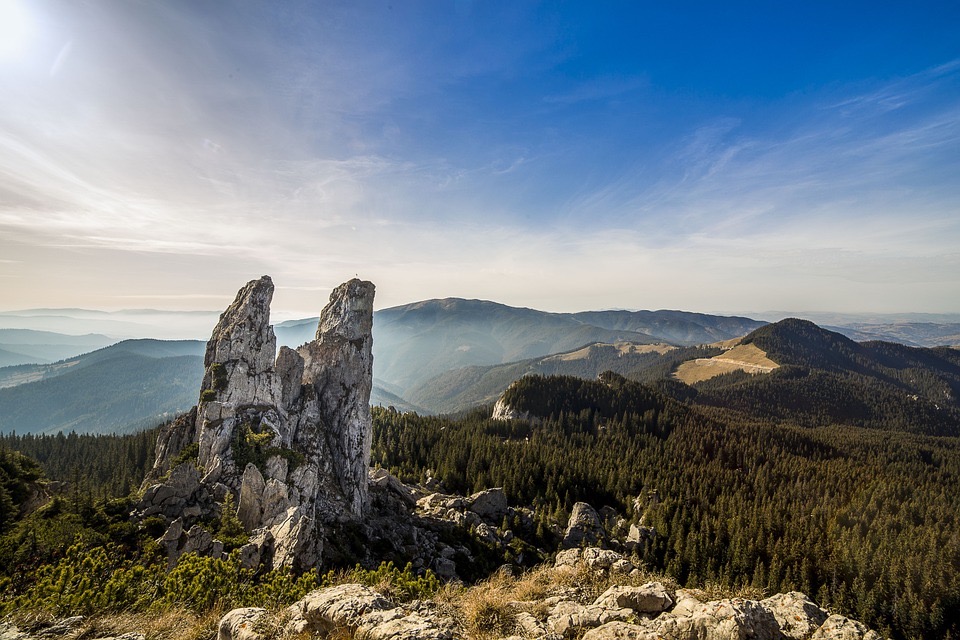
To the west of Transylvania, the Apuseni Mountains form a massif of the Western Carpathians renowned for its karst landscapes, forest villages and a network of caves among the densest in Central Europe. Less frequented than the Southern Carpathians, they offer unspoiled nature, ideal for hiking, caving and discovering still-vibrant rural traditions.
Why visit the Apuseni Mountains
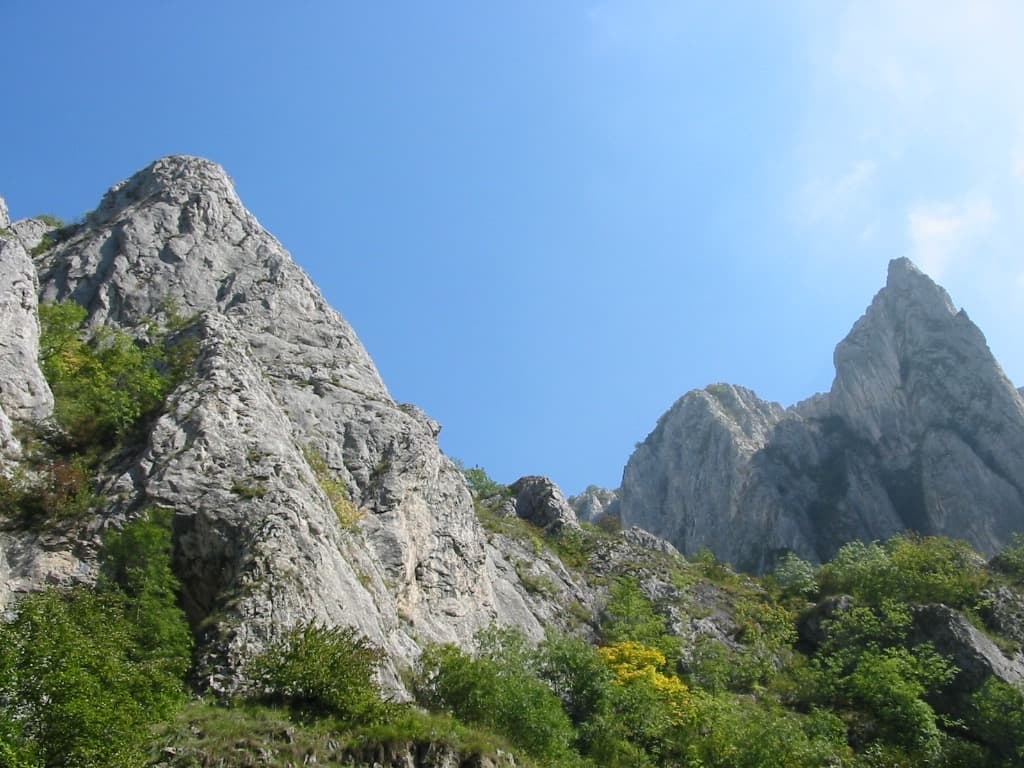
The relief of the Apuseni Mountains is typically karst (limestone), with numerous caves, sinkholes, canyons and resurgences. No summit reaches 2,000 meters and the average altitude of the Western Carpathians is around 1,000 meters, making the massif accessible to walkers of all levels.
The Apuseni Natural Park, created in 2005, protects over 75,000 hectares of forests, plateaus and gorges. The wooden villages scattered across the ridges (the moți, mountain communities) preserve an ancient agropastoral way of life, with manual hay-making and dispersed settlements. This is one of the last regions of Romania where such a cultural landscape can still be observed.
What to see and do
Iconic caves
- Scărișoara Cave: home to one of Europe's largest underground glaciers, with a block of ice estimated at over 75,000 m³, accumulated over several millennia.
- Bear Cave (Peștera Urșilor), near Chișcău: discovered in 1975, it owes its name to the bones of Ursus spelaeus (cave bear) found there. It is the most visited cave in the massif.
- Meziad Cave and Cetățile Ponorului, a vast system of karst collapses considered one of the country's most spectacular geological phenomena.
Waterfalls and gorges
- The Vârciorog waterfall and that of Bohodei (nearly 80 m), accessible via marked trails.
- The Galbena gorge and Sighiștel gorge, appreciated for their catwalks, ladders and equipped passages.
Villages and rural heritage
The hamlets of Gârda de Sus, Arieșeni and Vârtop offer a starting point for exploring the Land of the Moți. Rural markets and pastoral festivals (notably the "Girls' Fair" on Mount Găina, in July) bear witness to living folklore.
Activities
- Hiking on marked trails (from easy plateau loops to multi-day crossings).
- Guided caving for non-equipped caves.
- Mountain biking, cross-country skiing and light alpine skiing at Arieșeni-Vârtop in season.
When to go
The most favorable period extends from May to October, with an optimum in June-September for hiking (clear trails, long days). July and August are the busiest months but also the warmest at lower elevations; at altitude, temperatures remain pleasant. Autumn offers remarkable colors on the beech and spruce forests. In winter, snowfall allows skiing at Vârtop, but some secondary roads become difficult to access.
Practical information
- Duration of visit: allow a minimum of 2 to 3 days to see the main sites; a week for a genuine immersion.
- Accommodation: rural guesthouses (pensiuni) in Arieșeni, Gârda de Sus, Padiș and Stâna de Vale; mountain shelters for hikers.
- Rates: modest entrance fees for equipped caves; the natural park has free access.
- Equipment: waterproof hiking shoes, warm clothing even in summer (caves are around 4°C), headlamp for caving visits.
- Maps: Schubert & Franzke "Munții Apuseni" maps are the most reliable for hiking.
How to get there
The Apuseni Mountains are enclosed between four gateway cities:
- Cluj-Napoca (international airport) to the east, approximately 1.5-2 hours' drive from the first sites.
- Oradea to the northwest, convenient entry point for Bear Cave.
- Arad and Deva to the southwest.
A rental car is strongly recommended: public transport is poor for accessing the interior of the massif. Main roads (DN75, DN1) are good; secondary tracks require caution and, in places, a vehicle with raised ground clearance.
To combine in the region
The massif fits easily into a broader Transylvanian itinerary:
- Turda Salt Mine, a former salt mine transformed into a spectacular underground site, less than an hour from Cluj.
- Corvins Castle in Hunedoara, one of Central Europe's finest Gothic fortresses.
- The Transfăgărășan road to extend the mountain experience into the Southern Carpathians.
Frequently asked questions
Equipped caves (Scărișoara, Bear Cave, Meziad) are visited in groups with a local guide included in the ticket price. For wild cavities like Cetățile Ponorului, a certified caving guide is essential.
Yes, several sites (Bear Cave, Padiș plateau, Vârtop station) offer short marked trails accessible with children. Rural guesthouses readily welcome families.
Three days are enough to see the main caves and one or two viewpoints. A week allows you to combine hiking, caving and discovery of traditional villages.
Preparing your trip
The Apuseni Mountains lend themselves to a Romania circuit combining nature, rural heritage and major Transylvanian cities. Discover our travel ideas in Romania to build a bespoke itinerary.
Interested in this visit?
We can include it in your personalised itinerary.