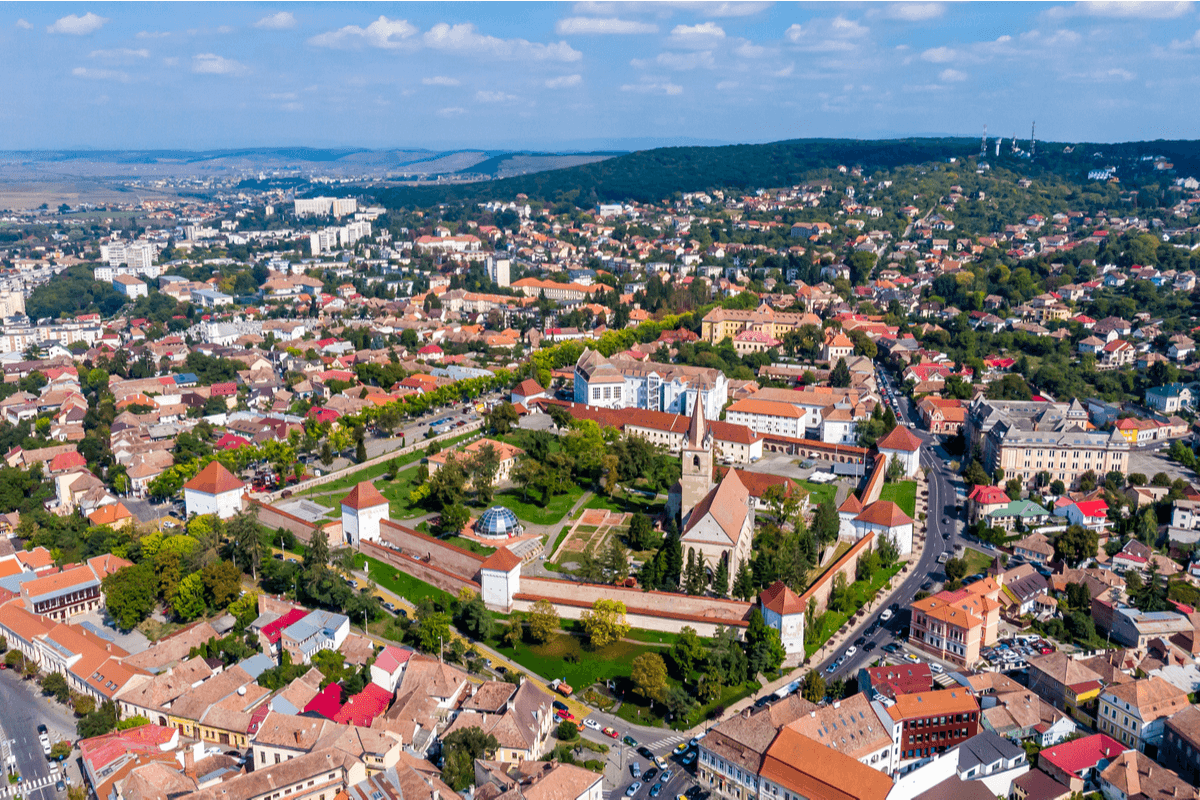
Carpathians and Prahova Valley
Gateway to the Southern Carpathians from Bucharest, between the royal Peleș Castle, the Bucegi plateau at 2,200 meters and brown bear hides.
The Prahova Valley cuts through the Southern Carpathians over some fifty kilometres, between the Wallachian plain to the south and the Brașov depression to the north. It is the historic axis linking Bucharest to Transylvania, travelled since the nineteenth century by the railway line and today by the DN1 highway. From our agency in Bucharest, we drive travellers there in two hours by car or train, making it the most direct gateway to Romanian mountains.
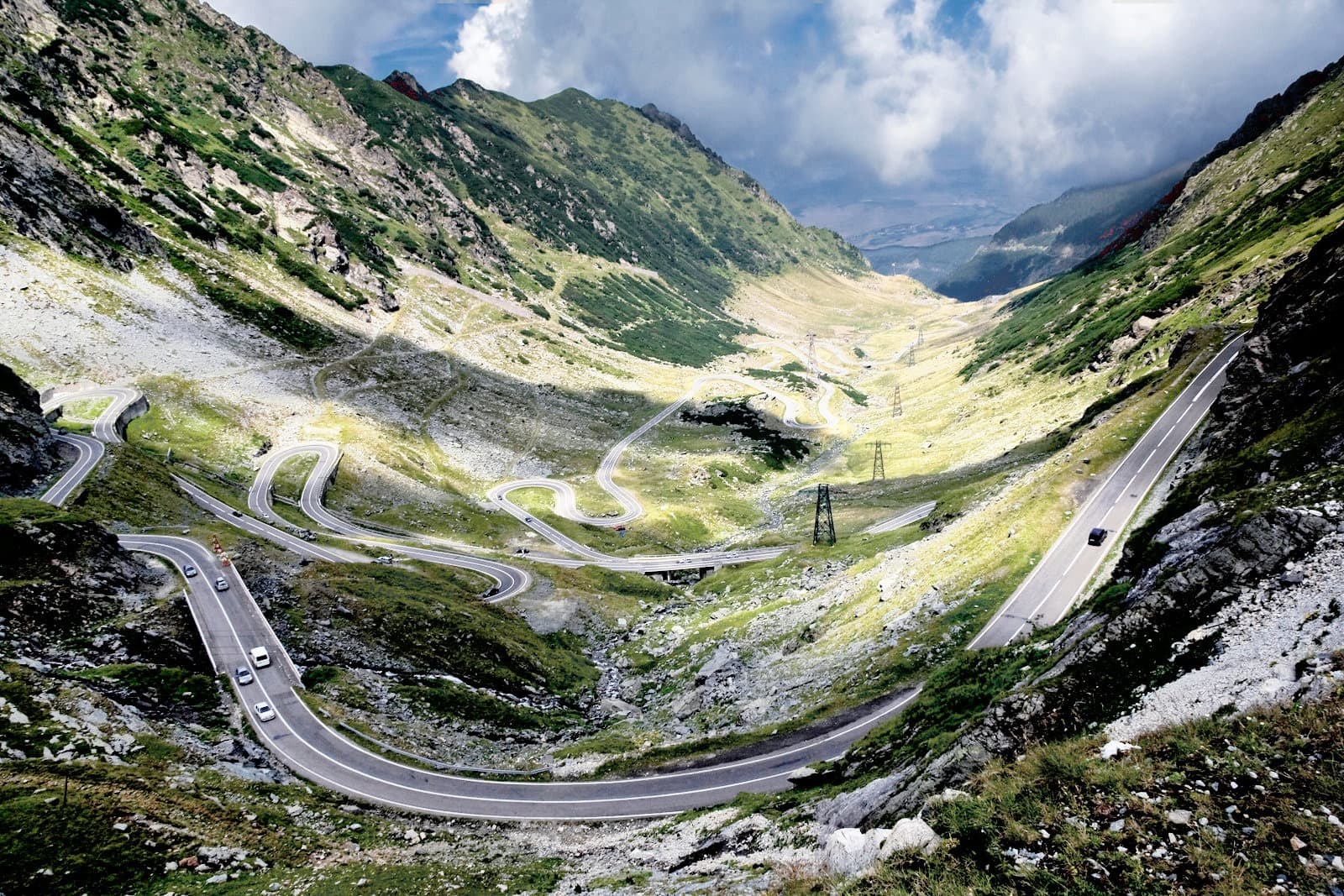
The valley is framed by two massifs with distinct characters. To the west, the Bucegi peaks at 2,505 meters at Omu and presents a wind-swept altitude plateau, where erosion has shaped the Sphinx and the Babele, sandstone reliefs that local shepherds named long before tourism arrived. To the east, the Baiu massif offers gentler slopes, covered with mixed beech and fir forests up to 1,700 meters. Further northwest, the Făgăraș range lines a 70-kilometre ridge with Moldoveanu (2,544 m) and Negoiu (2,535 m), accessible from the valley via the Transfăgărășan, an altitude road open from July to October.
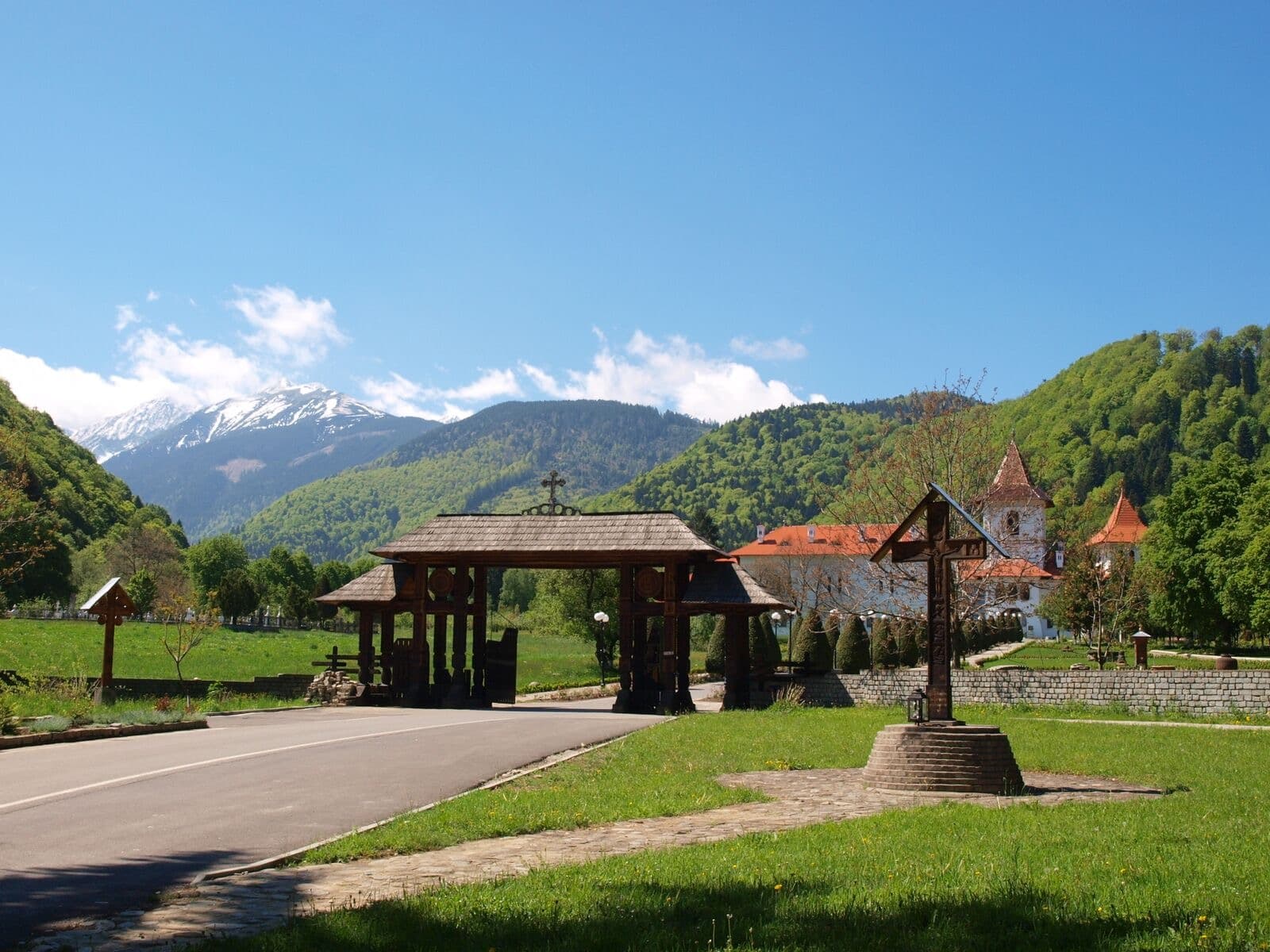
The valley's resorts tell a century and a half of tourism history. Sinaia developed around the monastery of the same name, founded in 1695, then around Peleș Castle, built between 1873 and 1883 for King Carol I in German Neo-Renaissance style. The inner courtyard, walnut woodwork and weapons hall make it one of the best-preserved royal interiors in Central Europe. Bușteni, ten kilometres further north, long lived from its paper mills and now serves as a base for hikes to the Heroes' Cross (2,291 m), erected in 1928 in memory of Romanian soldiers from the First World War. Predeal, perched at 1,060 meters, is the country's highest town and concentrates family ski runs.
Local life retains a pastoral dimension that still structures the highlands. Shepherds in the Bucegi region practise transhumance to altitude pastures from May to October, and cabins (stână) produce caș, urdă and telemea, sheep cheeses found in Sinaia and Azuga markets. Azuga, incidentally, is home to the Rhein winery, founded in 1892, which produces one of Romania's rare champagne-method sparkling wines. On the dining side, mountain inns serve fairly robust mountain cuisine: ciorbă de burtă, potato tochitură, trout from Doftana farms, and plum palincă produced in villages of the lateral Telega valley.
This region also concentrates our wildlife observation outings. The Romanian Carpathians are home to around 6,000 brown bears, half the European population outside Russia, and the Bucegi and Piatra Craiului massifs are part of their territories. We work with biologists from the national park who lead forest-edge hides, usually in the late afternoon between April and October. Lynx and wolves are present but far rarer to observe. These outings require strict behaviour: silence, neutral clothing, respected distance.
Beyond well-known sites, the valley provides access to less-frequented areas that we willingly include in programmes. The Dacian fortress of Sarmizegetusa, listed by UNESCO, is three hours' drive to the west. Bran Castle, 45 minutes from Brașov, draws crowds for its supposed links with Vlad the Impaler, but we often prefer to steer our travellers towards Râșnov, a less crowded and better-preserved fourteenth-century peasant citadel.
To discover
Peleș Castle in Sinaia. Summer residence of the Kings of Roumanie completed in 1883, with 170 rooms, including the weapons hall and secret library. One-hour guided tour avoiding summer weekends when queues reach two hours.
Bucegi Plateau and the Sphinx. Cable-car climb from Bușteni to 2,200 meters, then one-hour walk across the plateau to the Sphinx and Babele rock formations. Constant wind, bring a fleece even in July.
Brown bear hide. Observation from a wooden hide at the forest edge, led by a park biologist. Three-hour outing in late afternoon, April to October, in areas known to our team for regular bear activity.
Rhein Winery in Azuga. Tour of galleries dug in 1892 and tasting of sparkling wines made using traditional methods, at 950 meters altitude. One of the oldest sparkling wine houses in the Balkans still operating.
Râșnov Citadel. Fourteenth-century Saxon peasant fortress perched on a limestone pinnacle, a refuge for villagers during Ottoman incursions. Clear views of the Piatra Craiului massif and the Bran corridor entrance.
When to go
The best period for the Prahova Valley stretches from late May to early October. In June and September, temperatures in Sinaia (800 m) range between 10 and 22 °C, with cool nights requiring a fleece, and trails are passable to the ridges. July and August are the busiest months: temperatures of 15 to 26 °C in the valley, but weekends see Bucharesters flooding in and queues at Peleș Castle can exceed two hours. On the Bucegi plateau at 2,200 meters, expect 10 to 15 °C cooler than in the valley, and frequent thunderstorms in the late afternoon between June and August.
Winter, from December to March, is dedicated to skiing on Sinaia, Bușteni and Predeal runs, with reliable snow cover above 1,400 meters. Temperatures regularly drop to -10 °C at night. We advise against April and November: snow melts, altitude trails are muddy or still closed, Bran and Peleș castles remain open but landscapes are drab. For bear observation, the window stretches from April to October, with probability peaks in May-June and September when bears prepare for hibernation.
Practical advice
Three to four days are enough to grasp the Prahova Valley: one day in Sinaia (Peleș Castle, monastery, town), one day in the Bucegi (Bușteni cable car, plateau, return via the Heroes' Cross), a half-day for an Azuga winery or Râșnov citadel, and an evening for a bear hide. Bucharest Otopeni airport is the logical entry point, 130 kilometres to the south, and the direct Bucharest-Brașov train serves all stations in under two hours. Our team organises private transfers allowing stops along the way, notably at Snagov monastery.
The region combines very naturally with Transylvania to the north (Brașov is 45 minutes from Predeal, Sighișoara two hours further) and with Bucharest and Wallachia to the south. For a first trip to Roumanie, the sequence Bucharest, Carpathians and Prahova Valley, Transylvania makes up our most-requested itinerary over ten to twelve days. Comfort is correct to high: renovated family guesthouses, three and four-star hotels in Sinaia and Predeal, a few charming addresses in lateral villages. The region suits families with children from six years old, hikers seeking day-long walks without camping, and contemplative travellers interested in royal history and pastoral life. Experienced hikers will prefer pushing on to the Făgăraș for ridge itineraries over several days.