Danube Delta
Three arms of the Danube, 5,800 km² of channels and reed beds classified by UNESCO, Lipovan villages accessible only by boat, and 300 bird species.
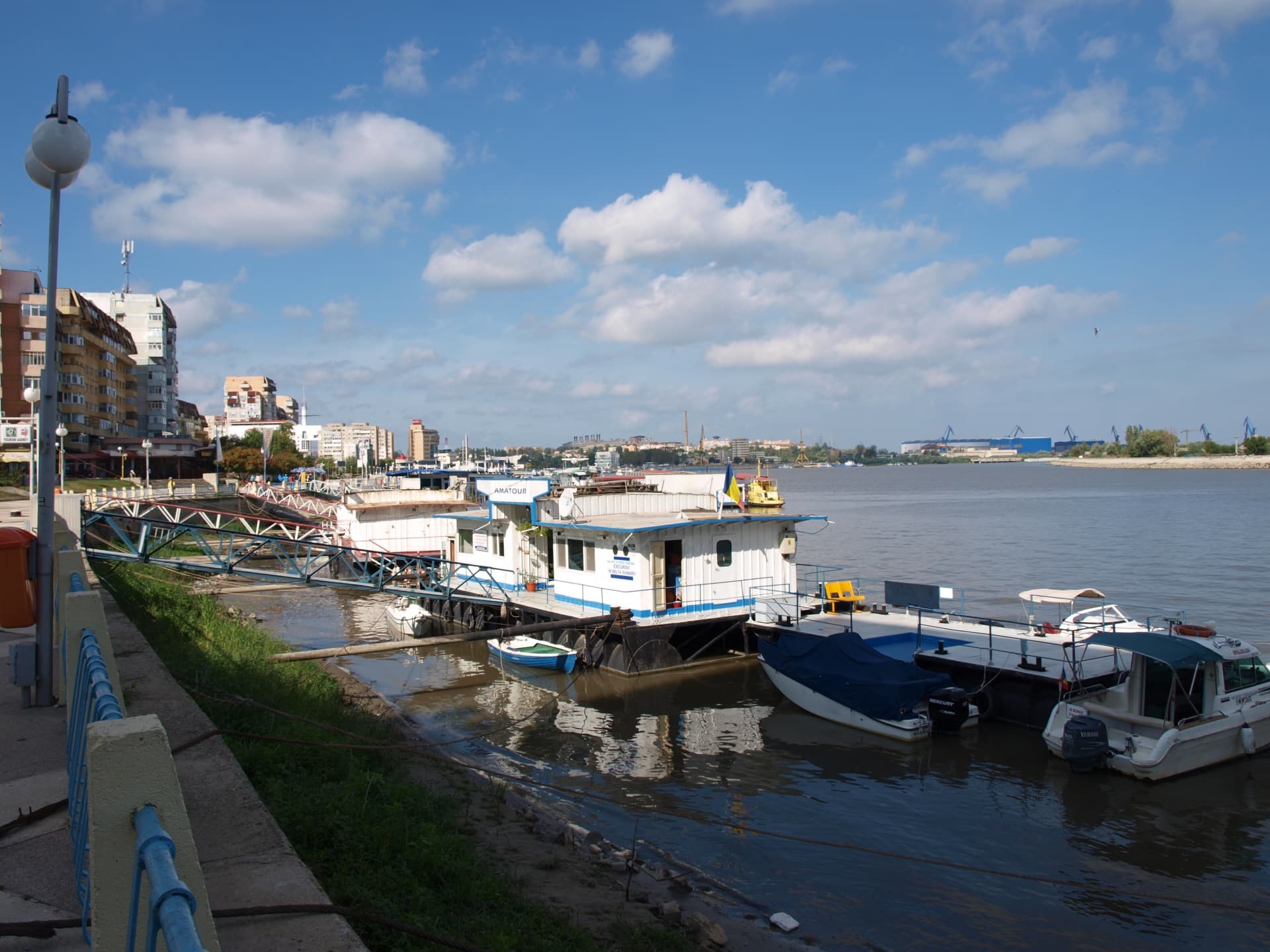
The Danube Delta begins at Tulcea, 80 km from the Black Sea, where the river splits into three main arms: the Chilia to the north, marking the Ukrainian border; the Sulina in the center, canalized for maritime navigation; and the Sfântu Gheorghe to the south, the wildest of the three. These 5,800 km² of channels, lakes, reed beds, and flooded forests form Europe's second-largest wetland, classified by UNESCO since 1991 and designated a biosphere reserve. When our team organizes a stay here, we work with local fishermen who know the secondary channels—those not found on tourist maps.
The ecosystem determines the rhythm of travel. More than 300 bird species frequent the delta, including Europe's largest white pelican colony and virtually the entire global population of Dalmatian pelicans during nesting season. You'll also spot purple herons, little egrets, Caspian terns, pygmy cormorants, and in winter tens of thousands of red-breasted geese migrating from Siberia. Movement happens by flat-bottomed motorized skiff or oars through narrow channels, since roads end at Tulcea and Murighiol. Inside the delta, the boat replaces the car.
Lipovan villages represent another dimension of the region. Descendants of Russian Old Believers who fled the reforms of Patriarch Nikon in the 17th century and settled here starting in the 1740s, the Lipovans still speak Russian among themselves and maintain their ancient Orthodox churches. In Mila 23, Crișan, Sfântu Gheorghe, and Caraorman, the economy rests on fishing for pike-perch, carp, catfish, and sturgeon, as well as family guesthouses for travelers. Local cuisine reflects this identity: borș de pește (sour fish soup), saramură de crap (grilled pickled carp), plăcintă lipovenească, and storceag, sturgeon soup served with sour cream.
Beyond the wildlife, the delta presents landscapes found nowhere else in Romania. Letea Forest, between the Chilia and Sulina arms, grows on sandy dunes and shelters semi-wild horses and centuries-old pedunculate oaks. Caraorman Forest, harder to reach, offers comparable vegetation. On the seaward side, Sfântu Gheorghe beach stretches for kilometers of fine sand with no structures, accessible only by boat from Tulcea (3 to 4 hours). The village lives off observation tourism and an independent film festival in August, Anonimul, which draws a fairly niche Romanian audience.
The delta is not a place to pass through. You must accept the rhythm of boats, the humid summer heat, mosquitoes, absent cell reception in certain areas, and the relative remoteness from the rest of the country. This is precisely what ensures that travelers who venture here leave marked by a different Romania—one turned toward water rather than mountains, and largely preserved from the tourism pressure now touching Transylvania.
To discover
Pelican watching at Lake Furtuna. Flat-bottomed skiff excursion from Crișan or Mila 23, at dawn, to approach white and Dalmatian pelican colonies fishing collectively on inland lakes.
Overnight with a host family in Mila 23. Lipovan guesthouse in a village accessible only by boat, dinner of borș de pește and conversation in Old Russian with fishermen returning at sunset.
Beach and village of Sfântu Gheorghe. Town of 800 inhabitants at the mouth of the southern arm, sandy beach free of any construction, and possibility of observing sturgeon swimming upriver in May.
Letea Forest on sandy dunes. Strictly protected scientific reserve between the Chilia and Sulina arms, accessible with a guide, where centuries-old oaks and semi-wild horses coexist on sandy soil.
Tulcea Museum and Delta Institute. Before entering the delta, spend two hours in Tulcea to understand the hydrology, settlement history, and current conservation challenges of this UNESCO site.
When to visit
The best period runs from May through early October, with two particularly rewarding windows. From mid-April through late June is nesting season: pelicans occupy their colonies, herons build nests in willow groves, and vegetation remains tender. Temperatures gradually rise from 18°C in April to 28°C in June. September and early October correspond to pre-nuptial migration toward Africa, with a massive passage of wading birds and raptors, and milder temperatures around 22-25°C during the day.
July and August remain viable but present three drawbacks: heavy heat up to 35°C with high humidity, dense mosquitoes in enclosed channels, and significant Romanian tourism, especially around the Anonimul festival. Winter (December to March) closes much of the guesthouse network and navigation becomes unreliable when the delta freezes, which happens some years in secondary channels. Our team advises against November and March, periods of persistent rain and fog.
Practical advice
Plan for a minimum of three full days in the delta, ideally four to five to combine two base villages (for example, Crișan for central channels and Sfântu Gheorghe for the sea and beach). Fewer than three days doesn't justify the journey from Bucharest: 4.5 hours by car or train to Tulcea, then 2 to 4 hours by boat to reach interior guesthouses. The main airport is Bucharest Otopeni, from where we arrange transfers. Tulcea has a small seasonal airport but flights remain irregular.
The region naturally combines with Bucovina and its painted monasteries (8 to 9 hours' drive heading north via Iași), or with Bucharest and Wallachia at the beginning or end of an itinerary. Combining with Transylvania requires a longer loop, starting from 12 days total. Comfort in the delta remains that of simple but clean family guesthouses, with hot water and electricity almost everywhere. This is a destination suited for contemplatives, birdwatchers, nature photographers, and families with curious children from age 8 onward, provided you accept the slow pace of boats and the rustic simplicity of fish-based meals.