Bucovine
At the foot of the Eastern Carpathians, five painted monasteries from the 16th century punctuate a rural landscape of beech forests, high-altitude sheepfolds, and still-living Orthodox liturgies.
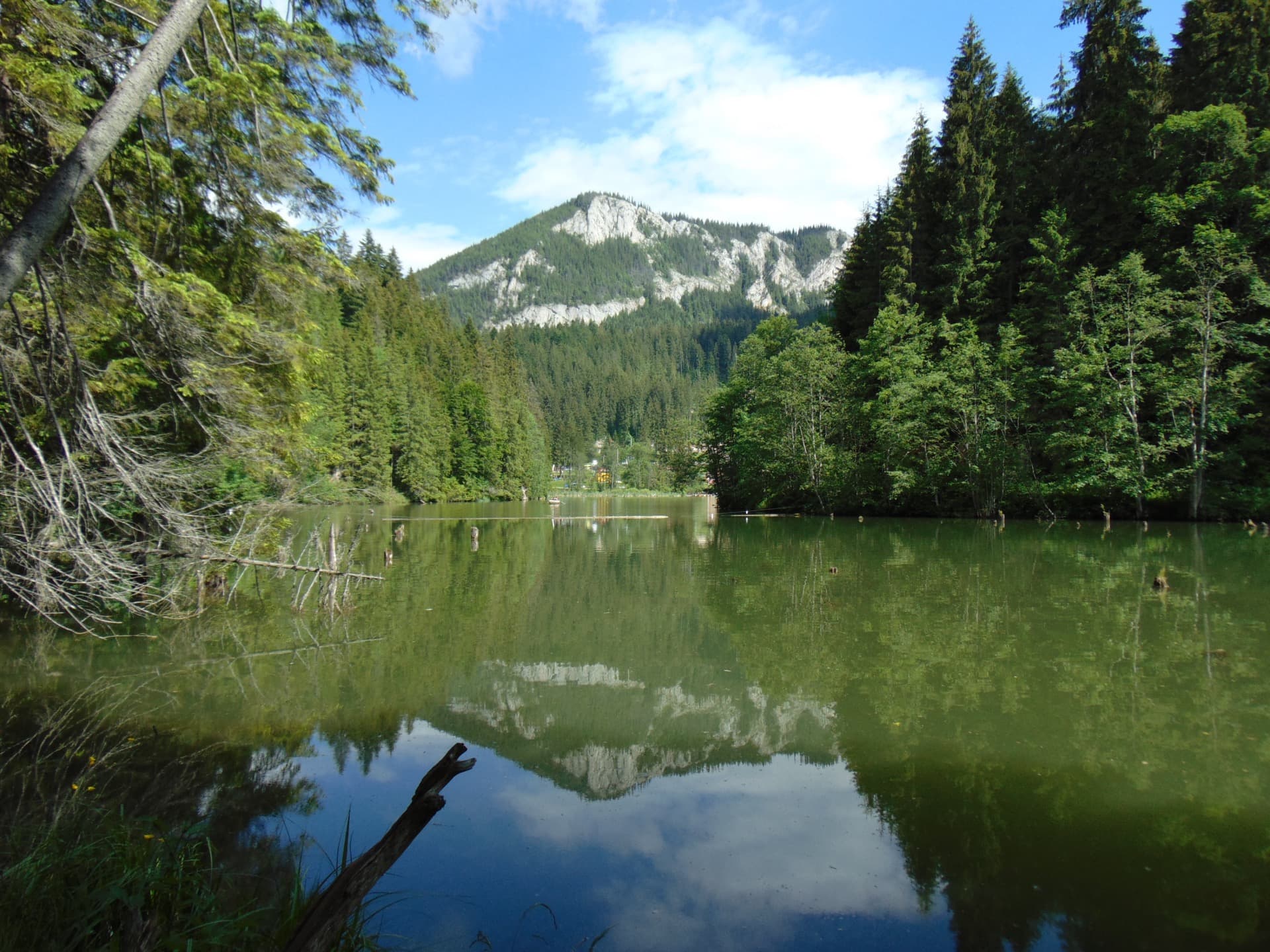
Bucovine occupies the northeastern corner of Romania, between the eastern foothills of the Carpathians and the Ukrainian border. Our English-speaking team has been bringing travelers here from Suceava, the former capital of the Moldavian principality in the 15th century, which now serves as the region's logistical gateway with its small airport and train station—seven hours from Bucharest. The region takes its name from the beech tree, buk in Slavic: forests still cover nearly half the territory, and it's in autumn that the palette of deciduous trees reveals its full measure on the slopes above Gura Humorului.
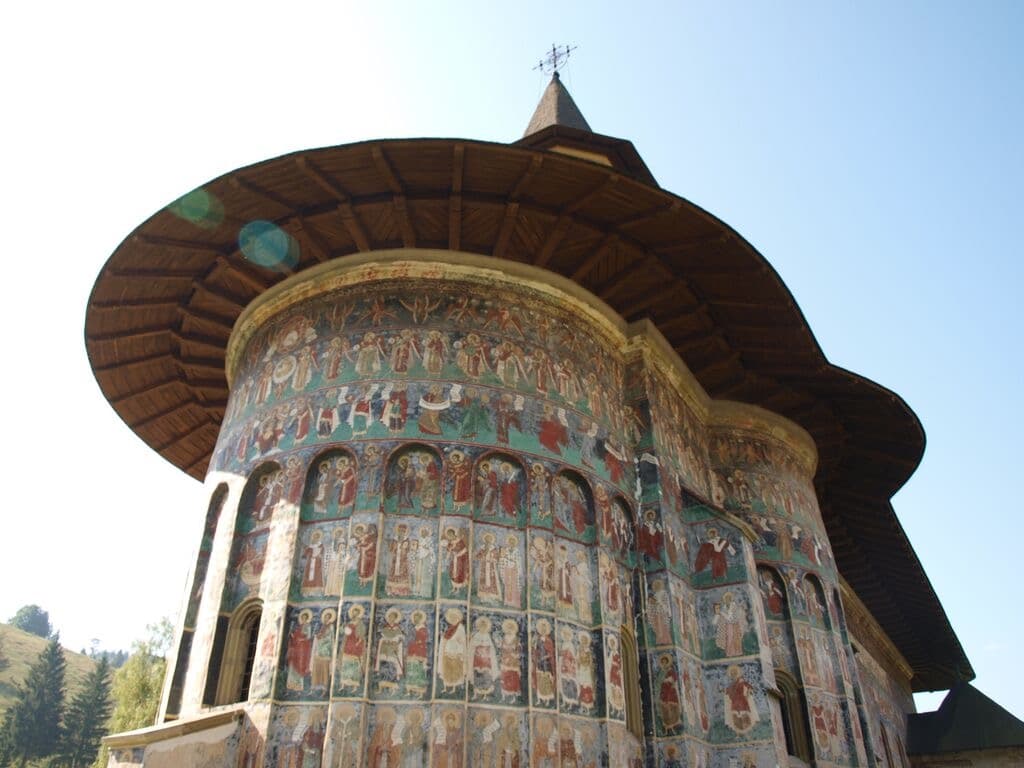
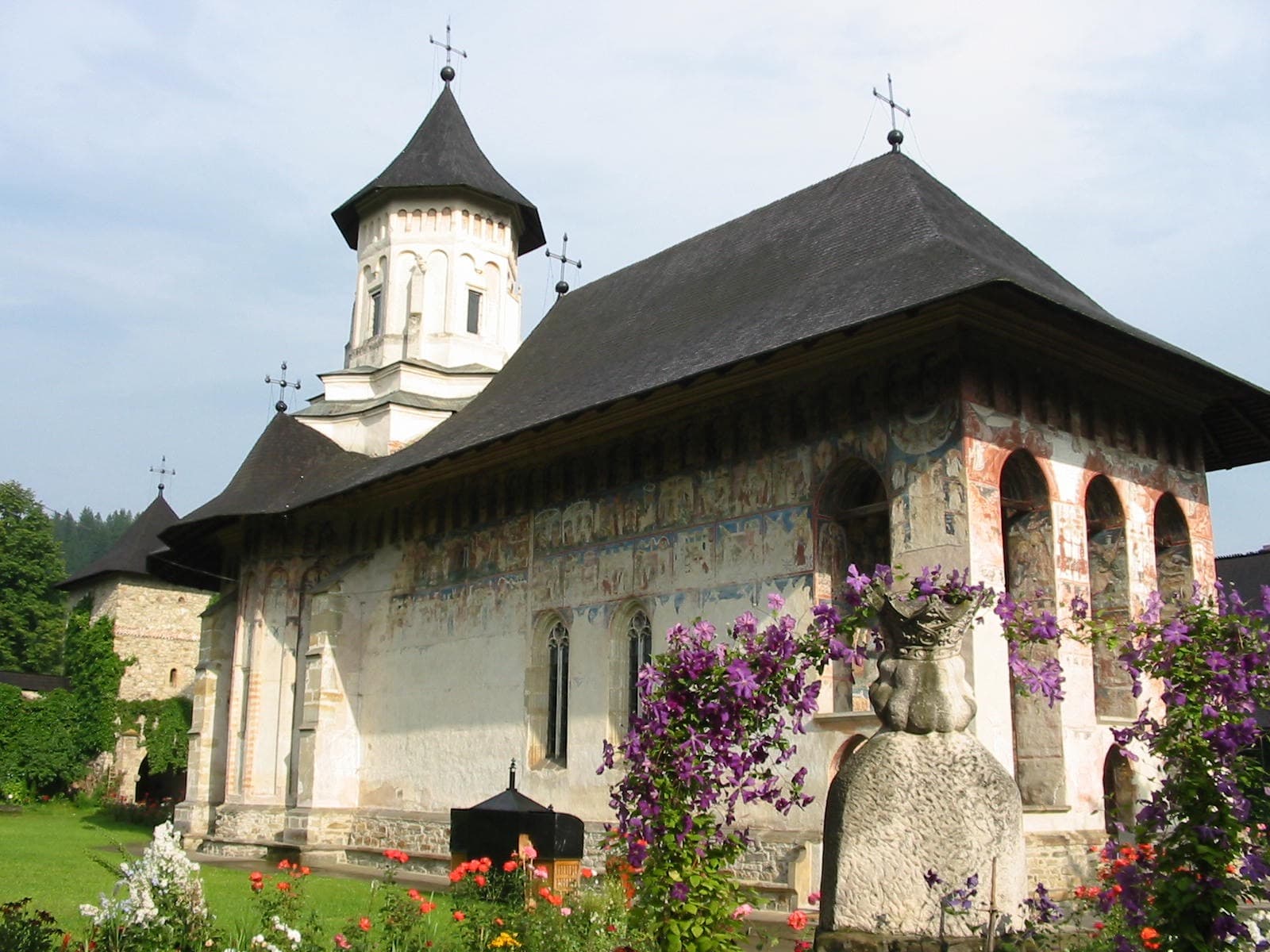
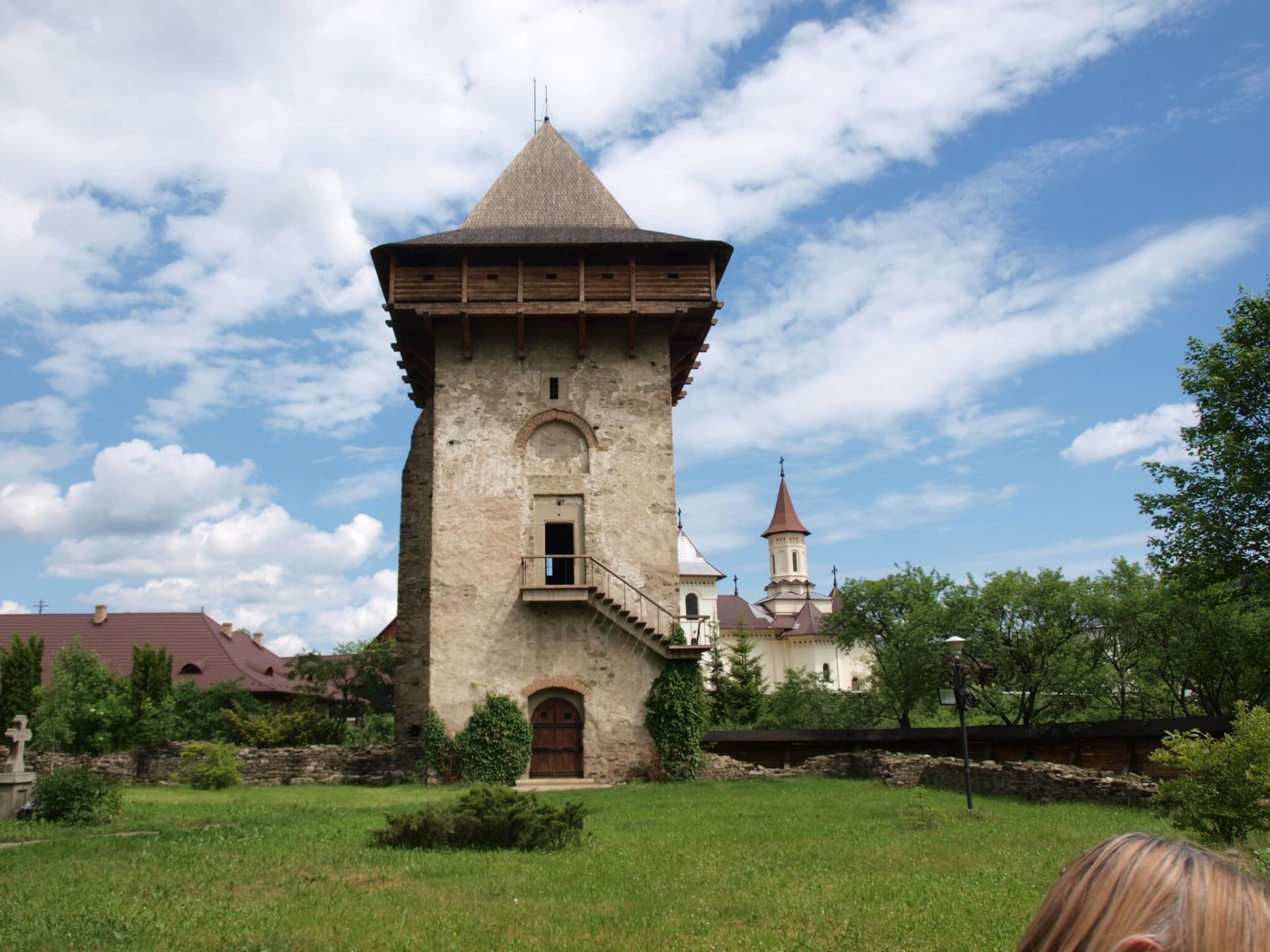
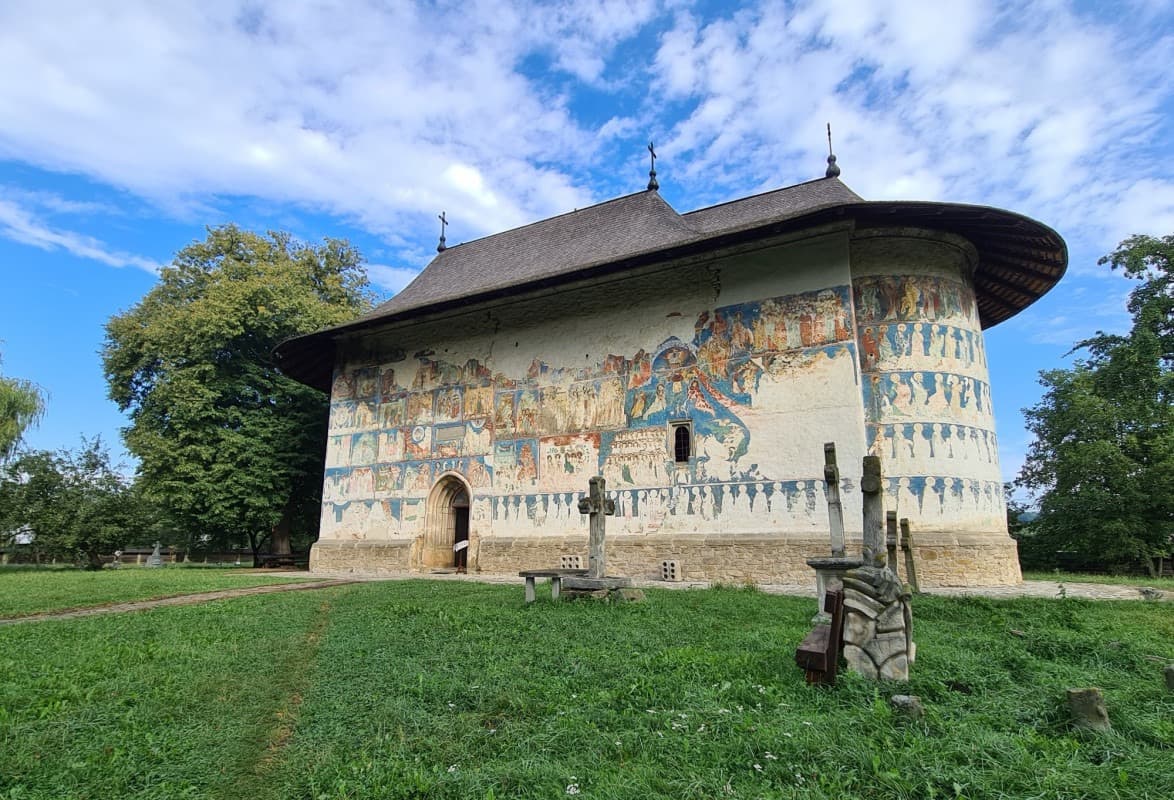
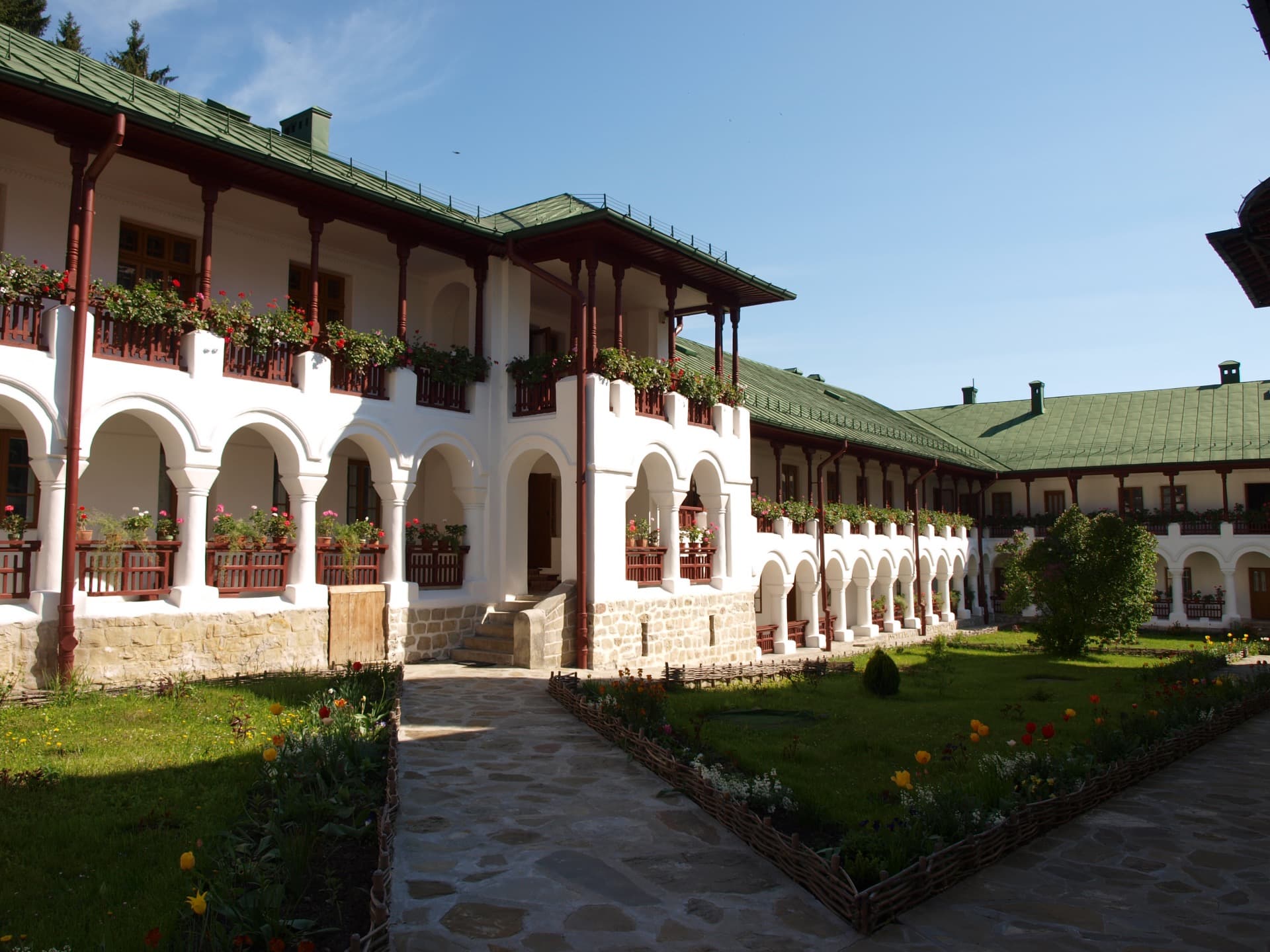
Five monasteries inscribed on the UNESCO World Heritage list embody Bucovine's visual identity: Voroneț, Sucevița, Moldovița, Humor, and Arbore. Built between 1487 and 1583 under the voivodes Stephen the Great and Petru Rareș, they possess a singular feature: they are entirely painted on the exterior, on all four walls, with complete iconographic cycles. The Last Judgment at Voroneț, on the western wall, unfolds in a composition more than thirty feet high dominated by a deep blue pigment—lapis lazuli according to some analyses—whose exact formula local artisans have never been able to rediscover. Sucevița, the last constructed and most heavily fortified, is surrounded by walls nearly twenty feet high and still houses an active monastic community.
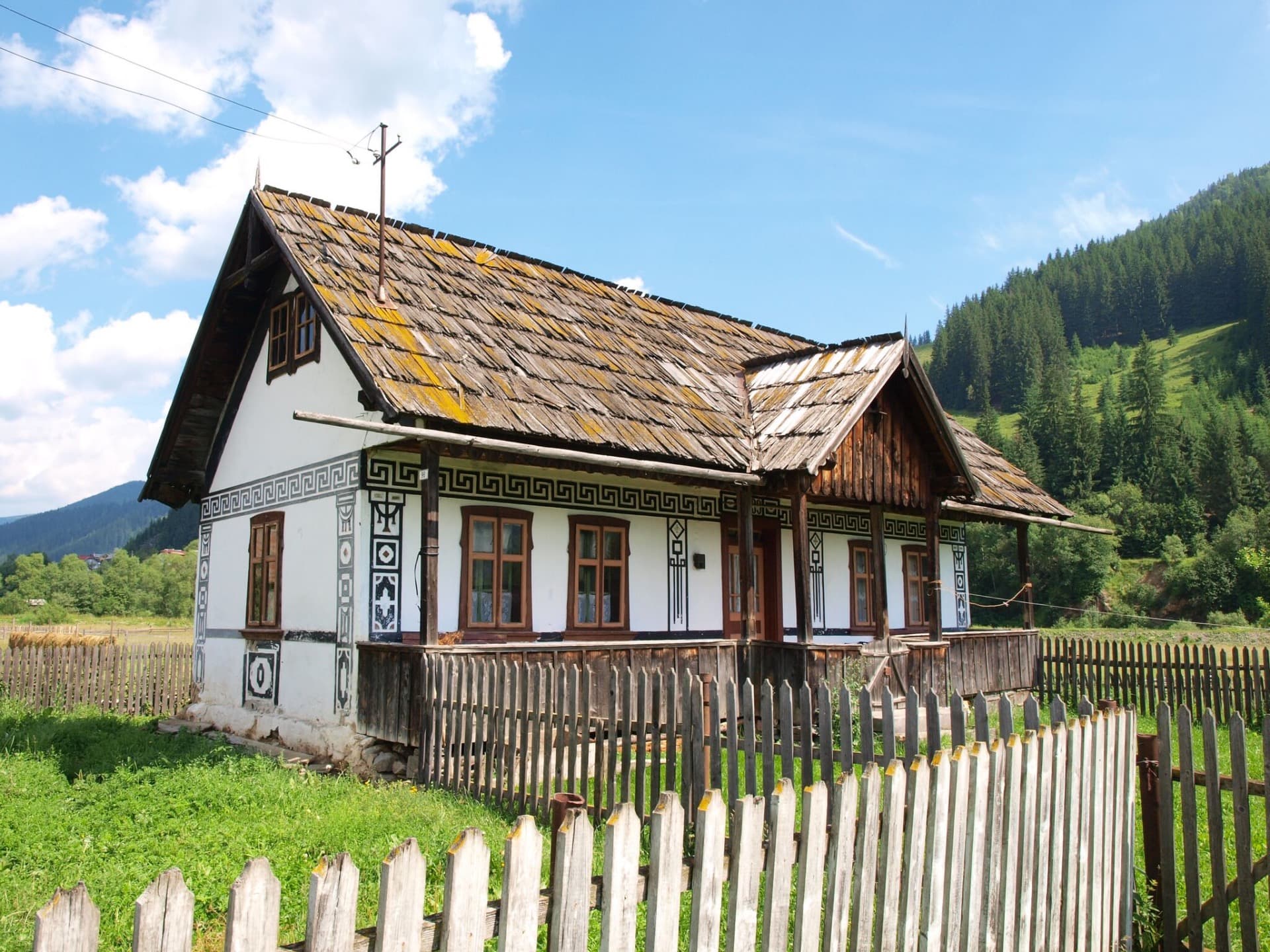
Beyond the monasteries, Bucovine is a country of rural valleys: the Moldova, the Moldovița, the Suceava. Villages line wooden houses with carved gate frames; meadows are hand-scythed until July; and herders still drive their flocks to the stâne, high-altitude sheepfolds where brânză de burduf is made—ewe's cheese aged in a skin or fir bark. At Marginea, near Sucevița, a workshop carries on black ceramics fired without oxygen, a technique present in the Balkans since the Bronze Age. At Ciocănești, on the upper Bistrița, the house façades are painted with geometric motifs renewed each spring.
Orthodox religious practice still structures the calendar. Sunday morning liturgies at Putna, where Stephen the Great rests, or at Sucevița, last more than two hours and draw the faithful from all surrounding villages. Summer patronal feast days, in June and July depending on the monastery, feature processions and markets selling glass-painted icons, fir honey, and plum brandy—Bucovine's țuică often reaching 100 proof.
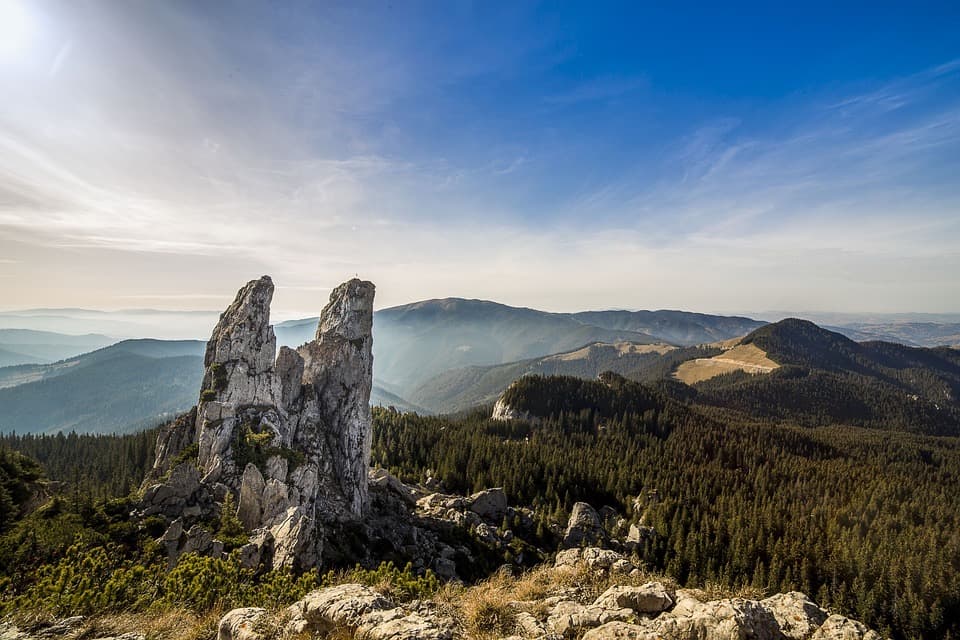
As for terrain, the Eastern Carpathians peak here at roughly 6,200 feet in the Rarău and Giumalău massifs, accessible from Câmpulung Moldovenesc. Trails cross primeval forests of beech and spruce, some protected by the Călimani National Park farther south. The Pierres de la Dame, a Rarău limestone formation, offers a panorama that extends on clear days to the foothills of Maramureș. Bucovine shares with historic Moldavia a cuisine of sour soups, borș de perișoare with meatballs, and jam rolls with poppy seed, cozonac, present on every holiday table.
To discover
The blue of Voroneț. The western wall of the monastery, painted in 1547, displays a Last Judgment set against a lapis blue whose formula has been lost. We go early in the morning, before the tour groups, when raking light brings out the faces of the blessed.
Marginea black ceramics workshop. A family of artisans still fire pots in reducing atmosphere, without oxygen, producing this characteristic matte black. The wheel demonstration lasts roughly thirty minutes.
Hike to the Pierres de la Dame. Four hours round trip from the Rarău pass, through a forest of spruce, to the limestone needles perched at about 5,360 feet. Feasible from mid-June through late September.
Sunday liturgy at Putna. Over the tomb of Stephen the Great, who founded the monastery in 1469, the Orthodox service brings together monks and villagers in traditional dress on major feast days.
The painted houses of Ciocănești. A village in the upper Bistrița valley where each façade bears geometric motifs inspired by painted Easter eggs, renewed or retouched each spring before the June patronal festival.
When to go
The best period extends from mid-May through mid-October. June and July are the greenest months, with daytime temperatures of 72 to 79 °F in the valleys and daylight stretching until 9 p.m., ideal for combining monasteries in the morning and hiking in the afternoon. September offers softer light, clear skies, and the first autumn colors in the highlands by the last week of the month. Early October, the beech forests of Rarău turn copper: this is our preferred season for photographer travelers.
Winter is severe: from December through February, temperatures regularly drop to 5 °F in the interior valleys, secondary roads are snowed in, and some monasteries close their gardens to visitors. March and April are best avoided for the thaw that makes trails muddy and veils the frescoes in damp mist. Rainfall, moderate over the year at roughly 28 inches, concentrates in May and late August in brief afternoon showers.
Practical advice
Allow a minimum of three full days on-site to visit the five UNESCO-listed monasteries without rush, adding a half-day for Marginea and Ciocănești. Four to five days allow for a hike in the Rarău massif and an overnight stay with locals in a Moldova valley village. The natural entry point is Suceava, either via its regional airport (flights from Bucharest and select European capitals in season) or overnight train from Bucharest. On the ground, a car with driver remains the most flexible option, with distances between monasteries ranging from roughly 10 to 30 miles on often-narrow country roads.
Bucovine pairs logically with Maramureș, located about five hours by road west via the Prislop pass, to extend the exploration of wooden villages and peasant traditions. A second coherent combination heads south toward Transylvania, crossing the Eastern Carpathians via Vatra Dornei and Bicaz. Comfort is adequate, with a good network of family guesthouses and a few restored monastery hotels at Sucevița and Putna, though without Western-style luxury. The region suits contemplative travelers particularly well, lovers of religious art and history, and hikers seeking moderate terrain without crowds.